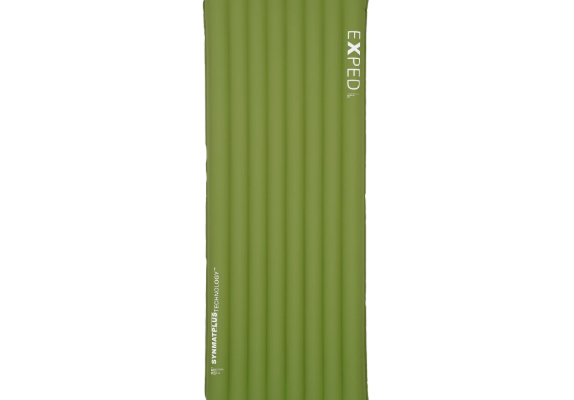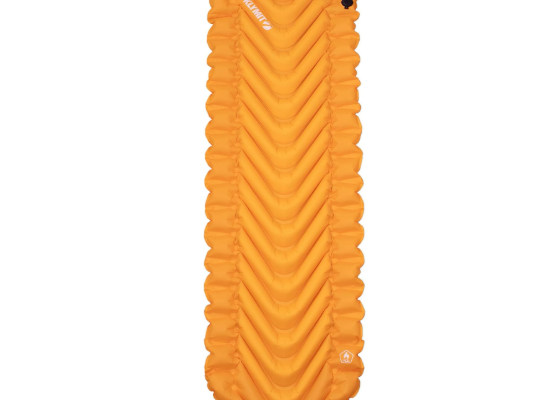

What R value do I need for winter camping comes down to a straightforward rule of thumb, most winter backpackers want a pad rated between 5.5 and 8, with anything above roughly 6.5 covering genuine sub freezing and deep winter conditions, while true four season expedition trips push toward the top of that range or beyond. R-value measures a sleeping pad’s resistance to heat loss through the ground, and since a sleeping bag alone does very little to stop conductive heat loss into cold earth or snow underneath you, getting the pad’s R-value right matters just as much as choosing the correct temperature rated bag for a winter trip.
The short answer
For three season trips down to around freezing, an R-value of 3 to 4 is typically sufficient. For genuine winter camping with overnight lows well below freezing, look for an R-value of 5.5 to 7. For deep winter or high altitude expeditions where temperatures regularly drop well below zero, an R-value of 7 to 8 or higher is the safer target, often achieved by stacking two pads rather than relying on a single one.
The ASTM F3340 standard and what R-value actually measures
R-value as used on modern sleeping pads is standardized under ASTM F3340, a testing protocol adopted industry wide specifically because R-value claims used to vary wildly between brands using their own internal, non comparable testing methods. The standard measures thermal resistance using a guarded hot plate test, placing the pad between a heated plate and a cooled plate and measuring how much energy is required to maintain a constant temperature difference across the pad, which produces a number directly comparable to insulation R-values used in home construction, where higher numbers mean more resistance to heat flow and therefore more warmth retained.
Before this standard was widely adopted, an R-value of 4 from one brand might perform quite differently from an R-value of 4 from another, since testing conditions and methodology were not consistent, which made comparison shopping genuinely unreliable. Most major pad manufacturers now test to ASTM F3340, and checking whether a specific pad’s listed R-value cites this standard is a reasonable way to confirm you are comparing pads on equal footing before a winter trip where the number actually matters for safety, not just comfort.
How to add R-values when stacking two pads
For the coldest trips, many winter backpackers layer two pads rather than buying a single pad rated high enough on its own, most commonly a closed cell foam pad underneath a warmer insulated air pad, and the resulting combined R-value is simply the sum of the two individual pads’ R-values. A foam pad rated at 2 placed underneath an air pad rated at 4.5 produces an effective combined R-value of roughly 6.5, which is both mathematically straightforward and practically useful, since it means you do not necessarily need to buy the single warmest pad on the market to handle a cold trip if you already own a lighter three season pad.
This stacking approach has a second practical benefit beyond raw warmth, since the foam pad underneath also protects the air pad from ground punctures and provides a usable sleeping surface as a backup if the air pad above it develops a leak overnight, a real consideration on a winter trip where a completely flat pad and direct ground contact could become a genuine safety issue rather than just an uncomfortable night.
Why sleeping bag temperature rating does not substitute for pad R-value
A common and genuinely risky mistake is assuming a warm enough sleeping bag compensates for an inadequate pad, but the two address different physical mechanisms of heat loss entirely. A sleeping bag primarily resists convective and radiative heat loss around the parts of your body not in contact with the ground, while the pad underneath you is almost entirely responsible for resisting conductive heat loss, the direct transfer of body heat into whatever surface you are lying on, which happens far more efficiently through solid or compressed snow contact than through the air a bag traps around you.
Because your body weight compresses the sleeping bag’s insulation to almost nothing directly beneath you, a bag rated to negative twenty degrees provides very little actual insulation against the ground below your back and hips specifically, which is why an underrated pad is one of the most common reasons backpackers report being cold overnight on a winter trip despite bringing an appropriately warm bag.
Body type, sleep temperature, and adjusting the target R-value
R-value guidance assumes an average sleeper under average conditions, and individual variation matters more in winter than in milder seasons, since the margin for error shrinks considerably once nighttime temperatures drop well below freezing. Cold sleepers, or anyone who runs cold generally, are often better served choosing a pad rated a point or more higher than the baseline recommendation for their expected trip temperature, while naturally warm sleepers occasionally get away with slightly less. Ground conditions matter too, since sleeping directly on packed snow or frozen ground draws heat away faster than sleeping on dry earth or a wooden tent platform, which is part of why many winter specific R-value recommendations run a bit higher than the coldest expected air temperature alone might suggest.
Common mistakes
- Buying based on temperature rating language rather than the R-value number itself. Marketing terms like winter ready or four season are not standardized the way R-value is, so always check the actual numeric R-value and confirm it was tested to ASTM F3340 rather than trusting a seasonal label alone.
- Assuming a thicker pad is automatically warmer. Thickness affects comfort more than warmth directly, and a thick pad with poor insulation can still leave you cold, while a thinner pad with a high R-value construction can outperform it, so check the R-value specifically rather than judging warmth by how tall the pad looks.
- Forgetting that R-values stack additively when layering pads. Many winter campers underestimate how effective a foam pad plus an air pad combination is, buying an expensive single pad rated high enough alone when a cheaper stacked combination using gear they already own would have worked just as well.
- Ignoring ground type when estimating needed R-value. Snow and frozen ground draw heat away faster than dry dirt or a tent platform, so trips involving snow camping specifically often call for a slightly higher R-value than the same air temperature over unfrozen ground would suggest.
Frequently Asked Questions
Is a higher R-value always better, regardless of season?
Not necessarily, since a higher R-value pad is typically heavier, bulkier, and warmer than needed for summer trips, which can actually cause uncomfortable overheating, so matching the R-value to the actual expected temperature range makes more sense than simply buying the warmest pad available.
What R-value do I need for camping right around freezing?
An R-value in the 3 to 4 range generally covers nights right around the freezing point comfortably for most sleepers, which is why this range is common among general purpose three season pads rather than dedicated winter models.
Can I trust R-value claims from every brand equally?
Most major manufacturers now test to the ASTM F3340 standard, which makes cross brand comparison far more reliable than it used to be, though it is still worth confirming a specific pad’s listing references this standard before assuming two pads with the same stated R-value perform identically.
Does R-value change with altitude?
R-value itself is a fixed physical property of the pad and does not change with altitude, but colder overnight temperatures and often more direct ground or snow contact at higher elevations mean many high altitude trips call for a higher R-value than the same trip at lower elevation would.
Wrapping up
Getting R-value right matters as much as choosing the correct sleeping bag for a winter trip, since the pad underneath you handles a type of heat loss a bag alone cannot address. For specific pad recommendations across every R-value range, see our sleeping pads buying guide, and our best insulated sleeping pads for winter camping roundup covers specific high R-value models.