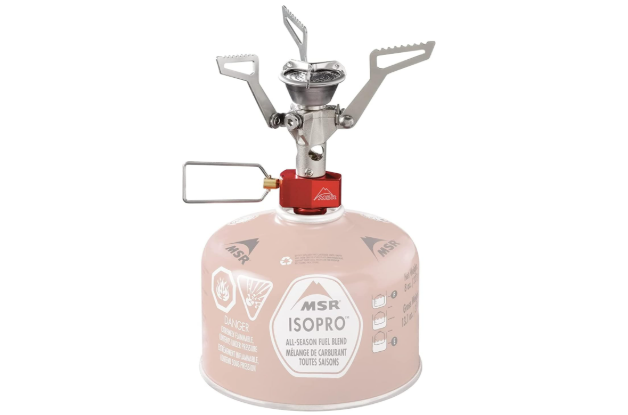
This msr pocketrocket 2 review is for ultralight backpackers and minimalist campers who want the lightest, smallest possible stove that still lights reliably and actually works, without paying for an integrated system or extra features they do not need. MSR built the PocketRocket 2 as a standalone canister burner, meaning it screws directly onto an isobutane canister and pairs with whatever pot you already carry, rather than coming bundled with its own dedicated cookware.
What decides whether this stove fits your trips is whether you value minimal weight and maximum flexibility over the speed advantage of an integrated system like a Jetboil. If you already own a pot you like and want a burner that disappears into a corner of your pack until needed, the PocketRocket 2 is worth a close look before committing to a heavier or more specialized stove.
Specifications
| Weight | 2.6 oz (73 g) |
| Burner output | Approximately 8,200 BTU per hour |
| Fuel type | Isobutane propane canister, screws directly onto the burner |
| Boil time (1 liter) | Roughly 3.5 minutes under good conditions |
| Ignition | No built in igniter, requires a lighter or matches |
| Packed size | Folds down to roughly 2 x 2 in |
Who it is for
The PocketRocket 2 suits ultralight backpackers, thru hikers, and anyone who counts ounces obsessively, since it is among the lightest functional canister stoves available and takes up almost no space in a pack. It is also a good fit for anyone who already owns cookware they like and does not want to be locked into a dedicated pot the way an integrated system like a Jetboil requires, since this burner pairs with any pot, pan, or cup that fits over the flame.
It is a weaker fit for group cooking, since the open burner design lacks the heat exchanging efficiency of an integrated system and takes noticeably longer to boil large volumes of water for several people. It is also more exposed to wind than an enclosed system, since there is no built in windscreen, and anyone cooking in consistently gusty conditions will need to supplement with a separate wind shield to get consistent performance. Anyone who wants an igniter built into the stove itself should also know this one has none, so a small lighter becomes a permanent part of the kit rather than an occasional backup.
How it performs
Weight and packed size
At 2.6 ounces, the PocketRocket 2 is about as light as a functional canister stove gets, folding down into a package smaller than a deck of cards that tucks easily into a pot or a corner of a pack without a second thought. It is light enough that most backpackers stop thinking about it as a separate item on the gear list at all, since it effectively disappears inside whatever pot it is already stored in. This weight savings comes from stripping the stove down to just the burner head, fuel valve, and folding pot supports, with nothing extra like an igniter, windscreen, or dedicated pot adding to the package.
For anyone building an ultralight kit where every gram is weighed against its usefulness, a stove this light removes cooking gear almost entirely from the weight conversation, leaving fuel canister weight as the main remaining consideration rather than the stove itself. This is the core appeal that has kept this stove popular across multiple generations of ultralight backpackers. The folding pot supports also lock into a wide, stable stance when deployed, which matters more than it sounds like for a stove this small, since a narrow or wobbly base is the easiest way to tip a pot of boiling water at camp.
Burner output and boil times
At roughly 8,200 BTU per hour, the PocketRocket 2 sits in a solid middle range for canister stoves, enough to bring a liter of water to a boil in a few minutes under good conditions, though noticeably slower than an integrated system with a heat exchanging pot since more of the generated heat escapes around an open flame and uncaptured pot rather than being channeled directly into the water. This tradeoff is the direct cost of the stove’s minimalist design, since there is no FluxRing style exchanger here to capture that escaping heat.
Boil times vary meaningfully with pot size, wind exposure, and canister fullness, with a nearly empty canister delivering lower pressure and a noticeably slower burn than a fresh one. For solo or two person use boiling modest amounts of water, the output here is entirely adequate, and the wider burner head also distributes heat more evenly across the bottom of a pot than some smaller burner designs manage. At higher elevations, thinner air changes combustion slightly for any stove, and most users find the practical effect here is a marginally longer boil time rather than any real drop in reliability, since the open burner design is less sensitive to the exact mix of oxygen and fuel than some more enclosed systems.
Simmer control and cooking versatility
This is one of the PocketRocket 2’s genuine strengths relative to a boil focused integrated system, since the burner valve offers a wider adjustment range that allows a real simmer rather than just high output or off. The wider burner head spreads flame more evenly than a narrow jet, which helps avoid the hot spots that can scorch food on stoves with a tighter, more concentrated flame pattern.
Because it pairs with any pot, this stove also offers more cooking flexibility than an integrated system, since you can use a wider pan for frying, a taller pot for a one pot meal, or a small cup for a single serving of coffee, all on the same burner. Anyone who wants to cook real food on the trail rather than just boil water benefits from this flexibility considerably.
Wind resistance
The PocketRocket 2 has no built in windscreen, which is the clearest tradeoff of its minimalist design, since an open flame on an exposed burner loses a meaningful amount of effective heat output to even a light breeze disrupting the flame pattern around the pot. In calm conditions this is a non issue, but anyone cooking regularly in exposed or windy terrain should plan to carry a small separate wind shield or position the stove behind natural wind breaks like rocks or a pack.
It is worth noting that using any kind of enclosed windscreen with a canister stove requires some care, since trapping too much heat around the canister itself can cause it to overheat, so a partial shield that blocks the wind without fully enclosing the canister is the safer approach with a stove like this one. A low rock wall or a dug out wind pocket on the lee side of a ridge accomplishes much the same thing without carrying any extra gear at all, which is a trick worth knowing for anyone trying to keep total pack weight as low as this stove’s own weight suggests.
What we liked
- Extremely light and compact
- pairs with any cookware you already own
- wider burner head gives better simmer control than many compact stoves
- dependable output across a wide range of conditions
What we did not
- No built in igniter requires carrying a separate lighter
- no windscreen means real wind exposure
- slower boil times than an integrated system with a heat exchanging pot
How it compares
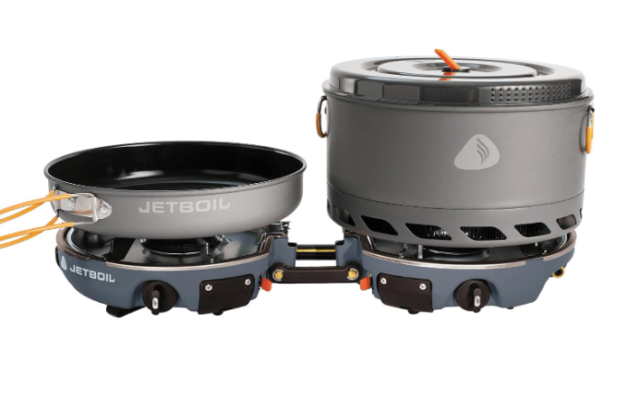
Against the Jetboil Flash, the PocketRocket 2 is lighter and more flexible with cookware choice, while the Flash boils water faster thanks to its integrated FluxRing heat exchanger, making the choice largely about whether raw speed or weight and flexibility matters more for your trips. Against the MSR WhisperLite International, a liquid fuel stove built for cold weather and international fuel availability, the PocketRocket 2 is vastly lighter and simpler for typical three season backpacking, while the WhisperLite holds a clear edge in genuinely cold conditions where canister stoves lose pressure. Against the BioLite CampStove 2+, the comparison again comes down to fuel source, the PocketRocket 2 offers consistent, fast ignition from a canister with zero fuel gathering required, while the BioLite trades that consistency for fuel independence and device charging.
Frequently Asked Questions
Does the MSR PocketRocket 2 have a built in igniter?
No, it requires a separate lighter or matches to ignite, which is a deliberate tradeoff to keep the stove as light and simple as possible.
How much does the MSR PocketRocket 2 weigh?
It weighs 2.6 ounces, making it one of the lightest functional canister stoves available, and it folds down to about the size of a deck of cards.
Can the PocketRocket 2 simmer food, or just boil water?
It offers a genuinely usable simmer range thanks to its wider burner head and adjustable valve, making it more cooking capable than many compact boil focused stoves.
Does the MSR PocketRocket 2 perform well in wind?
Not especially, since it has no built in windscreen, so cooking in exposed or gusty conditions benefits from a separate wind shield or natural cover like rocks.
Verdict
The MSR PocketRocket 2 earns its long standing reputation honestly, delivering reliable output, genuine simmer control, and cookware flexibility in a package that weighs next to nothing. That combination of light weight and real cooking versatility is the entire reason to choose it over a heavier or more specialized stove, and for most backpackers it remains a smart default choice.
Buy this if you want the lightest practical canister stove that still offers real simmer control and pairs with cookware you already own. Look elsewhere if you need built in wind protection, an integrated fast boiling system, or cold weather performance beyond what any canister stove can offer. Pack a small lighter and a minimal wind shield alongside it and you have covered the two gaps this stove deliberately leaves open in exchange for its weight. For more options across weights and fuel types, see our camp stoves buying guide.
An extremely light, flexible canister stove with genuine simmer control, ideal for backpackers who want minimal weight without giving up real cooking versatility.