The best canister stove for cold weather has to work around a basic physical limitation, isobutane and propane both rely on internal vapor pressure to push fuel to the burner, and that pressure drops significantly as temperatures fall. Below freezing, a standard upright canister stove can sputter, weaken, or stop working altogether, which is why this roundup focuses specifically on canister stoves engineered to keep performing when the mercury drops.
Two design approaches address this problem. Pressure regulated stoves use an internal regulator to maintain more consistent fuel flow even as canister pressure falls, while remote canister stoves that can be run inverted feed liquid fuel to the burner instead of vapor, largely sidestepping the pressure drop issue. Fuel blend matters too, since propane has a lower boiling point than isobutane and performs better in extreme cold, which is why many winter rated canisters use a higher propane percentage. Our camp stoves buying guide covers the wider category for milder conditions.
Comparison
| Name | Key features |
|---|---|
| Kovea Spider | Remote canister, invertible for liquid feed, strong cold weather reputation |
| MSR WindPro II | Remote canister, invertible, wide stable burner for cold conditions |
| MSR Reactor | Pressure regulated radiant burner, strong wind and cold tolerance |
| Soto WindMaster | Upright canister stove, concave burner head, better than average cold tolerance |
| Primus Lite+ | Pressure regulated integrated system, compact cold weather performer |
Each stove below addresses the cold weather pressure problem differently, from fully invertible remote canister systems down to upright stoves engineered for better than typical cold tolerance.
1) Kovea Spider (Best overall)
The Spider connects to its canister through a flexible fuel hose rather than screwing directly on top, and critically it is designed to run with the canister inverted, feeding liquid fuel to the burner instead of vapor. This sidesteps the pressure drop that cripples standard canister stoves in cold weather, giving it a reputation among winter backpackers as one of the more dependable canister options for sustained cold.
Its wide, stable burner head also handles pots well on snow or uneven winter terrain, and it remains simpler to operate than a true liquid fuel stove since there is no priming involved. For cold weather trips where you still want canister convenience, it is hard to beat.

Kovea Spider
- Fuel typeisobutane-propane canister
- Weightaround 6.7 oz
- Burner styleremote canister with hose
- Pot supportwide
Key features
- Remote canister connected by a flexible hose
- Invertible for liquid feed in cold conditions
- Wide, stable pot support arms
Pros
- Strong reputation for reliable cold weather performance
- No priming required unlike liquid fuel stoves
- Stable on snow or uneven winter terrain
Cons
- Bulkier and heavier than upright canister stoves
- Still a canister stove at its core, with some limits in truly extreme cold
What we liked
- Strong cold weather reputation
- no priming
- stable on snow
What we did not
- Bulkier than upright stoves
- limits remain in extreme cold
For winter backpackers who want dependable canister performance without the fuss of liquid fuel, the Spider is the top choice here.
Check the current price2) MSR WindPro II (Best stable winter burner)
The WindPro II is another invertible remote canister stove, built around a wide burner head and stable leg design that holds large pots securely even on packed snow, a genuine advantage during winter camping when ground conditions are rarely level or firm. Like the Spider, inverting the canister lets it draw liquid fuel in cold conditions rather than relying on vapor pressure alone.
It runs a bit heavier than minimalist upright stoves, an expected trade for its stability and cold weather capability, making it a strong choice for winter car camping or base camp use where weight matters less than reliable performance.
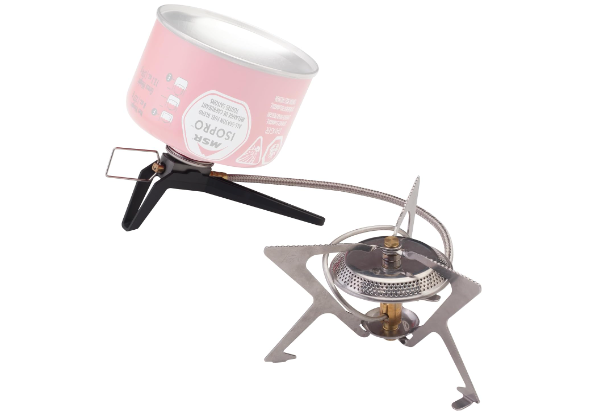
MSR WindPro II
- Fuel typeisobutane-propane canister
- Weightaround 7.4 oz
- Burner styleremote canister with hose
- Pot supportwide
Key features
- Wide, low profile burner head
- Invertible for liquid feed in cold
- Stable leg design for snow and uneven ground
Pros
- Excellent stability for larger winter cooking pots
- Reliable cold weather feed when inverted
- Low profile design resists tipping
Cons
- Heavier than minimalist upright stoves
- Bulkier packed size than simple canister tops
What we liked
- Excellent pot stability
- reliable cold feed
- resists tipping
What we did not
- Heavier build
- bulkier packed size
For winter base camp cooking where stability matters as much as cold performance, the WindPro II is a smart pick.
Check the current price3) MSR Reactor (Best pressure regulated system)
The Reactor uses an internal pressure regulator to maintain consistent fuel flow to its radiant burner as canister pressure naturally drops in cold weather, closing much of the gap between standard canister stoves and dedicated winter systems without requiring an inverted canister setup. Its enclosed burner also resists wind exceptionally well, a common companion to cold weather.
It remains an upright canister stove, so in truly extreme sustained cold a liquid fuel or invertible system still has an edge, but for most winter trips where temperatures are cold rather than arctic, the Reactor delivers strong, simple performance.
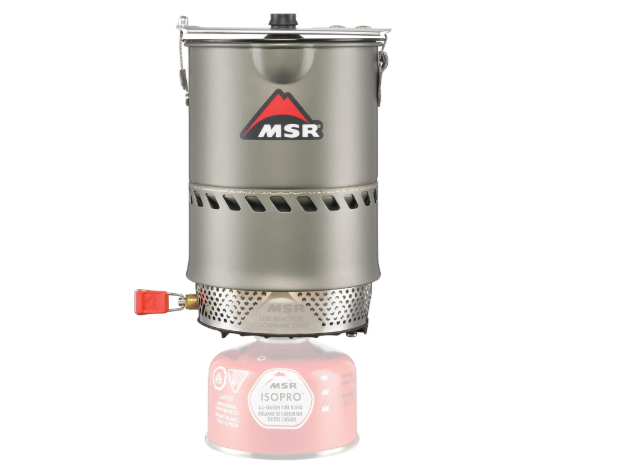
MSR Reactor
- Fuel typeisobutane-propane canister
- Weightaround 1 lb for 1L system
- Burner styleregulated radiant burner
- Wind resistanceenclosed design
Key features
- Internal pressure regulator for consistent output
- Enclosed radiant burner resists wind
- Simple upright operation, no inverting needed
Pros
- Strong cold weather output without inverting a canister
- Excellent wind resistance
- Simple, straightforward operation
Cons
- Still loses some edge to invertible systems in extreme cold
- Heavier than minimalist upright stoves
What we liked
- Strong cold output without inverting
- excellent wind resistance
- simple operation
What we did not
- Invertible systems still edge it out in extreme cold
- added weight
For winter trips with cold but not extreme temperatures, the Reactor offers strong performance with less fuss than a remote canister setup.
Check the current price4) Soto WindMaster (Best lightweight upright option)
The WindMaster is a standard upright canister stove, but its concave burner head design and reputation for reliable cold tolerance make it a popular choice among winter hikers who still want to keep pack weight low. It will not match an invertible or regulated system in truly harsh cold, but for moderate winter conditions it holds up noticeably better than a typical upright canister stove.
Keeping the canister warm, such as inside a jacket pocket before use or sleeping with it in a sleeping bag on cold nights, helps maximize its performance since it still depends on standard vapor pressure feed.

Soto WindMaster
- Fuel typeisobutane-propane canister
- Weightaround 2.3 oz burner only
- Burner styleconcave wind resistant head
- Igniterbuilt in micro igniter
Key features
- Concave burner head improves flame stability
- Very light packed weight
- Built in micro igniter
Pros
- Among the lightest options in this comparison
- Better than average cold and wind tolerance for an upright stove
- No priming or pumping required
Cons
- Not suited to truly extreme or sustained arctic cold
- Still dependent on canister vapor pressure
What we liked
- Very light
- better cold tolerance than typical upright stoves
- simple operation
What we did not
- Not for extreme cold
- still canister dependent
For winter hikers who want to keep weight low while still getting decent cold performance, the WindMaster is a sensible compromise.
Check the current price5) Primus Lite+ (Best compact integrated system)
The Lite+ brings a pressure regulated valve to a compact, lightweight integrated cooking system, giving winter backpackers more consistent output than a basic upright canister stove without the bulk of a remote canister setup. Its enclosed burner chamber also helps in the wind that often accompanies cold weather trips.
Like other integrated systems it has a narrower cooking surface tuned for boiling, limiting versatility for actual cooking, but for a solo or duo winter backpacker focused on hot drinks and rehydrated meals, it is a practical, well rounded choice.

Primus Lite+
- Fuel typeisobutane-propane canister
- Weightaround 14.8 oz
- Burner styleenclosed chamber
- Regulatorpressure regulated valve
Key features
- Pressure regulated valve for consistent output
- Enclosed burner chamber resists wind
- Compact, lightweight integrated design
Pros
- More consistent cold weather output than basic upright stoves
- Good wind resistance from the enclosed design
- Compact enough for solo or duo winter trips
Cons
- Narrower cooking surface limits versatility
- Not as cold capable as invertible remote canister stoves
What we liked
- Better cold output than basic stoves
- good wind resistance
- compact design
What we did not
- Limited cooking versatility
- trails invertible stoves in extreme cold
For winter backpackers who want cold weather improvement without the bulk of a remote canister setup, the Lite+ is a smart lightweight pick.
Check the current priceFrequently asked questions
Why does my canister stove get weaker in cold weather?
Canister stoves rely on the fuel’s own vapor pressure to push gas to the burner, and both isobutane and propane lose pressure as temperature drops, which weakens the flame and slows boil times. Below freezing this effect becomes pronounced enough that some canisters stop producing usable pressure altogether.
What does inverting a canister actually fix?
Inverting a canister on a stove designed for it feeds liquid fuel to the burner instead of vapor, which bypasses the pressure drop problem since liquid feed does not depend on internal vapor pressure the same way. This only works safely on stoves specifically built for inverted use, never on standard upright canister tops.
Does keeping the canister warm actually help?
Yes, keeping a canister warm, such as in an inner jacket pocket before use or inside a sleeping bag overnight, raises its internal pressure and noticeably improves performance on a standard upright stove. This is a simple, free way to extend the usable range of a basic canister stove in cold conditions.
Should I just use a liquid fuel stove instead for winter trips?
A true liquid fuel stove like a white gas burner remains the most reliable option in truly extreme, sustained cold since a hand pump pressurizes the fuel regardless of temperature, but it requires priming and more maintenance. For moderate winter conditions, an invertible or pressure regulated canister stove performs nearly as well with far less hassle.
Conclusion
For winter backpackers who want the most dependable canister performance in genuinely cold conditions, the Kovea Spider and MSR WindPro II both deliver reliable cold weather feed through their invertible remote canister design, while the MSR Reactor offers strong performance without the need to invert anything.
Hikers who want to keep weight down should consider the Soto WindMaster, and the Primus Lite+ offers a compact, lightweight integrated option for solo or duo winter trips. For even more extreme conditions, our best camp stove for high altitude roundup covers liquid fuel options, and our best camp stove for windy conditions guide pairs well with cold weather planning.
Choose the Kovea Spider for the most dependable cold weather canister performance, the MSR Reactor if you want strong output without inverting a canister, and the Soto WindMaster for the lightest pack weight.