The best camp stove for windy conditions has to solve a problem that ruins more camp meals than almost anything else, a gust that blows the flame sideways, carries away most of the heat before it reaches the pot, and sometimes snuffs the burner out entirely. This roundup focuses on stoves built with real wind resistant engineering, from enclosed burner heads to integrated systems that shield the flame almost entirely from moving air.
Wind affects stoves differently depending on their design. A completely open burner with a wide flame is the most vulnerable, since crosswind pushes heat away from the pot rather than up into it, while a concave or recessed burner head redirects air to keep the flame stable, and a fully enclosed integrated system blocks crosswind from reaching the flame at all. Simmer control often suffers in the most wind resistant designs, so this list balances wind performance against how much cooking flexibility you give up. Our camp stoves buying guide covers the full category for calmer conditions.
Comparison
| Name | Key features |
|---|---|
| Soto WindMaster | Concave burner head, exceptional wind tolerance for an open burner |
| MSR WindBurner | Fully enclosed integrated system, strongest wind resistance overall |
| Jetboil MiniMo | Integrated system with wider burner for better simmer control in wind |
| Primus Lite+ | Enclosed burner chamber, compact integrated design |
| Camp Chef Everest 2 Burner | Built in wind baffles, strong output for exposed campsite cooking |
Each stove below takes a different approach to blocking wind from the flame, from backpacking scale burners to a full sized two burner stove with built in baffles for exposed campsite cooking.
1) Soto WindMaster (Best wind tolerant open burner)
The WindMaster’s defining feature is its concave burner head, which pulls air inward toward the flame rather than letting a crosswind blow it sideways the way a flat burner head does. This single design choice gives it dramatically better wind performance than most open burner backpacking stoves, closing much of the gap with fully enclosed systems while remaining lighter and more versatile for actual cooking.
It is not completely wind proof, since there is no shield around the pot itself, but paired with even a basic foil windscreen it handles genuinely gusty conditions far better than a typical ultralight burner. For backpackers who need both wind resistance and real simmer control, it remains the standout option.

Soto WindMaster
- Weightaround 2.3 oz burner only
- Fuel typeisobutane-propane canister
- Burner designconcave wind resistant head
- Igniterbuilt in micro igniter
Key features
- Concave burner head redirects wind away from the flame
- Optional 4Flex pot support for wider cookware
- Built in micro igniter
Pros
- Noticeably better wind resistance than typical open burners
- Retains genuine simmer control
- Very light for its performance
Cons
- Still benefits from a foil windscreen in severe gusts
- Best pot support sold separately
What we liked
- Strong wind tolerance for an open burner
- real simmer control
- light weight
What we did not
- Benefits from a windscreen in severe gusts
- accessory sold separately
For backpackers who refuse to give up cooking flexibility but still need wind resistance, the WindMaster is the best balance available.
Check the current price2) MSR WindBurner (Best overall wind resistance)
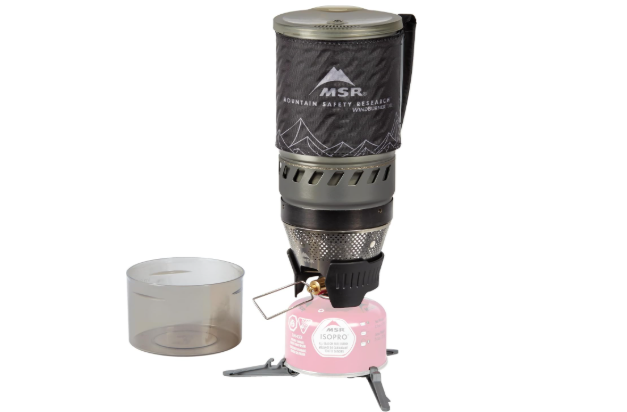
The WindBurner takes wind resistance to its logical extreme, enclosing the burner almost entirely and pairing it with a heat exchanger pot that locks directly onto the stove body, so crosswind simply cannot reach the flame the way it can with any open burner design. In genuinely gusty conditions it holds boil times close to its rated figures when open burner stoves slow down dramatically or fail to boil at all.
The trade off is a narrower cooking footprint tuned for boiling rather than simmering, and a bit more bulk than a minimalist open burner. For anyone cooking regularly in exposed, windy terrain like alpine ridgelines or open desert, that trade off is well worth it.
MSR WindBurner
- Weightaround 15 oz with 1L pot
- Fuel typeisobutane-propane canister
- Burner designfully enclosed
- Boil timeabout 100 seconds per liter in calm air
Key features
- Fully enclosed burner chamber
- Locking heat exchanger pot
- Available in multiple pot sizes
Pros
- Best wind resistance of any stove in this comparison
- Consistent boil times regardless of gusts
- Stable, locking pot reduces spill risk
Cons
- Not designed for precise simmering
- Bulkier than minimalist open burners
What we liked
- Strongest wind resistance here
- consistent boil times
- stable locking pot
What we did not
- Weak simmer control
- bulkier than minimalist stoves
For truly exposed, windy terrain where reliability matters most, the WindBurner is the stove built specifically for the job.
Check the current price3) Jetboil MiniMo (Best for simmering in wind)
The MiniMo takes Jetboil’s enclosed, wind resistant integrated system format but widens the burner and pot shape specifically to improve simmer control, addressing the biggest weakness of most wind resistant stoves. The result is a system that still blocks crosswind effectively while letting you actually cook a real meal rather than just boil water.
It runs a bit heavier than the narrower Flash or Zip models, a reasonable trade for the wider, more stable cooking surface and better low flame control. For campers who want wind resistance without giving up real cooking versatility, it is a smart middle ground.
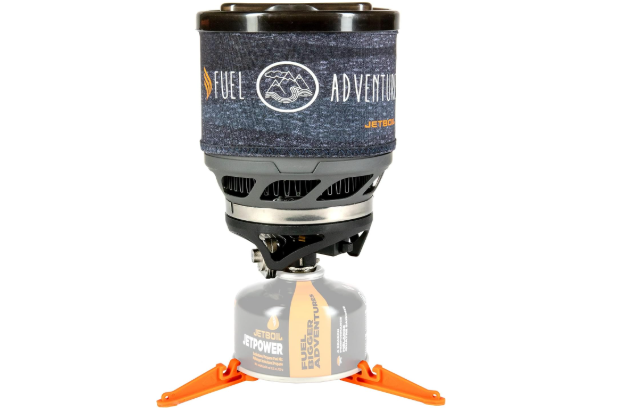
Jetboil MiniMo
- Weightaround 14.6 oz
- Fuel typeisobutane-propane canister
- Burner designenclosed
- Igniterpush button piezo
Key features
- Wider, shorter pot shape for better simmer control
- Enclosed burner chamber resists wind
- Push button piezo igniter
Pros
- Better simmer control than most enclosed systems
- Strong wind resistance maintained
- Stable, wide pot base
Cons
- Heavier than narrower integrated systems
- Still not as versatile as a true open burner with a separate pot
What we liked
- Genuine simmer control
- strong wind resistance
- stable wide base
What we did not
- Heavier than narrower systems
- less versatile than open burners
For windy trips where you still want to cook a proper meal, the MiniMo is one of the better compromises available.
Check the current price4) Primus Lite+ (Best compact enclosed system)
The Lite+ packs an enclosed burner chamber into a compact, lightweight integrated system, giving backpackers solid wind resistance without the bulk of larger systems like the WindBurner. Its regulator helps maintain more consistent output as the canister runs low or temperatures drop, a secondary benefit alongside its wind blocking design.
It trades some of that compactness for a narrower cooking surface, similar to other integrated systems, limiting it mostly to boiling rather than true cooking. For solo or duo trips into windy terrain where pack weight still matters, it strikes a reasonable balance.
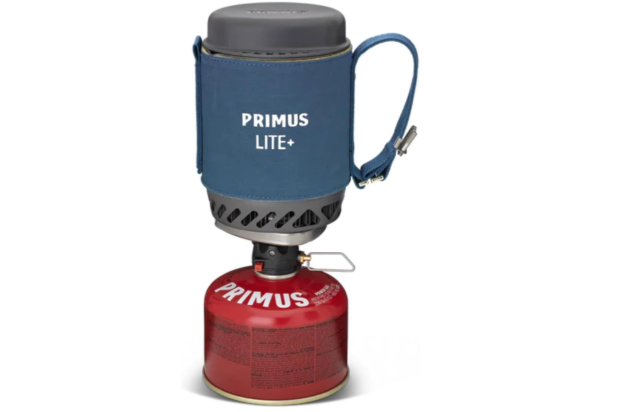
Primus Lite+
- Weightaround 14.8 oz
- Fuel typeisobutane-propane canister
- Burner designenclosed chamber
- Regulatorpressure regulated valve
Key features
- Enclosed burner chamber for wind resistance
- Pressure regulated valve for consistent output
- Compact, lightweight integrated design
Pros
- Solid wind resistance in a lighter package
- More consistent output as canister pressure drops
- Compact enough for solo or duo backpacking
Cons
- Narrower cooking surface limits versatility
- Less wind resistant than the fully enclosed WindBurner
What we liked
- Good wind resistance for the weight
- consistent output
- compact design
What we did not
- Limited cooking versatility
- not as wind resistant as larger systems
For backpackers who want wind resistance without carrying a bulkier system, the Lite+ is a sensible lightweight choice.
Check the current price5) Camp Chef Everest 2 Burner (Best for exposed campsite cooking)
The Everest 2 Burner brings wind resistance to full sized camp cooking with built in wind baffles surrounding each burner, addressing a problem that hits multi burner stoves just as hard as backpacking stoves, since an open flame on a tabletop stove is just as vulnerable to a steady breeze across a campsite. Its strong combined output also helps compensate for the heat that still escapes around the edges in gustier conditions.
It remains a larger, heavier stove meant for car camping and base camp use rather than backpacking, but for anyone cooking real meals at an exposed site, from a beach to an open plateau, the built in wind protection makes a genuine difference.
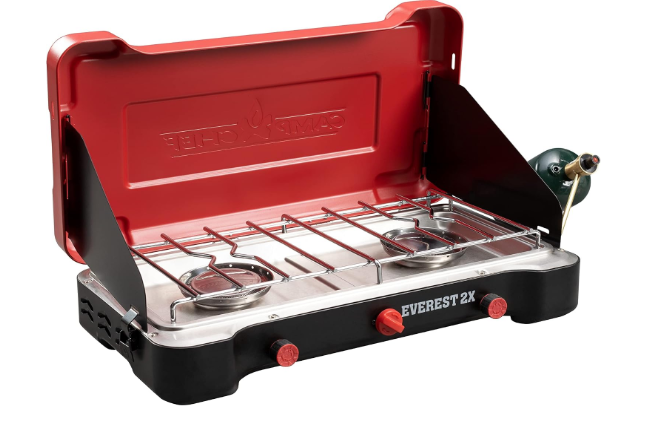
Camp Chef Everest 2 Burner
- BTU outputabout 20
- Burners2
- Fuel typepropane
- Wind protectionbuilt in baffles around each burner
Key features
- Built in wind baffles around each burner
- Strong combined BTU output
- Stable, wide cooking surface
Pros
- Genuine wind protection for full sized cooking
- Strong output compensates for heat loss in gusts
- Stable surface for two pots at once
Cons
- Too large and heavy for backpacking
- Still loses some efficiency in very strong sustained wind
What we liked
- Real wind protection at full size
- strong output
- stable for two pots
What we did not
- Not backpacking friendly
- some efficiency loss in severe wind
For car camping and base camp cooking at exposed sites, the Everest 2 Burner brings genuine wind resistance to full sized meals.
Check the current priceFrequently asked questions
Why does wind affect camp stoves so much?
Wind pushes the flame sideways and away from the bottom of the pot, carrying heat off before it transfers into the cookware, which both slows boiling and wastes fuel. A strong enough gust can also blow the flame out entirely on an unshielded burner.
Is a foil windscreen enough, or do I need a stove built for wind?
A basic windscreen helps with open burner stoves in mild to moderate wind, but in genuinely gusty conditions a stove with an enclosed or recessed burner design performs far more consistently. Combining a windscreen with a wind resistant stove design gives the best results.
Do wind resistant stoves sacrifice simmer control?
Many fully enclosed integrated systems are tuned for fast boiling and do sacrifice some simmer precision, but designs like the Jetboil MiniMo and open burners with concave heads like the Soto WindMaster manage to keep reasonable simmer control while still resisting wind well.
Does a multi burner family stove need wind protection too?
Yes, an exposed tabletop or standing height stove with open burners is just as vulnerable to steady wind as a backpacking stove, which is why models with built in baffles around each burner, like the Camp Chef Everest, perform noticeably better at breezy campsites.
Conclusion
For backpackers who refuse to compromise on cooking versatility, the Soto WindMaster delivers surprisingly strong wind resistance in an open burner format, while the MSR WindBurner remains the top choice when wind resistance alone is the priority. The Jetboil MiniMo and Primus Lite+ both offer solid middle ground options depending on whether simmer control or pack weight matters more.
For car camping and base camp cooking at exposed sites, the Camp Chef Everest 2 Burner brings real wind protection to full sized meals. For more on backpacking specific boil speed, see our best backpacking stove for boiling water fast roundup, and our best canister stove for cold weather guide covers a closely related challenge.
Choose the Soto WindMaster if you need real cooking flexibility in the wind, the MSR WindBurner for the strongest wind resistance available, and the Camp Chef Everest 2 Burner for exposed campsite cooking at full size.