Canister vs liquid fuel stove is the fundamental fork in the road for backpacking and expedition cooking, and the right choice depends heavily on the conditions you actually camp in rather than any universal notion of which is better. A canister stove screws directly onto a pre-pressurized can of isobutane-propane blend, lighting instantly with no priming and offering genuinely simple operation, while a liquid fuel stove burns white gas, kerosene, or other fuels from a refillable bottle pressurized by a hand pump, trading that simplicity for reliable performance in cold, at altitude, and in parts of the world where canister fuel is hard to find. Neither system wins outright, and the right pick comes down to where you travel, how cold your trips get, and how much you value convenience over raw reliability.
The short answer
Choose a canister stove if you camp in mild three-season conditions, want the simplest possible setup, and mostly stay somewhere canister fuel is easy to buy. Choose a liquid fuel stove if you face genuine cold, high altitude, or international travel where canister fuel may not be available, and you are willing to deal with priming and more maintenance in exchange for consistent performance. Most backpackers in temperate climates do fine with a canister stove, while mountaineers and expedition travelers increasingly lean toward liquid fuel out of necessity rather than preference.
Side by side
| Factor | Canister | Liquid Fuel |
|---|---|---|
| Setup time | Instant, screw on and light | Requires priming before each use |
| Cold weather performance | Weakens as canister cools | Maintains pressure via hand pump |
| Fuel availability | Limited to outdoor retailers | White gas, kerosene, auto fuel often available almost anywhere |
| Maintenance | Minimal, little to service | Regular jet and pump maintenance needed |
| Weight for short trips | Lighter for weekend trips | Heavier due to pump and fuel bottle |
Canister stoves explained
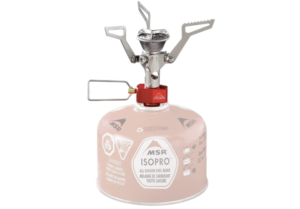
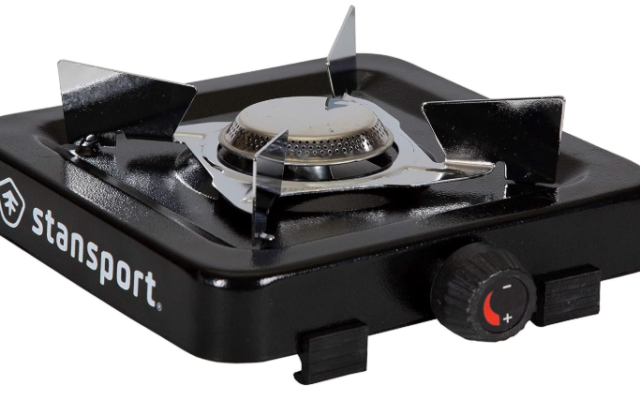
A canister stove threads directly onto a pressurized can of isobutane-propane blend, and the fuel’s own vapor pressure pushes gas through the jet without any pumping or priming required, which is why canister stoves light almost instantly and why they dominate casual and three-season backpacking. The blend of isobutane and propane is chosen specifically because propane vaporizes well in cold while isobutane burns cleanly and efficiently in milder conditions, giving a reasonable performance range across typical trip conditions without any user intervention.
The weakness of this design is exactly what makes it simple: because the stove relies entirely on the fuel’s own vapor pressure, that pressure drops as the canister cools, either from ambient temperature or from the fuel vaporizing inside the can during use, which can visibly weaken the flame partway through a cold morning boil. Canister fuel is also only sold at outdoor retailers in a handful of standard sizes, which becomes a real problem on international trips or in remote regions where that specific fuel type is not stocked locally.
Liquid fuel stoves explained
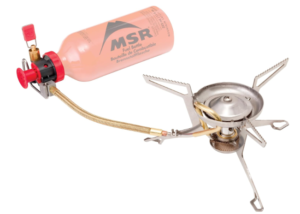
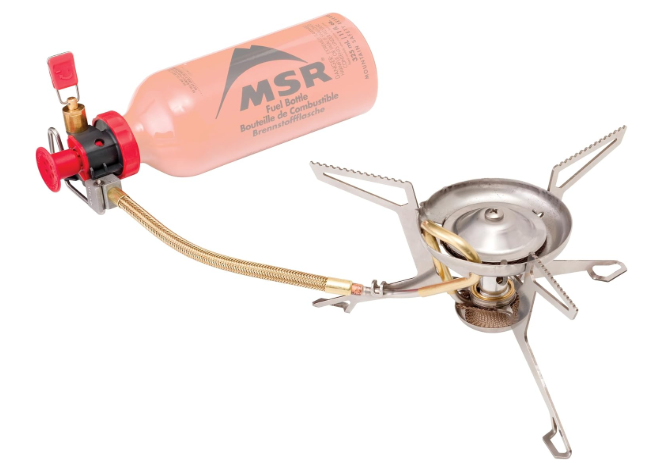
A liquid fuel stove burns white gas, kerosene, or in some cases unleaded automotive fuel from a refillable bottle, with a hand pump pressurizing the bottle so the fuel is forced through a fuel line to the burner regardless of outside temperature. Because the pressure comes from the pump rather than the fuel’s own vapor pressure, a liquid fuel stove maintains consistent output in genuinely cold conditions and at high altitude far better than a canister stove, which is why these stoves remain standard equipment for mountaineering expeditions and winter trips.
The trade-off is a more involved startup process: liquid fuel needs to be primed, meaning a small amount is released and burned to heat the fuel line before the stove runs cleanly on vaporized fuel, a process that takes longer and requires more practice than simply lighting a canister stove. Liquid fuel stoves also need more regular maintenance, including periodically cleaning the jet with the fine wire built into many models and servicing the pump’s leather or synthetic seal, though this is also what makes them genuinely field repairable when something does go wrong far from a store.
Where each one wins
Simplicity
Canister wins clearly, with instant lighting and no priming, pumping, or maintenance required for most trips, making it the far easier system for a beginner or anyone who just wants to boil water without fuss.
Cold weather and altitude performance
Liquid fuel wins decisively here, since the hand-pumped pressure system does not depend on ambient temperature the way canister vapor pressure does, delivering consistent output in conditions that visibly weaken a canister stove’s flame.
Fuel availability while traveling
Liquid fuel wins for international and remote travel, since white gas, kerosene, and in some cases auto fuel can be found in far more places worldwide than specific canister sizes sold mainly through outdoor retailers.
Weight for a short, mild trip
Canister wins for typical weekend backpacking, since the stove itself is lighter and there is no pump or fuel bottle to carry, a real advantage when the trip is short enough that cold-weather pressure drop is unlikely to matter.
Field repairability
Liquid fuel wins here too, somewhat counterintuitively, since the more involved design comes with a cleaning needle and serviceable pump that a camper can fix with basic tools, while a malfunctioning canister stove usually just needs to be replaced.
Trip planning and fuel estimation
Canister wins slightly for planning simplicity, since a canister is a sealed, known quantity and many stoves ship with a rough burn-time rating per canister size, making it easy to calculate how many canisters a trip needs. Liquid fuel requires estimating ounces of fuel per day of cooking and measuring it into a bottle before the trip, a bit more effort but one that scales better for long expeditions, since a single large fuel bottle can be refilled from bulk containers rather than requiring a fresh sealed canister for every few days of use.
Which should you buy
If most of your trips are mild, three-season backpacking in places where outdoor retailers are easy to reach, a canister stove’s simplicity and lighter weight make it the sensible default. If you regularly face genuine cold, high altitude, or international travel where canister fuel availability is uncertain, a liquid fuel stove’s consistent performance and field serviceability are worth the extra setup time and maintenance. For a closer look at how fuel type interacts with integrated systems, see our integrated canister system vs standalone burner comparison.
Frequently Asked Questions
Why does a canister stove lose power as it gets colder?
The stove depends entirely on the fuel’s own vapor pressure to push gas through the jet, and that pressure drops as the canister cools, either from the surrounding air temperature or from the fuel vaporizing inside the can during use, which is why a long boil on a cold morning often ends with a visibly weaker flame than it started with.
Is priming a liquid fuel stove difficult to learn?
It takes a few attempts to get comfortable with, but the process is straightforward once practiced: a small amount of fuel is released and burned to preheat the fuel line, after which the stove runs cleanly on vaporized fuel, and most backpackers find it becomes routine within a trip or two.
Can I bring a canister stove on an international flight?
Fuel canisters cannot be carried on a plane, whether checked or carried on, so travelers need to purchase canisters at their destination, which is a major reason liquid fuel stoves remain popular for international trips where a specific canister size may not be sold locally.
Which type of stove is more fuel efficient overall?
Canister stoves are generally more fuel efficient for typical boiling tasks in mild conditions, since the blended fuel burns cleanly without the priming fuel a liquid fuel stove uses on startup, though liquid fuel bottles can be refilled from bulk fuel, which often works out cheaper per ounce burned over a long expedition. Altitude affects both systems in different ways: thinner air at elevation reduces combustion efficiency slightly for either fuel type, but the effect is more pronounced on a canister stove, where reduced atmospheric pressure compounds the cold-weather pressure drop the canister already suffers from, while a liquid fuel stove’s pump-driven pressure is largely unaffected by elevation itself.
Buy a canister stove for simple, mild-weather backpacking, and a liquid fuel stove if you face cold, altitude, or international travel where canister fuel is uncertain.