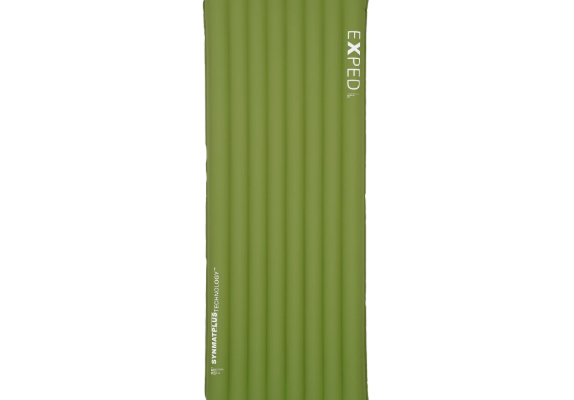
The best sleeping pad for a hammock has to solve a problem that ground camping pads were never designed for, since a hammock compresses insulation underneath a sleeper’s body weight just like a ground pad does, but the hammock fabric itself wraps around the pad rather than lying flat beneath it. That difference means pad shape, width, and how well it stays in place inside the hammock matter as much as R-value and thickness.
Underquilts exist specifically to solve hammock insulation more elegantly, but a well chosen sleeping pad remains the more affordable and versatile option for anyone who also ground camps occasionally, since a good pad works in both setups while a dedicated underquilt only works in a hammock. Our sleeping pads buying guide covers the wider category for anyone deciding between the two approaches.
The underquilt versus pad decision comes down to how insulation loses effectiveness under compression. A sleeping pad inside a hammock still relies on the sleeper’s body weight to press it against the hammock fabric, which means the insulation directly beneath the heaviest parts of the body, the hips and shoulders, compresses the same way it would on the ground, thinning out exactly where warmth matters most. An underquilt sidesteps that problem entirely by hanging on the outside of the hammock body, suspended from the same ends as the hammock itself, so its loft is never compressed by body weight at all. Some hammocks use a trapezoidal pad shape specifically designed to taper toward the foot end, matching the natural diagonal lay of an asymmetrical hammock more closely than a rectangular pad, which reduces the amount of pad material wasted outside the body’s actual footprint and helps keep a rectangular pad from bunching or twisting as the sleeper shifts position.
Comparison
| Name | Key features |
|---|---|
| Therm-a-Rest NeoAir XLite NXT | Light, narrow enough to sit well in a hammock |
| NEMO Tensor All-Season | High R-value, stable in a hammock |
| Klymit Static V2 | Budget friendly, decent hammock fit |
| Therm-a-Rest Z Lite Sol | Foam pad, cannot shift or deflate |
| Sea to Summit Ether Light XT | Thick, stable, premium option |
Each pad below handles the specific demands of hammock camping differently, so weigh width, R-value, and how easily the pad shifts inside the hammock before choosing.
1) Therm-a-Rest NeoAir XLite NXT (Best overall for hammocks)
The Therm-a-Rest NeoAir XLite NXT works especially well in a hammock because its width sits close to the sweet spot for most hammock interiors, wide enough to provide full body coverage without excess material bunching against the hammock fabric at the edges. Its low weight is also a genuine benefit for hammock campers, who are often already carrying a tarp, suspension system, and hammock body that add up quickly.
Its solid three season R-value covers most hammock camping conditions, and hammock sleepers should note that R-value ratings, tested on a flat surface, translate slightly differently once a pad is compressed by hammock fabric wrapping around it, so pairing it with a wind resistant tarp setup helps it perform closer to its rated number.
Owners who want to minimize shifting inside the hammock often pair this pad with an inexpensive pad sleeve or a few strips of hook and loop fastener attached to the hammock fabric itself, which keeps the pad roughly centered without needing to buy a dedicated hammock specific pad. It is a cheap workaround worth trying before spending more on a hammock branded pad, since the NeoAir XLite NXT’s width already does most of the work of staying in place on its own.
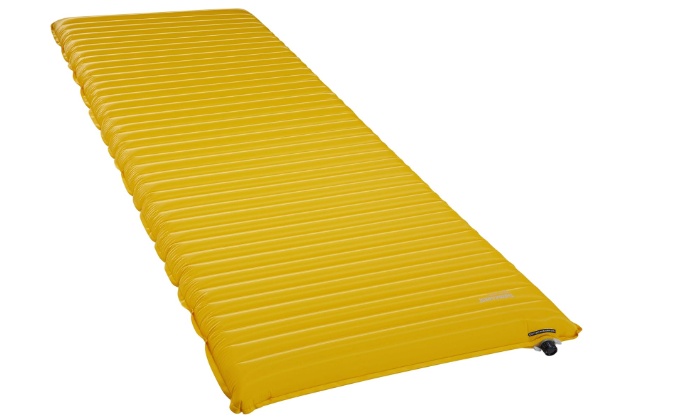
Therm-a-Rest NeoAir XLite NXT
- R-value4.5
- Packed size9.5 x 4.3 in
- Weight13 oz
- Thickness3.2 in
Key features
- Width suited to most hammock interiors
- Very light weight
- Solid three season R-value
Pros
- Fits hammock dimensions well
- Very light for the warmth provided
- Small packed size
Cons
- Can still shift inside the hammock without a strap system
- Premium price
What we liked
- Fits hammock dimensions well
- very light
- small packed size
What we did not
- Can shift without a strap system
- premium price
Hammock campers watching total pack weight should look here first.
Check the current price2) NEMO Tensor All-Season (Best for cold weather hammocking)
The NEMO Tensor All-Season brings a high R-value into a hammock setup, useful since hammock sleepers lose heat both above and below their body in a way ground sleepers do not, with cold air able to wrap around the hammock body rather than being blocked by solid ground on one side. Its spiraled baffle construction also helps it stay somewhat more stable inside a hammock’s curved shape than a basic tube baffle pad.
Combined with a wind blocking tarp and appropriate insulation on top, this pad extends hammock camping meaningfully further into cold shoulder season than a standard summer pad would allow.

NEMO Tensor All-Season
- R-value5.4
- Packed size9 x 4.5 in
- Weight1 lb 13 oz
- Thickness3 in
Key features
- High R-value for cold hammock nights
- Spiraled baffle construction
- Backpackable weight
Pros
- Strong warmth for cold hammock camping
- Holds shape reasonably well inside a hammock
- Light for its warmth class
Cons
- Premium price
- Still needs a wind blocking tarp for full effect
What we liked
- Strong cold weather warmth
- holds shape well
- light for warmth class
What we did not
- Premium price
- needs a tarp for full effect
Cold weather hammock campers should prioritize this pad’s R-value over a lighter, less insulated option.
Check the current price3) Klymit Static V2 (Best value)
The Klymit Static V2 remains a popular budget choice among hammock campers, since its lower price makes it an easy first pad to try in a hammock setup without a large investment, and its width fits reasonably well inside most hammock bodies. Its Body Mapping baffle design also provides decent support despite the low cost.
Its low R-value limits it to warm weather hammocking, which for many summer hammock campers is exactly the range they need, making the low price a genuinely practical trade rather than a compromise.

Klymit Static V2
- R-value1.3
- Packed size8 x 3 in
- Weight1 lb 6 oz
- Thickness2.5 in
Key features
- Body Mapping baffle pattern
- Affordable price
- Compact packed size
Pros
- Inexpensive entry point for hammock camping
- Reasonable hammock fit
- Packs down small
Cons
- Low R-value, summer use only
- Can shift more than heavier pads
What we liked
- Inexpensive
- reasonable hammock fit
- packs down small
What we did not
- Low R-value
- can shift more
Summer hammock campers on a budget should start their search here.
Check the current price4) Therm-a-Rest Z Lite Sol (Best for reliability)
The Therm-a-Rest Z Lite Sol offers something no air pad can inside a hammock, complete immunity to a slow leak or puncture that could otherwise leave a hammock camper with zero insulation between their body and cold air overnight. Its closed cell foam construction cannot fail the way an air valve can, which matters more in a hammock where insulation loss is felt from both sides of the body rather than just from below.
Its thin profile is a real trade off, and many hammock campers use it more as a supplemental base layer combined with a thicker air pad on top rather than as a standalone hammock pad, since its low R-value alone is limiting.

Therm-a-Rest Z Lite Sol
- R-value2.6
- Packed size20 x 5.5 x 5.5 in
- Weight14 oz
- Thickness0.75 in
Key features
- Closed cell foam, cannot puncture
- Works well as a supplemental base layer
- Light weight
Pros
- Cannot fail or deflate
- Good insurance layer against cold
- Very light
Cons
- Thin and low R-value alone
- Less comfortable than an air pad by itself
What we liked
- Cannot fail
- good insurance against cold
- very light
What we did not
- Thin alone
- less comfortable than an air pad
Hammock campers who want a fail proof backup layer should keep one of these on hand.
Check the current price5) Sea to Summit Ether Light XT (Best for maximum comfort)
The Sea to Summit Ether Light XT brings its four inch thickness and I-beam baffle construction into a hammock setup, delivering noticeably more cushioning than a typical hammock pad while its structured internal baffles help it resist collapsing unevenly against the curved hammock fabric.
Its premium price and slightly larger packed size are the trade offs, but for hammock campers who prioritize comfort as much as ground sleepers do, it remains one of the more comfortable options that still fits reasonably well inside a hammock body.

Sea to Summit Ether Light XT
- R-value3.8
- Packed size9 x 5.3 in
- Weight1 lb 9 oz
- Thickness4 in
Key features
- Four inch thickness
- I-beam baffle construction
- Solid three season warmth
Pros
- Exceptional comfort for a hammock pad
- Resists uneven collapse well
- Quiet construction
Cons
- Premium price
- Slightly bulkier than lighter hammock pads
What we liked
- Exceptional comfort
- resists uneven collapse
- quiet
What we did not
- Premium price
- slightly bulkier
Comfort focused hammock campers willing to pay for it should look here.
Check the current priceFrequently asked questions
Can a regular sleeping pad be used in a hammock?
Yes, most standard sleeping pads work fine in a hammock, though width matters since a pad too narrow will leave cold gaps along the sides where the hammock fabric compresses without insulation.
Is an underquilt better than a sleeping pad for hammock camping?
An underquilt generally insulates more efficiently since it wraps around the hammock’s exterior rather than compressing under body weight, but it only works for hammock camping, while a good sleeping pad also works for ground camping trips.
Do sleeping pads shift around inside a hammock?
They can, especially on a curved or actively moving hammock, so many hammock campers use pad straps or a specific hammock sleeve accessory to keep the pad centered through the night.
What R-value do I need for hammock camping?
The same general guidance as ground camping applies, roughly 3 to 5 for standard three season conditions and higher for cold weather, though hammock sleepers often feel cold faster since air can circulate on both sides of the hammock body.
Conclusion
For most hammock campers, the Therm-a-Rest NeoAir XLite NXT hits the best balance of width, weight, and warmth, while anyone hammocking into cold shoulder season should prioritize the NEMO Tensor All-Season’s higher R-value instead.
Budget conscious hammock campers should start with the Klymit Static V2 for warm weather trips, and anyone wanting a fail proof backup layer should keep a Therm-a-Rest Z Lite Sol on hand. For the full range of options, see our sleeping pads buying guide, and our guide to what R-value you need for winter camping covers cold weather hammocking in more depth.
Buy the Therm-a-Rest NeoAir XLite NXT for the best all around hammock fit, the NEMO Tensor All-Season for cold weather trips, and the Klymit Static V2 if budget is the priority.