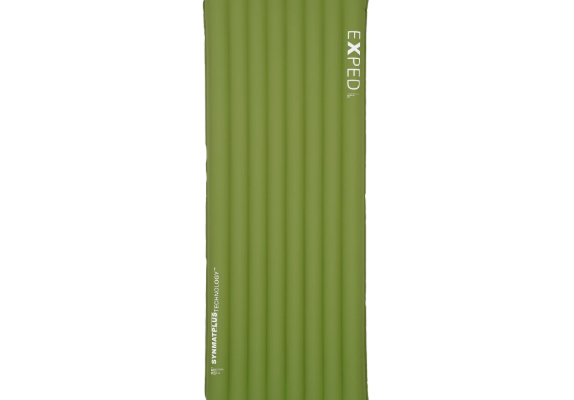
The best sleeping pad under $50 asks you to accept more compromise than a sub $100 pad does, usually in the form of a lower R-value, a simpler chamber construction, or foam instead of air, but it still delivers a genuinely usable night’s sleep for anyone testing whether camping is a hobby worth investing further in before spending more. This tier is less about finding a pad that competes with premium options and more about finding the smartest possible trade offs at the lowest reasonable price.
Foam pads dominate the very bottom of this price range for a simple reason, a closed cell foam slab is cheaper to manufacture than any air chamber with a valve and seams, which is why several of the picks below skip air construction entirely. That is not automatically a downgrade, since a foam pad under $50 still delivers the same total puncture immunity as a $150 foam pad, just with a thinner or less refined surface pattern. Even among the air pads that do fit under this price ceiling, expect a simpler baffle geometry and a lower R-value than a pad costing twice as much, trade offs that matter less for a warm weather weekend than they would for a shoulder season trip. Our sleeping pads buying guide covers the full price range if $50 turns out to be more restrictive than you need.
Comparison
| Name | Key features |
|---|---|
| Klymit Static V2 | Body mapped air cells, best overall at this price |
| Therm-a-Rest RidgeRest SOLite | Foam, reliable, no valve to fail |
| Coleman Self-Inflating Camp Pad | Simple self inflating, car camping oriented |
| Klymit Hammock V | Budget hammock specific pad |
| Gossamer Gear Thinlight Pad | Ultralight supplemental foam sheet |
Each pad below fits comfortably under a $50 budget while still solving a real camping need, so weigh whether your trips call for warm weather backpacking, car camping simplicity, hammock use, or just a lightweight supplemental layer.
1) Klymit Static V2 (Best overall)
The Klymit Static V2 stays firmly within a $50 budget while still delivering the body mapped chamber construction, individual air cells shaped around where a sleeper’s weight actually falls, that makes it consistently one of the best value pads in the entire backpacking category regardless of price tier. Raised side rails add a genuinely useful touch, keeping a sleeper centered on the pad through the night.
Its low R-value limits it firmly to warm weather use, which is a fair trade at this price point, and for a first backpacking pad or an occasional summer camper who does not need cold weather performance, it remains difficult to beat under $50.
Klymit Static V2
- R-value1.3
- Packed size8 x 3 in
- Weight1 lb 6 oz
- Thickness2.5 in
Key features
- Body mapped chamber construction
- Raised side rails
- Comfortably under $50
Pros
- Excellent value for a supportive air pad
- Side rails help with centering
- Light and packable
Cons
- Low R-value, warm weather only
- Narrower standard width than pricier pads
What we liked
- Excellent value
- helpful side rails
- light and packable
What we did not
- Low R-value
- narrower standard width
For a first backpacking pad or an occasional summer camper on a tight budget, this is the one to start with, and it remains capable enough that many owners never feel a real need to upgrade for warm weather trips.
Check the current price2) Therm-a-Rest RidgeRest SOLite (Best for reliability)
The Therm-a-Rest RidgeRest SOLite strips the closed cell foam pad concept down to its essentials, a ridged accordion fold foam pad without the reflective coating of pricier foam pads, keeping the price solidly under $50 while still delivering the same fundamental reliability the whole foam category is known for, nothing to puncture and nothing to fail regardless of terrain or how many seasons it sees use.
It is an easy choice as a first backpacking pad, a guest pad for visiting friends, or a supplemental layer under a thinner air pad for extra warmth and puncture protection, all at a price that makes the purchase an easy decision rather than a considered investment.
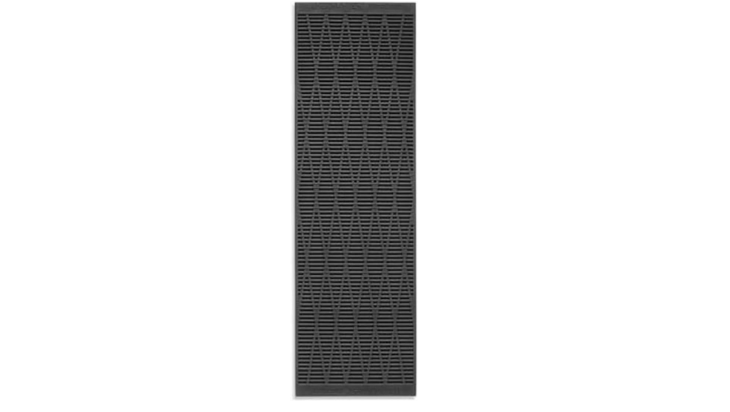
Therm-a-Rest RidgeRest SOLite
- R-value2.0
- Packed size20 x 5.5 x 5.25 in
- Weight14 oz
- Thickness0.75 in
Key features
- Raised ridge surface pattern
- Accordion fold, no inflation needed
- Very affordable
Pros
- Cannot puncture or fail
- No setup time required
- Easy, low risk first purchase
Cons
- Thin compared to any air pad
- No reflective coating, slightly less warmth than pricier foam options
What we liked
- Cannot fail
- no setup time
- easy low risk purchase
What we did not
- Thin compared to air pads
- no reflective coating
Anyone who wants a completely dependable pad without spending much should start here.
Check the current price3) Coleman Self-Inflating Camp Pad (Best for car camping)
The Coleman Self-Inflating Camp Pad targets car campers rather than backpackers specifically, using a basic open cell foam core and a simple valve to partially self inflate before a few finishing breaths bring it to full firmness, a straightforward design that keeps the price well under $50 since weight and packed size are not priorities when the pad travels by vehicle rather than a pack.
It will not compete with a premium self inflating pad on thickness or long term durability, but for an occasional car camper who just wants something more comfortable than a bare sleeping bag on a tent floor without spending much, it does the basic job reliably.
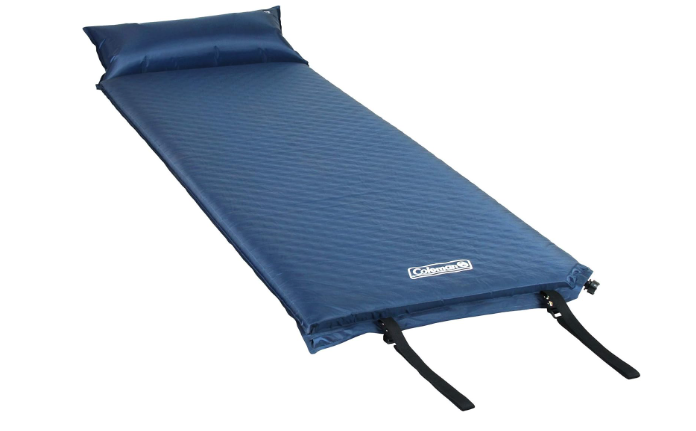
Coleman Self-Inflating Camp Pad
- R-value2.0
- Packed size5 x 24 in
- Weight3 lb
- Thickness1.5 in
Key features
- Self inflating open cell foam core
- Simple valve design
- Very affordable
Pros
- Genuinely low cost
- Easy self inflating setup
- Adequate comfort for occasional car camping
Cons
- Too heavy and bulky for backpacking
- Less durable than premium self inflating pads
What we liked
- Low cost
- easy setup
- adequate for occasional trips
What we did not
- Too heavy for backpacking
- less durable long term
Occasional car campers who just want basic comfort without spending much should consider this pad.
Check the current price4) Klymit Hammock V (Best for hammock camping)
The Klymit Hammock V brings a body mapped chamber design reshaped specifically for hammock use to a genuinely affordable price, with a narrower, contoured profile built to stay put against curved hammock fabric rather than sliding around the way a flat ground pad does when improvised into a hammock setup.
Because hammock camping exposes a sleeper’s underside to convective cooling from moving air in a way ground camping does not, having a pad shaped correctly for that specific use case matters, and this remains one of the few purpose built hammock pads available under $50.

Klymit Hammock V
- R-value1.9
- Packed size8 x 4 in
- Weight1 lb 3 oz
- Thickness2 in
Key features
- Contoured shape built for hammock use
- Body mapped chamber construction
- Compatible with most hammock strap systems
Pros
- Purpose built shape rather than an adapted ground pad
- Addresses hammock specific underside cooling
- Genuinely affordable for a hammock pad
Cons
- Not a good fit for ground sleeping
- Moderate R-value limits it to three season hammock use
What we liked
- Purpose built hammock shape
- addresses underside cooling
- affordable
What we did not
- Poor fit for ground sleeping
- moderate R-value
Hammock campers on a tight budget should look here before improvising with a ground pad.
Check the current price5) Gossamer Gear Thinlight Pad (Best ultralight supplemental option)
The Gossamer Gear Thinlight Pad skips the ridged or egg crate surface entirely for a completely flat sheet of foam, sold at a price well under $50, that exists purely to add a supplemental R-value boost and puncture protection under an air pad at the lowest possible added weight. It is not meant as a standalone pad for most campers.
For ultralight and fastpacking hikers chasing the lowest total pack weight while still wanting some insurance against a leak, or anyone wanting a cheap way to boost an aging air pad’s warmth, this remains one of the most useful few dollars spent in the entire category.

Gossamer Gear Thinlight Pad
- R-value1.0
- Packed size20 x 5 x 3 in
- Weight2.5 oz
- Thickness0.125 in
Key features
- Completely flat foam sheet, no ridge pattern
- Exceptionally light supplemental layer
- Very low price
Pros
- Lightest option on this list by a wide margin
- Adds real puncture insurance under an air pad
- Useful double duty as a pack stiffener
Cons
- Too thin to use as a standalone pad for most sleepers
- Low R-value on its own
What we liked
- Lightest option here
- real puncture insurance
- useful as a pack stiffener
What we did not
- Too thin alone for most sleepers
- low standalone R-value
Ultralight hikers who already own an air pad and want cheap supplemental warmth should consider this instead of a full sized pad.
Check the current priceFrequently asked questions
Is a sleeping pad under $50 actually usable for real camping?
Yes, for mild three season conditions, though expect a lower R-value, a simpler chamber or foam construction, and less fabric refinement than a pricier pad. For an occasional camper or someone testing the hobby, that trade off is usually a sensible one, and it is far better than skipping a pad altogether.
Why are foam pads so much cheaper than air pads at this price point?
A closed cell foam slab is simpler and cheaper to manufacture than an air chamber with a valve and sealed seams, which is why foam pads dominate the very bottom of the price range while still offering the same puncture proof reliability as pricier foam options.
What is the biggest thing I give up buying under $50 instead of under $100?
Mainly R-value and fabric quality, since a $50 pad rarely includes the insulation layers or softer laminates found on pads closer to the $100 mark, which matters most if you plan to camp in cooler shoulder season conditions rather than warm summer weather. A foam pad under $50 closes much of that gap on reliability, if not on outright warmth.
Should I buy a cheap pad now and upgrade later?
For many first time campers, yes, since a budget pad lets you confirm how often you will actually use the gear before investing in a premium option, and several of the picks here still make useful backup or supplemental pads even after an upgrade, so the money spent now is rarely wasted even if you later move up to a pricier pad.
Conclusion
For most first time backpackers, the Klymit Static V2 remains the clearest pick under $50, delivering genuinely supportive comfort at a price that makes the purchase an easy decision. Anyone who wants total reliability without spending more should consider the Therm-a-Rest RidgeRest SOLite instead, since foam simply cannot fail the way an air pad can, and the modest gap in comfort is a fair trade for that peace of mind.
Car campers on a tight budget should look at the Coleman Self-Inflating Camp Pad, hammock campers should consider the purpose built Klymit Hammock V, and ultralight hikers who already own an air pad should weigh the Gossamer Gear Thinlight Pad as a cheap supplemental layer rather than buying a full sized second pad. For a slightly larger budget, see our best sleeping pads under $100 roundup, and our sleeping pads buying guide covers the full price range.
Buy the Klymit Static V2 for the best overall value under $50, the Therm-a-Rest RidgeRest SOLite if reliability matters more than comfort, and the Coleman Self-Inflating Camp Pad if you car camp and just want basic comfort.