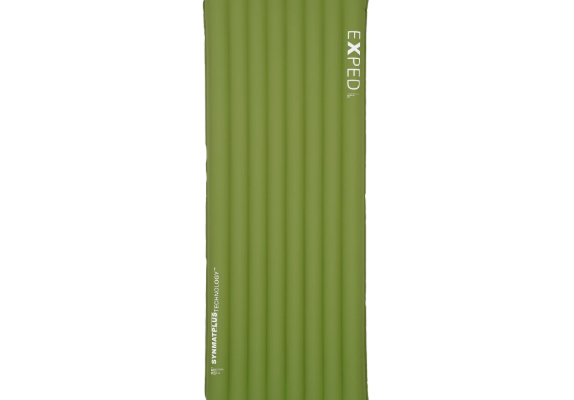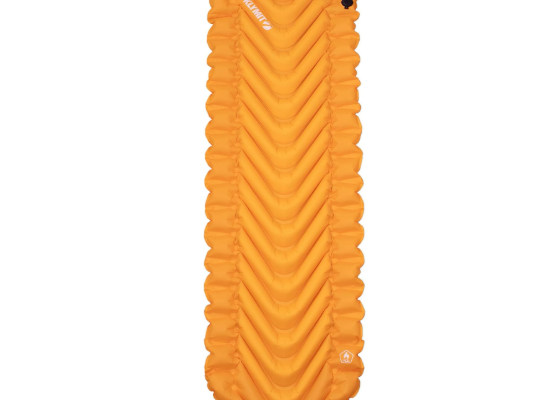
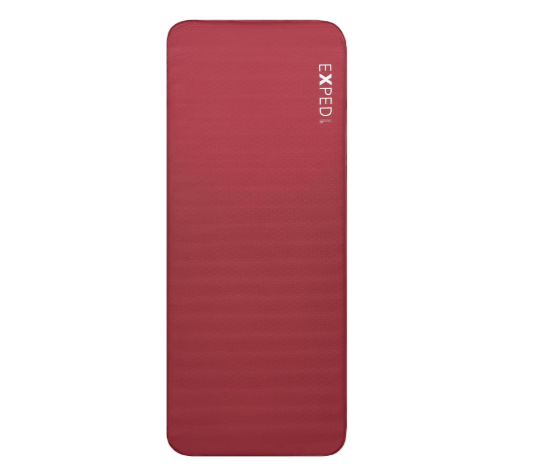
Choosing the best sleeping pads for camping decides more about how well you sleep outdoors than almost any other single piece of gear, since even the warmest sleeping bag cannot stop body heat from escaping into cold ground without insulation underneath it, and even the most exhausted hiker sleeps poorly on a surface that leaves hips and shoulders pressing against the dirt. Picking the right one comes down to balancing four things that pull against each other, warmth, comfort, weight, and construction type, and no single pad maximizes all four at once.
This guide walks through how to think through that balance, then routes you to a specific roundup for your actual situation, whether that means carrying a pad for months on a thru-hike, keeping a restless kid warm on a family trip, sharing a pad with a partner, or finding something dependable that will not break the bank.
The short answer
For most three season camping, look for an R-value between 3 and 5, a thickness of at least 2.5 inches if you sleep on your side, and a construction that matches how you travel, air for backpacking where packed size matters, self inflating or foam for car camping or maximum reliability. Backpackers chasing low weight should prioritize a pad under 1.5 pounds with a reflective barrier or synthetic insulation, while car campers can prioritize thickness and stability without worrying much about weight at all. If in doubt, a mid weight insulated air pad in the 3.5 to 4.5 R-value range covers the widest range of conditions without forcing you to own a second pad for cooler nights.
The four things that actually decide a sleeping pad purchase
Every sleeping pad decision comes down to weighing these four factors against how and where you actually camp, since improving one nearly always costs you in another.
Warmth and R-value
R-value measures a pad’s resistance to heat flow and is tested under the standardized ASTM F3340 protocol, which lets you compare a number from one brand directly against a number from a competing brand. A pad typically needs an R-value of at least 2 for mild summer conditions, 3 to 5 for standard three season use, and 6 or higher for genuine winter camping. Pads reach these numbers through different mechanisms, a reflective metalized barrier that bounces radiant body heat back upward, a layer of synthetic insulation packed inside the air chambers, or a thick slab of closed cell or open cell foam that insulates through its own trapped air pockets. R-values stack additively when pads are layered, which is why many cold weather campers place a foam pad underneath an insulated air pad rather than buying one dedicated winter pad.
Thickness and comfort
Thickness mostly decides how well a pad prevents bottoming out, the term for a hip or shoulder compressing the pad fully and touching the ground underneath, which matters enormously for side sleepers who concentrate body weight onto two small pressure points rather than distributing it evenly the way a back sleeper does. Baffle construction matters just as much as raw thickness, since I-beam baffles, small internal fabric walls inside each air chamber, and spiraled or body mapped chamber patterns all resist collapse in ways a simple straight tube baffle cannot match at the same thickness.
Weight and packed size
This is where backpacking and car camping priorities diverge completely. A backpacking pad needs to compress small enough to fit inside or strap to a pack without weighing down every mile of trail, which is why ultralight pads rely on thin, high denier fabrics and efficient reflective insulation rather than bulk. A car camping pad has no such constraint, so it can prioritize maximum thickness and a thicker, more durable fabric without any weight penalty that matters, since the pad travels by vehicle rather than a human back.
Construction type
Air pads offer the best warmth to weight and packed size ratio but carry real puncture risk and need active inflation every night. Self inflating pads combine an open cell foam core with an air valve, opening the valve lets the foam expand and draw in air on its own before a few finishing breaths bring it to full firmness, trading some weight for a more forgiving design. Closed cell foam pads carry no puncture risk whatsoever and need no setup time at all, at the cost of a thinner, fixed sleeping surface. None of the three is universally correct, and many experienced campers own more than one type for different trips.
Find the right pad for your situation
Rather than one universal recommendation, here is where to look based on what actually matters for your trips.
- Backpacking and thru-hiking: start with our best ultralight sleeping pads for thru-hiking roundup, and see the Therm-a-Rest NeoAir XLite NXT review and NEMO Tensor All-Season review for two benchmark pads.
- Choosing foam over air, or the reverse: our best foam sleeping pads roundup covers the puncture proof end of the category, while inflatable vs foam sleeping pad and self inflating vs manual inflate pad walk through the trade offs, and the Therm-a-Rest Z Lite Sol review looks at the category’s most trusted foam pad.
- Sleeping on your side, managing a bad back, or wanting a quieter night: see our best sleeping pads for side sleepers, best sleeping pads for a bad back, and best quiet sleeping pads roundups.
- Taller than average, camping with a partner, or bringing the kids: our best sleeping pads for a tall person, best double sleeping pads for couples, best sleeping pads for car camping couples, and best sleeping pads for kids roundups cover each situation.
- Sleeping in a hammock, or heading into cold weather: see our best sleeping pads for a hammock and best insulated sleeping pads for winter camping roundups, and our what R-value you need for winter camping guide.
- Car camping, or shopping on a budget: our best self inflating sleeping pads for car camping roundup prioritizes comfort over weight, while best sleeping pads under $100 and best sleeping pads under $50 cover genuinely usable pads at tighter price tiers.
- Shopping by brand: see our roundups on Therm-a-Rest, Exped, Sea to Summit, NEMO, Big Agnes, and Klymit sleeping pads, and our Therm-a-Rest vs NEMO and Therm-a-Rest vs Sea to Summit comparisons if you are torn between two brands.
- Individual reviews and comparisons: see the Klymit Static V2 review, Exped MegaMat 10 review, and Sea to Summit Ether Light XT review, plus our air mattress vs sleeping pad and cot vs sleeping pad in a tent comparisons.
- Field care and technique: our how to patch a sleeping pad in the field and how to stop sliding off a sleeping pad guides cover two of the most common real world pad problems.
Understanding sleeping pad specs
- R-value. A standardized measure of resistance to heat flow, tested under ASTM F3340. Higher means warmer, and values stack additively when pads are layered.
- Baffle construction. The internal chamber shape of an air pad. Simple straight tubes are the most basic and least stable design, while I-beam, spiraled, and body mapped patterns add structural support that resists collapse and rolling.
- Denier. A measure of individual fabric thread thickness. Higher denier fabric is tougher and more puncture resistant but also heavier, which is why backpacking pads use lighter denier than car camping pads.
- Closed cell vs open cell foam. Closed cell foam has sealed air pockets that cannot compress flat, used in thin, firm, puncture proof pads. Open cell foam has interconnected pockets that compress and can self inflate, used in thicker self inflating pads.
- Packed size. How small a pad compresses for carry. Air pads win here by a wide margin, while foam pads fold into a bulkier shape that usually straps outside a pack rather than compressing down.
- Bottoming out. The point where a compressed pad’s cushioning is fully used up and body weight presses through to the ground underneath, most common at the hip and shoulder for side sleepers.
Common mistakes when buying a sleeping pad
- Choosing R-value based on the warmest trip you take, not the coldest. A pad rated for your average trip will leave you cold the one weekend temperatures drop unexpectedly. Buy for your coldest realistic night, not your typical one.
- Ignoring baffle construction and focusing only on thickness. A thick pad with a basic tube baffle can still bottom out under concentrated hip pressure, while a thinner pad with I-beam or body mapped baffles often provides more consistent support.
- Buying a backpacking weight pad for car camping, or the reverse. An ultralight pad on a car camping trip sacrifices comfort for a weight savings that is irrelevant when the pad rides in a trunk, while a thick self inflating pad on a backpacking trip adds unnecessary weight to every mile.
- Skipping a repair kit for an air pad. A small patch kit weighs almost nothing and can save a trip if a puncture happens far from a gear shop, yet it remains one of the most commonly forgotten items in a backpacking kit.
Frequently asked questions
What R-value do I need for a sleeping pad?
Most three season camping is well covered by an R-value between 3 and 5. Mild summer only trips can get by with 1 to 2, while genuine winter camping calls for 6 or higher, often achieved by stacking a foam pad under an insulated air pad.
Is an air pad or a foam pad better?
Air pads offer more comfort, adjustable firmness, and a much smaller packed size, while foam pads offer total puncture immunity, instant setup, and a lower price. Many experienced campers own both for different situations.
How thick should my sleeping pad be?
At least 2.5 inches for most sleepers, and closer to 3.5 to 4 inches for side sleepers who need more cushioning to avoid bottoming out at the hip and shoulder.
Do I need a different sleeping pad for backpacking versus car camping?
Generally yes, since a backpacking pad prioritizes low weight and small packed size at some cost to comfort, while a car camping pad can prioritize maximum thickness and durability without any weight penalty that matters.
Wrapping up
Most sleeping pad regret comes down to one of two mistakes, buying for R-value based on an average night rather than the coldest one you will actually face, or ignoring baffle construction in favor of a thickness number alone. Get those two right and the rest comes down to matching construction type and weight to how you actually camp. Start with the situation links above that match your specific trips, and pair whichever pad you choose with the right bag using our sleeping bags buying guide.