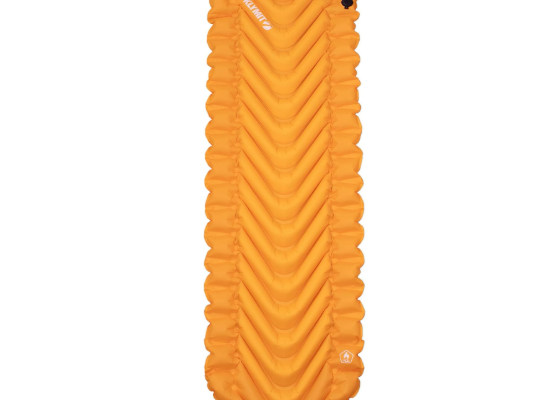

How to stop sliding off a sleeping pad usually comes down to one of three fixes, adding a friction grip backing to the pad itself, switching to a sleeping bag with an integrated pad sleeve, or using a strap system that physically connects the bag to the pad, and most chronic sliders need to combine at least two of these to solve the problem completely. Sliding off a pad overnight is one of the most common complaints among backpackers using a modern, slick faced inflatable pad inside a mummy bag on a smooth tent floor, since the two surfaces in contact, sleeping bag fabric and pad fabric, are often chosen for low weight and packability rather than grip.
The short answer
A pad with a textured or silicone printed grip backing on its underside solves most sliding caused by the pad itself moving on the tent floor, while a sleeping bag with a built in pad sleeve or loop system solves sliding caused by the sleeper moving relative to the pad. Combining a grippy pad backing with a bag that has pad attachment loops addresses both failure points at once and eliminates the problem for the vast majority of sleepers.
Why sliding actually happens, mechanically
Sliding off a pad is really two separate problems that get lumped together, and understanding which one is actually happening determines which fix works. The first is the pad itself sliding across the tent floor, which happens because most pad fabrics and most tent floor fabrics are both smooth, low friction materials chosen to reduce weight and improve packability, so there is very little resistance keeping the pad from creeping sideways as a sleeper shifts weight during the night. The second, more common problem is the sleeper sliding relative to a pad that is not moving at all, which happens because a slick sleeping bag fabric resting on a slick pad fabric creates almost no friction between the two surfaces, so any lateral movement, rolling over, adjusting position, simply slides the bag across the pad’s surface with very little resistance.
Distinguishing between these two matters because a fix aimed at the wrong problem does not help much. If you wake up with the pad itself out of position relative to where it started in the tent, the pad is sliding on the floor. If the pad is still where you left it but you have rolled off the edge of it, you are sliding relative to the pad, and the fix needs to address the bag to pad interface specifically, not the pad to floor interface.
Friction grip fabric backings
Many pads now include a textured or silicone dot printed backing on the underside specifically to address pad to floor sliding, a coating applied in a grid or random dot pattern that dramatically increases the surface friction between the pad and whatever it is resting on, whether that is a bare tent floor, a footprint, or a tent’s built in floor fabric. This backing works purely through mechanical friction rather than any adhesive, so it does not leave residue and does not degrade with repeated setup and teardown the way a sticky surface eventually would.
The trade off is a small amount of added weight and, in some cases, a slightly noisier texture when the pad shifts under a sleeper, since the same grip that resists sliding on the floor can create a bit more friction sound during normal movement. For backpackers who slide primarily because the pad itself creeps across a smooth tent floor, this backing alone often solves the entire problem without needing any other fix.
Sleeping bag pad sleeves and loop systems
A pad sleeve is a fabric tube sewn into the underside of certain sleeping bags, sized to hold a specific width of pad, that effectively makes the bag and pad into one connected unit rather than two separate items resting against each other. Because the pad slides into the sleeve rather than sitting loose underneath the bag, the sleeper cannot roll off the pad’s edge without the entire pad coming along with them, which addresses the sleeper sliding relative to the pad problem directly rather than through added friction.
Loop or strap systems achieve a similar result through a different mechanism, using small fabric loops sewn onto the underside of the bag that thread through or clip onto straps built into the pad itself, holding the two together at several points along their length rather than enclosing the pad in a full sleeve. This approach tends to add less bulk and weight than a full sleeve design while still meaningfully reducing how far a sleeper can drift relative to the pad, though it generally does not eliminate relative sliding as completely as a true sleeve does.
Strap and clip systems for pads without built in compatibility
For a sleeping bag with no sleeve or loop compatibility and a pad with no matching strap system, aftermarket strap kits solve the same problem by wrapping around the pad and connecting to the bag’s exterior, typically using adjustable webbing straps with buckles or hook and loop closures. These are a practical fix for anyone mixing a bag and pad from different brands or different product generations that were never designed to be compatible with each other in the first place.
The main downside is that most aftermarket strap systems add a genuine step to setup and teardown each night, threading and adjusting straps that a built in sleeve or loop system handles automatically, a small but real inconvenience some backpackers find not worth the trouble once they realize a simple grip backing solves most of the problem on its own.
Common mistakes
- Assuming a wider pad automatically fixes sliding. A wider pad gives more margin before you actually fall off the edge, but it does nothing to address the underlying low friction surface causing the sliding in the first place, so the problem often just takes longer to become noticeable rather than disappearing.
- Buying a grip backed pad but pitching it on a slick footprint. A textured pad backing only helps as much as the surface underneath allows, and a very slick tent floor or footprint fabric can partially defeat even a well textured pad backing, so pairing pad grip with a reasonably textured tent floor matters too.
- Overtightening a strap system. Cinching pad straps too tight can restrict the pad’s natural loft or cause uneven pressure points across the sleeping surface, so straps should hold the bag and pad together snugly without compressing the pad itself.
- Ignoring sleeping bag fabric as part of the problem. A very slick, low friction sleeping bag shell fabric contributes just as much to sliding as the pad does, and no pad fix fully compensates for an extremely slippery bag exterior resting on top of it.
Frequently Asked Questions
Do all sleeping pads come with a grip backing?
No, grip backings are common on newer or premium pads but far from universal, so it is worth checking the specific product description or specs before assuming a given pad includes one.
Can I add grip to a pad that does not have a textured backing?
Yes, some backpackers apply strips of silicone seam grip or specific grip enhancing tape to the underside of a slick pad, though results vary and this is generally a less reliable fix than buying a pad with a factory applied grip backing.
Does sliding get worse in a hammock compared to on the ground?
Often yes, since a hammock’s curved shape adds gravity pulling a flat pad toward the center or edges in a way flat ground does not, which is why hammock specific pads with a contoured, narrower shape tend to stay in place noticeably better than a standard ground pad used in a hammock.
Will a sleeping bag liner make sliding worse?
It can, since most liners use smooth, slick fabric on the outside to slide easily into a bag, and that same smoothness can reduce friction against the pad, so anyone prone to sliding might notice it more with a liner in use.
Wrapping up
Most sliding problems trace back to one of two specific causes, the pad moving on the tent floor or the sleeper moving relative to the pad, and matching the fix to the actual cause solves it far more reliably than guessing. For picking a pad with a grip backing built in from the start, see our sleeping pads buying guide, and our inflatable vs foam sleeping pad comparison covers how pad construction affects overall stability too.