
Camp Chef vs Coleman camp stoves is a comparison that really comes down to how seriously you want to cook at camp versus how little you want to spend getting there. Camp Chef builds its reputation on even heat distribution, modular accessories, and genuine simmer control aimed at campers who want to prepare real meals, while Coleman has spent decades perfecting an affordable, dependable two-burner formula that just works without a learning curve or a premium price tag. Neither brand is objectively better, and the right pick depends on whether you value cooking precision enough to pay for it, or whether a straightforward, budget-friendly stove already covers everything you actually do at a campsite.
The short answer
Choose Camp Chef if you cook real meals at camp, want modular accessories like a griddle or grill box, and are willing to pay more for even heat distribution and precise simmer control. Choose Coleman if you mostly boil water, heat up simple one-pot meals, and want the most affordable, widely available two-burner stove on the market. Campers who upgrade from boiling to real cooking over a few seasons often start with Coleman and move to Camp Chef once they know what they are missing. Think about how many weekends a year you actually cook at camp and how adventurous those meals tend to be: a couple of trips a year spent mostly boiling water rarely justifies the Camp Chef premium, while a family that car camps all summer and wants griddle breakfasts most mornings gets real, repeated value out of the investment.
Side by side
| Factor | Camp Chef | Coleman |
|---|---|---|
| Typical price | Higher | Lower |
| Simmer control | Precise, three-sided burner design on flagship models | Basic to moderate depending on model |
| Accessory ecosystem | Modular griddle, grill, and oven boxes | Limited, mostly stove-only |
| Typical BTU output | Higher on flagship models | Moderate, higher on PowerHouse line |
| Wind resistance | Strong on flagship models | Basic, improved on Cascade Classic |
Camp Chef explained
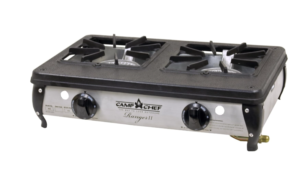
Camp Chef positions itself around real cooking versatility rather than simple boiling, which shows up most clearly in burner designs like the three-sided configuration found on models such as the Everest 2X, where flame wraps around more of the pan’s base rather than concentrating heat in the center. That even distribution genuinely matters once you move past boiling water into cooking eggs, reducing a sauce, or griddling pancakes, tasks where a hot spot in the middle of the pan causes scorching long before the edges finish cooking.
The brand also builds its stoves around a modular accessory philosophy, with interchangeable griddle boxes, grill plates, and even pizza oven attachments that snap onto the same base unit on models like the Explorer. This turns one stove into a flexible cooking platform across a trip, though the accessories cost extra and only pay off if you actually rotate between cooking styles rather than defaulting to the same pot every meal. The trade-off for all this versatility is price and bulk, since Camp Chef stoves generally cost more and weigh more than a comparable Coleman model. Flagship Camp Chef stoves also tend to run a higher total BTU output than a typical Coleman two-burner, which translates into faster boil times for large pots of water, a real advantage for groups boiling pasta water or heating dish water in volume rather than cooking for one or two people. That higher output does come with a corresponding increase in fuel consumption, so a propane canister or tank runs out faster at full output than it would on a lower-powered Coleman burner, something worth factoring into fuel planning for a longer trip.
Coleman explained

Coleman has built its reputation on affordability, wide availability, and a stove design so unchanged over decades that it has had time to iron out nearly every common failure point in burner valves, hose connections, and windscreen hinges. That simplicity means there is very little to go wrong on a trip far from a hardware store, and when something does fail, replacement parts are easy to find because the design has stayed consistent for so long.
The trade-off for that affordability is less cooking precision. Coleman’s base Classic line offers basic simmer control adequate for straightforward meals, though the Triton+ line improves on this specifically for buyers who want more than boiling water without stepping up to a pricier brand. Coleman also lacks the modular accessory ecosystem Camp Chef has built, so what you see on the stove is generally what you get, without griddle or grill attachments expanding its versatility. Because Coleman stoves have been a default car camping purchase for so long, there is also an enormous installed base of used units and spare parts in circulation, which keeps resale value and repairability strong even for a stove that is several seasons old, something a newer or less widespread brand cannot match as easily.
Where each one wins
Price
Coleman wins clearly here, with entry-level two-burner stoves costing meaningfully less than a comparable Camp Chef model, and the gap widens further once Camp Chef accessories are added to the comparison.
Cooking versatility
Camp Chef wins decisively, with its modular accessory system and even heat distribution supporting a much wider range of cooking tasks than Coleman’s fixed, stove-only format.
Simmer control
Camp Chef wins on its flagship models, with the three-sided burner design delivering noticeably more precise low-end control than Coleman’s base Classic line, though Coleman’s Triton+ closes some of that gap.
Wind resistance
Camp Chef’s flagship models generally edge out Coleman here, though Coleman’s Cascade Classic closes much of the gap with its improved wind panel design over the original Classic.
Durability and parts availability
Coleman wins on sheer availability, since decades of unchanged design mean replacement parts and accessories are easier to find almost anywhere, while Camp Chef parts can require more specific ordering.
Maintenance and cleaning
Both brands use fairly simple burner and jet designs that a camper can clean with basic tools, clearing a clogged jet with the fine wire included on some models or a shaker-jet mechanism built into the burner itself. Camp Chef’s three-sided burners have more surface area and more ports to keep clear, which means slightly more involved cleaning after a trip with a lot of grease or spillover, while Coleman’s simpler single-ring burners are quicker to wipe down and inspect.
Which should you buy
If you want to actually cook at camp, value even heat distribution, and are willing to invest in a modular accessory system over time, Camp Chef is worth the higher price for the versatility it delivers across a season of varied meals. If your camp cooking mostly consists of boiling water, heating a one-pot meal, or making coffee, and you want to spend as little as possible on a dependable stove that is easy to find parts for anywhere, Coleman remains the sensible choice. For a closer look at how these stoves compare against lighter backpacking formats, see our camp stove buying guide.
Frequently Asked Questions
Is Camp Chef worth the extra money over Coleman?
For campers who genuinely cook beyond boiling water and want modular accessories like a griddle or grill box, yes, the even heat distribution and accessory ecosystem justify the higher price. For someone who mostly boils water and eats simple one-pot meals, the price premium is harder to justify against Coleman’s lower cost and comparable basic performance.
Which brand has better simmer control?
Camp Chef’s flagship models, built around a three-sided burner design, offer more precise simmer control than Coleman’s base Classic line, though Coleman’s Triton+ line specifically improves low-end valve control for buyers who want more than Coleman’s entry-level stoves provide without switching brands entirely.
Can I use Camp Chef accessories on a Coleman stove, or vice versa?
No, Camp Chef’s modular griddle, grill, and oven accessories are built specifically to fit the brand’s own base units, and Coleman does not offer a comparable interchangeable accessory system, so the two ecosystems are not cross-compatible.
Which brand is better for a first-time car camper?
Coleman is generally the more sensible starting point given its lower price and simpler operation, letting a new camper learn what they actually need before investing in Camp Chef’s pricier, more capable cooking system once they know they want that versatility.
Buy Camp Chef if real cooking versatility and modular accessories matter more than price, and buy Coleman if an affordable, dependable stove for simple meals is all you need.