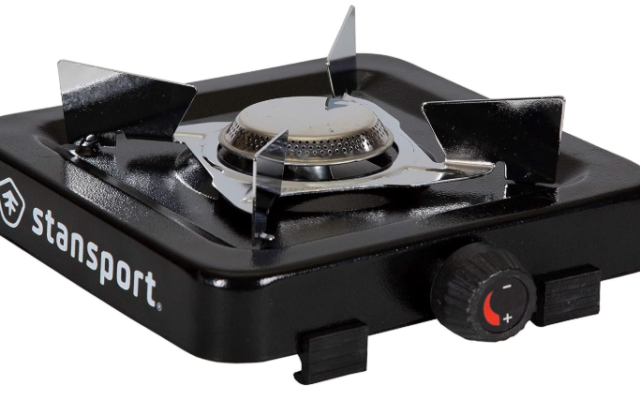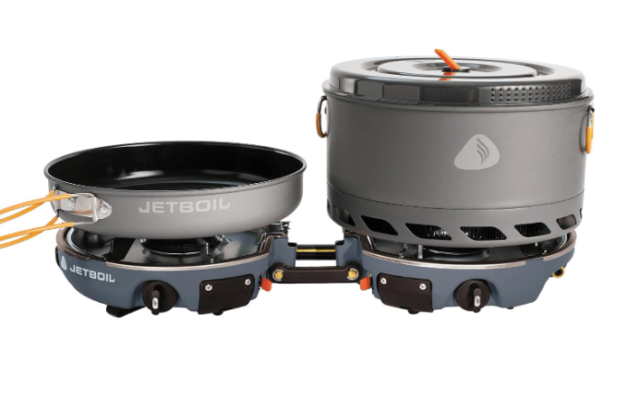

Propane vs butane camp stove is a question that trips up a lot of buyers because most canister stoves actually burn a blend of both rather than one or the other, but the distinction still matters once you understand what each gas brings to that blend and why pure butane and pure propane stoves exist for specific use cases. Propane vaporizes well even in cold temperatures but requires a heavier, pressure-rated tank to store safely, while butane is easier to contain in lightweight canisters but struggles to vaporize once temperatures drop much below freezing. Most backpacking canister stoves use an isobutane-propane blend specifically to get the best of both, while larger car camping stoves often run on pure propane from a refillable tank. The confusion for buyers usually comes from canister labels that list percentages of each gas without explaining what those percentages actually change in practice, so understanding the underlying chemistry helps more than memorizing a specific blend ratio when comparing stoves and fuel.
The short answer
Choose a propane-fueled stove, whether a large refillable tank for car camping or a blended backpacking canister, if you camp in cold weather or at altitude and need reliable vaporization. Choose a pure butane stove only for mild, warm-weather trips where its lighter canister weight is worth the reduced cold-weather performance. In practice, most backpackers end up using an isobutane-propane blend canister that sidesteps this choice entirely by combining both gases.
Side by side
| Factor | Propane | Butane |
|---|---|---|
| Cold weather vaporization | Strong, vaporizes well below freezing | Weak, struggles near and below freezing |
| Container requirements | Heavier, pressure-rated tank | Lighter, simpler canister |
| Common use case | Car camping tanks, blended backpacking canisters | Rarely used alone, mostly blended with isobutane |
| Energy density | High | Slightly higher per volume, but limited by cold performance |
| Typical stove format | Large car camping stoves, blended canister stoves | Small portable stoves in warm climates |
Propane explained

Propane has a much lower boiling point than butane, which means it continues vaporizing and generating usable pressure even in genuinely cold conditions where butane would simply remain liquid and fail to feed the burner. This is exactly why propane is the standard fuel for car camping stoves, which are often used in cooler mornings and shoulder-season conditions, and why it makes up a meaningful portion of the isobutane-propane blend found in most backpacking canisters specifically to improve their cold weather performance.
The trade-off is storage. Propane’s higher vapor pressure requires a heavier, more robustly built container to hold safely, which is why pure propane is typically sold in bulkier refillable tanks for car camping rather than the lightweight disposable canisters used for backpacking, where a lighter isobutane-propane blend canister does the job instead. This is also why propane powered car camping stoves tend to run a higher total BTU output than a typical backpacking canister stove, since the larger tank can feed a wider burner jet without running into the vaporization limits a small blended canister faces, making propane the natural choice whenever raw heat output matters more than minimizing weight.
Butane explained
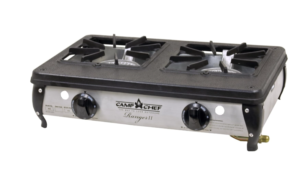
Butane is easier to liquefy and contain at lower pressures than propane, which allows for lighter, simpler canister construction, a real advantage for portable stoves used in consistently warm conditions where its weaker cold-weather vaporization never becomes a problem. This is part of why butane shows up in simple portable stoves marketed for backyard or warm-climate use.
The limitation becomes obvious the moment temperatures drop. As the temperature approaches freezing, butane increasingly fails to vaporize fast enough to maintain stove pressure, leading to a weak flame or a stove that will not light at all, which is why pure butane stoves are a poor choice for shoulder-season or high-altitude camping where temperatures swing lower than expected. Some manufacturers address this by blending in isobutane rather than normal butane, since isobutane vaporizes somewhat better in cooler conditions than standard butane, but even isobutane alone still underperforms propane once temperatures drop well below freezing, which is why the most reliable backpacking canisters combine both isobutane and propane rather than relying on either gas by itself.
Where each one wins
Cold weather reliability
Propane wins decisively, maintaining usable vapor pressure in conditions that leave pure butane unable to feed the burner at all, a critical factor for any trip where temperatures might dip toward freezing.
Canister weight and simplicity
Butane wins on paper for warm-weather use, since it can be contained in lighter, simpler canisters than propane’s higher pressure requires, though this advantage disappears entirely once cold weather performance becomes a concern.
Versatility across seasons
Propane wins clearly, since it performs across a far wider temperature range than butane, making it the safer default for anyone who camps across multiple seasons rather than only in consistently warm weather.
Availability in blended backpacking canisters
Propane wins here too, since nearly every quality backpacking canister uses an isobutane-propane blend specifically to improve cold-weather performance over a butane-only or isobutane-only fuel, making pure propane’s advantages available in a lightweight, pressure-safe canister.
Warm, mild-climate portability
Butane wins for consistently warm climates, where its lighter canister and simpler construction offer a genuine, if narrow, advantage over heavier propane-rated containers for casual, low-stakes cooking.
High altitude performance
Propane wins again at elevation, since the combination of lower ambient temperature and reduced atmospheric pressure at altitude compounds the vaporization problem butane already struggles with, while propane’s lower boiling point keeps it vaporizing reliably under those same conditions.
Simmer control and burner tuning
Neither gas has an inherent advantage here, since simmer control comes down to the stove’s valve and jet design rather than the fuel itself, though a propane-rich blend burning at more consistent pressure does make it slightly easier for a burner’s needle valve to hold a steady low flame compared to a butane-heavy blend losing pressure partway through a simmer.
Which should you buy
For nearly all backpacking and car camping use, a blended isobutane-propane canister or a propane tank delivers the cold-weather reliability that pure butane cannot match, making it the sensible default for anyone camping across more than one season. Pure butane stoves remain a narrow, warm-climate option rather than a general recommendation. For more on how fuel type affects cold weather stove choice, see our best canister stove for cold weather roundup.
Frequently Asked Questions
Why do most backpacking canisters blend propane and butane together?
The blend combines propane’s strong cold-weather vaporization with isobutane’s cleaner, more efficient burn in milder conditions, giving a reasonable performance range across typical trip temperatures without requiring the heavier, pressure-rated container pure propane would need.
At what temperature does butane stop working in a stove?
Butane’s vaporization drops off sharply as temperatures approach freezing, and performance becomes unreliable well before that point in many cases, which is why pure butane stoves are not recommended for shoulder-season or high-altitude trips where temperatures can swing lower than expected.
Is propane more dangerous to store than butane?
Propane requires a more robustly built, pressure-rated container because of its higher vapor pressure, but when stored in properly rated canisters or tanks designed for that pressure, it is not inherently more dangerous, just less suited to the ultralight canister formats butane can use. Both gases are heavier than air and can pool in low, unventilated spaces if they leak, which is part of why any canister or tank should be checked for a secure seal before each trip and stored away from open flame and enclosed vehicle interiors in hot weather.
Can I use a pure propane car camping tank on a backpacking stove?
No, car camping propane tanks use a different valve and connection standard than backpacking canisters, and the tanks themselves are far too heavy and bulky for backpacking use, so the two fuel formats are not interchangeable despite both relying partly on propane. Adapters exist that let a backpacking stove draw from a larger refillable propane tank, which some car campers use to avoid buying disposable canisters, but this is a separate accessory rather than something built into either stove by default, and it only works with stoves explicitly designed to accept a remote fuel line.
Buy a stove that uses propane or an isobutane-propane blend for reliable performance across seasons, and reserve pure butane stoves for consistently warm, mild climates.
If you are ever unsure which fuel a specific canister contains, check the printed label rather than guessing from the canister’s size or brand, since manufacturers are required to list the gas blend and its approximate percentages directly on the canister. A canister listing a higher percentage of propane relative to isobutane or butane generally signals better cold-weather performance, which is worth checking before a shoulder-season or high-altitude trip rather than assuming all backpacking canisters perform identically.