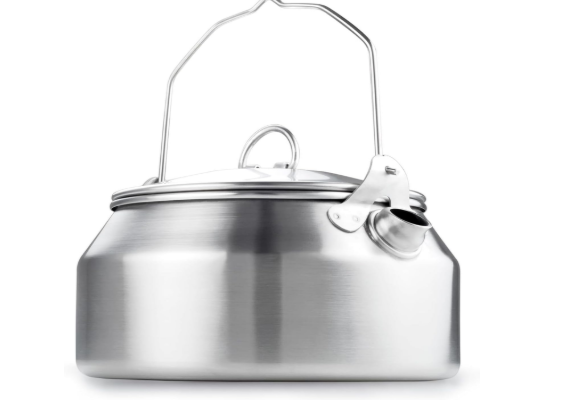

This toaks titanium 750ml pot review is for backpackers and ultralight hikers who have weighed their cookware on a kitchen scale and decided that every gram still matters, even after switching away from heavier aluminum. TOAKS built its reputation on simple, well machined titanium pots that cut weight to close to the physical minimum a pot of a given size can reach, and the 750ml size sits right in the sweet spot for solo backpackers who want enough volume for a real meal without carrying capacity they will never use.
What decides whether this pot suits you is how much you value that minimal weight against the heat conduction and cooking versatility that a heavier aluminum or steel pot provides. If boiling water for dehydrated meals and coffee is most of what your cookware needs to do, and shaving every possible ounce off your base weight matters to you, the TOAKS 750ml deserves a close look, and understanding exactly what titanium does well, and where it falls short compared to other metals, is worth walking through before it becomes the single pot in your kit.
Specifications
| Material | Titanium |
| Capacity | 750 milliliters |
| Construction | Single wall, no coating |
| Lid | Titanium lid, doubles as a small plate |
| Handle type | Folding wire bail handle |
| Ideal use | Solo backpacking, boiling water and simple meals |
Who it is for
The TOAKS 750ml suits solo backpackers and thru hikers who are building an ultralight kit around a single pot that boils water for freeze dried meals, instant coffee, and basic one pot cooking, since 750 milliliters is enough capacity for one person’s meal without the extra weight of a larger pot that a solo hiker would rarely fill anyway. It also suits anyone who wants cookware that will essentially never wear out from corrosion or coating failure, since bare titanium has no nonstick coating to scratch through and no real rust risk the way untreated steel does.
It is a weaker fit for anyone planning to actually cook food beyond boiling water, searing, frying, or simmering a sauce that could scorch, since titanium’s uneven heat conduction makes it a poor choice for anything beyond rehydrating meals or boiling liquid. It is also a weaker fit for group cooking, given its single person capacity, and a weaker fit for anyone who values a nonstick cooking surface for easy cleanup, since this pot is bare metal with none of the food release convenience a coated aluminum pot provides.
How it performs
Weight and why titanium is so light
Titanium’s appeal in backpacking cookware comes down to a specific combination of properties, it has a notably high strength to weight ratio, which means a titanium pot wall can be made thinner than an aluminum or steel wall of equivalent strength, and that thinness is where most of the weight savings actually comes from rather than titanium being dramatically less dense than aluminum on its own. The result is a pot that is meaningfully lighter than a comparably sized aluminum pot and dramatically lighter than a steel or cast iron pot of the same capacity, which is exactly why titanium dominates the ultralight end of the camp cookware market despite being a more expensive and harder to machine metal.
That thin wall construction is also why a titanium pot like this one typically has no insulating double wall or added reinforcing material, prioritizing weight above nearly everything else. For a solo hiker counting grams across an entire kit, that tradeoff is usually an easy one to accept, since the weight saved on cookware adds up alongside similar savings on a shelter, a sleep system, and a pack, all pursuing the same ultralight philosophy.
Heat conduction and why it is boil focused
Titanium conducts heat considerably less evenly than aluminum does, which is the central tradeoff for its light weight. Aluminum spreads heat across its surface quickly and evenly, which is part of why it is the standard choice for cooking food that needs even heat to avoid scorching, while titanium tends to develop a hot spot directly above the flame with less heat spreading outward to the rest of the pot wall. This matters less for boiling water, since water itself circulates and evens out the temperature as it heats, but it matters a great deal for cooking anything with solid food content, rice, pasta, or a sauce, since those hot spots are exactly where food sticks and scorches against the pot wall.
This is the core reason experienced titanium pot users treat these pots as water boilers first and cooking vessels second, generally boiling water separately and rehydrating food in a bag or a separate container rather than simmering directly in the titanium pot itself, a workaround that keeps the pot’s lightest possible weight while sidestepping its weakest performance trait.
Durability and corrosion resistance
Titanium is exceptionally corrosion resistant, more so than aluminum and dramatically more so than untreated steel, which means a bare titanium pot like this one can be used, washed, and stored without the rust concerns that plague cast iron or the oxidation and pitting that can eventually affect aluminum over many years of hard use. There is also no coating here to scratch through, since the pot has no nonstick finish at all, which means there is nothing to degrade in the first place, a genuine durability advantage over any coated cookware regardless of how good that coating is when new.
The tradeoff for that durability is that food sticks directly to bare titanium more readily than it would to a nonstick coated surface, particularly anything with sugar content or starchy food left to sit too long over heat, so cleanup after actually cooking food in this pot, rather than just boiling water, tends to require more scrubbing than a coated aluminum pot would. Most owners manage this by sticking closely to the boil water and rehydrate approach the pot is best suited for, which keeps cleanup to a quick rinse in most cases.
Everyday use and handling
The folding wire bail handle is simple and functional, a design shared across most ultralight titanium pots for exactly the reason that it adds almost no weight while still providing a secure way to lift a hot pot off a stove. The lid doubling as a small plate is a nice piece of multi use design common in ultralight gear philosophy generally, squeezing a second function out of a component that would otherwise just sit there as dead weight between meals.
One practical detail worth knowing about titanium cookware broadly is that the thin walls, the same thinness that saves weight, also make the pot more prone to denting than a thicker aluminum or steel pot would be under the same impact, though titanium itself does not crack or fail the way a thin aluminum wall eventually might, it simply deforms and keeps working, a minor cosmetic issue rather than a functional one in most cases.
Pros and cons
What we liked
- Exceptionally light for its capacity
- highly corrosion resistant with no coating to wear through
- simple folding handle adds minimal weight
- lid doubles as a small plate
What we did not
- Uneven heat conduction makes it poor for anything beyond boiling water
- food sticks more than it would to a nonstick coated pot
- thin walls dent more easily than thicker aluminum or steel
How it compares
Against the Sea to Summit X-Pot 2.8L, the TOAKS pot is dramatically lighter and simpler but offers far less capacity and no collapsible packing advantage, a straightforward tradeoff between solo ultralight weight and the packed volume savings the X-Pot targets for larger loads. Against the GSI Pinnacle Camper Cookset, the comparison is really about use case, the Pinnacle Camper is a complete two person kitchen with a nonstick frying pan and accessories, while the TOAKS pot is a minimalist single vessel built around one job, boiling water, as light as that job can be done. Against a standard uncoated aluminum backpacking pot of similar capacity, the TOAKS pot is noticeably lighter, while the aluminum pot conducts heat more evenly and handles actual cooking, not just boiling, considerably better.
Frequently Asked Questions
Is the TOAKS Titanium 750ml pot good for cooking, not just boiling water?
It can cook simple meals, but titanium’s uneven heat conduction means it is better suited to boiling water and rehydrating freeze dried food than to simmering rice, pasta, or sauces that can scorch against a hot spot.
How much lighter is titanium than aluminum for a pot this size?
Titanium’s high strength to weight ratio allows thinner pot walls than aluminum needs for the same strength, which generally makes a titanium pot meaningfully lighter than a comparably sized aluminum pot.
Does the TOAKS 750ml pot have a nonstick coating?
No, it is bare titanium with no coating, which means it never has a coating to scratch through but also means food sticks more readily than it would in a coated aluminum pot.
Is 750 milliliters enough capacity for solo backpacking?
Yes, 750 milliliters is a common solo backpacking size, large enough for a single dehydrated meal or a mug’s worth of coffee without carrying unused extra capacity.
Verdict
The TOAKS Titanium 750ml pot delivers exactly what it promises, a genuinely minimal weight solo cooking vessel built around boiling water and rehydrating meals rather than trying to be an all purpose cooking pot. Its corrosion resistance and lack of a coating to wear through mean it will likely outlast most other pieces in an ultralight kit.
Buy this if you are a solo backpacker or thru hiker building an ultralight kit around boiling water and simple rehydrated meals, and every gram of base weight matters to you. Look elsewhere if you want to actually cook food beyond boiling, sear, simmer, or fry, since titanium’s uneven heat conduction makes it a poor fit for that kind of cooking. For the full range of options at every weight and capacity, see our camping cookware buying guide.
An exceptionally light, bare titanium solo pot built for boiling water and rehydrating meals, trading even heat conduction for the lowest weight a pot this size can reach.