The best Kammok camping hammocks distinguish themselves from most of the market through fabric, the brand’s diamond ripstop nylon has a noticeably more supportive, less stretchy feel underneath the body than the standard parachute nylon most competitors use, a difference many campers notice the first time they lie in one without being told what to look for. Kammok built its reputation around that material choice along with clean, considered design details across straps, bug nets, and underquilts that all integrate with the core hammock line.
The mistake buyers make shopping this brand is assuming the higher price over brands like ENO is purely a markup for the name, when the diamond ripstop fabric and higher weight capacity ratings reflect real material and construction differences that show up in how the hammock feels and holds up over time. For the wider category this brand sits within, our camping hammock buying guide covers the full range across every brand.
Kammok positions itself deliberately as a premium alternative rather than competing purely on price, and that shows up not just in fabric choice but in details like reinforced stress points at the gathered ends and a more consistent finish across stitching and hardware than buyers typically find at the lower end of the category. For a camper who plans to use a hammock heavily across many seasons rather than occasionally, those small construction details compound into a noticeably longer service life.
Comparison
| Name | Key features |
|---|---|
| Kammok Roo Double | Diamond ripstop fabric, 500 lb capacity |
| Kammok Roo Single | Solo version, lighter and more packable |
| Kammok Mantis All-in-One | Integrated tent, bug net and suspension system |
| Kammok Wolverine Underquilt | Compressible down insulation, pairs with any Roo |
| Kammok Python Straps | Included with some bundles, tree-friendly webbing |
Each item below reflects Kammok’s consistent focus on supportive fabric and considered detail, scaled across a bare hammock, a complete system, and the accessories that round it out, so match the pick to how much of the system you want from one brand.
1) Kammok Roo Double (Best overall)
The Roo Double is the hammock most associated with the Kammok name, and its diamond ripstop fabric delivers the supportive, less-stretchy feel the brand is known for, a real difference from standard parachute nylon that becomes obvious within the first few minutes of lying in it. The 500 pound capacity rating also gives meaningfully more margin than the 400 pound rating common on many competing double hammocks.
The diamond ripstop weave gets its name from the small diamond pattern woven into the fabric structure itself, which distributes tension more evenly across the material and resists tearing better than a standard flat weave under concentrated stress, a real engineering advantage rather than just an aesthetic choice, since a small puncture or snag is far less likely to propagate into a larger tear across the whole panel.
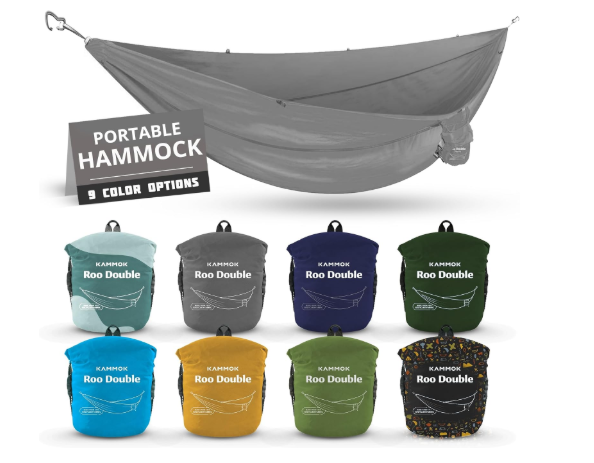
Kammok Roo Double
- Weight21 oz
- Packed size5 x 8 in
- Capacity2 person
- FabricDiamond ripstop nylon
Key features
- Diamond ripstop fabric
- 500 lb capacity rating
- Double-wide sizing
Pros
- Noticeably more supportive feel than standard nylon
- Higher capacity margin than most competitors
- Well regarded overall build quality
Cons
- Higher price than basic gathered-end hammocks
- Straps typically sold separately
What we liked
- More supportive fabric
- higher capacity margin
- solid build
What we did not
- Higher price
- straps usually separate
For most people entering the Kammok lineup, this remains the hammock that best represents what the brand does well, and it is the model most often used as the reference point when comparing the brand against ENO or Wise Owl.
Check the current price2) Kammok Roo Single (Best for solo backpackers)
The Roo Single scales the same diamond ripstop formula down to a solo width, trimming weight while keeping the supportive fabric feel that defines the brand. It suits backpackers who want Kammok’s material quality without carrying the extra fabric weight of the double-wide version.
Weight drops meaningfully compared to the Roo Double, and while the capacity rating also decreases accordingly, it remains generous for a solo hammock compared to many competitors at this weight.
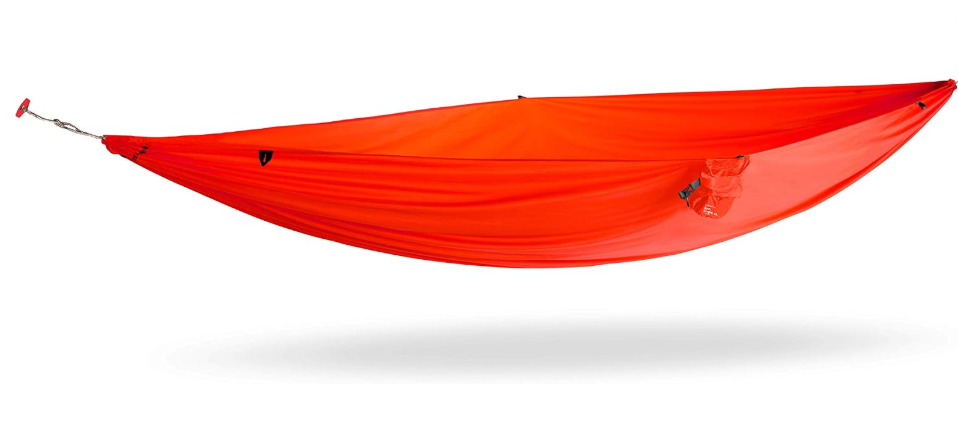
Kammok Roo Single
- Weight16 oz
- Packed size5 x 7 in
- Capacity1 person
- FabricDiamond ripstop nylon
Key features
- Solo-width diamond ripstop fabric
- Lighter than the Roo Double
- Generous capacity for a solo hammock
Pros
- Same supportive fabric as the Roo Double
- Noticeably lighter and more packable
- Good capacity margin for its weight class
Cons
- Less room than the double-wide version
- Straps sold separately
What we liked
- Same supportive fabric as double
- lighter and packable
- good capacity margin
What we did not
- Less room than double
- straps separate
Solo backpackers who want Kammok’s fabric quality without the extra weight should look here first.
Check the current price3) Kammok Mantis All-in-One (Best complete system)
The Mantis bundles a hammock body, integrated bug net, and suspension straps into a single purchase, with an optional add-on tarp available to complete a full weather-protected system. It is Kammok’s answer to buyers who want to skip piecing together separate components and get hanging with everything included from the start.
The integrated net zips closed around the full perimeter, similar in concept to the protection a Hennessy hammock offers, though the Mantis uses a top-entry rather than bottom-entry technique, which some buyers find more intuitive coming from a standard gathered-end hammock.
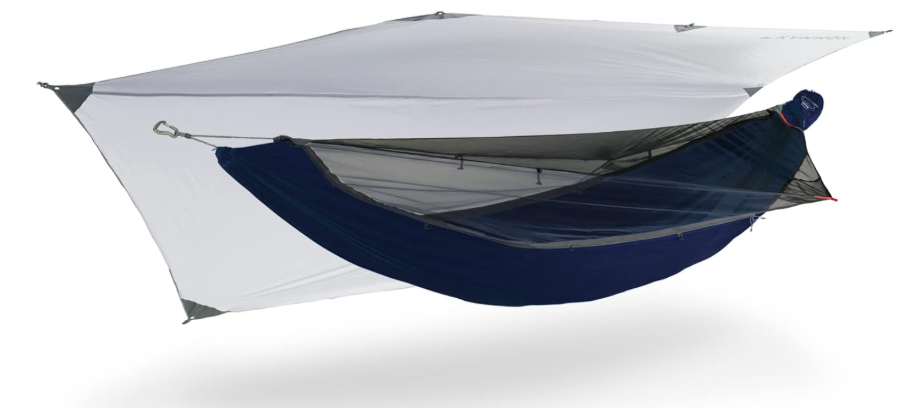
Kammok Mantis All-in-One
- Weight32 oz
- Packed size7 x 9 in
- Capacity1 person
- FabricDiamond ripstop nylon with integrated netting
Key features
- Integrated full-perimeter bug net
- Included suspension straps
- Top-entry design
Pros
- Everything needed to hang included in one box
- Top-entry technique familiar to most first-timers
- Same diamond ripstop fabric quality
Cons
- Heavier than the bare Roo models
- Premium price for the complete bundle
What we liked
- Complete system in one purchase
- familiar top-entry
- same fabric quality
What we did not
- Heavier than bare hammocks
- premium price
Buyers who want to skip separate strap and net shopping entirely should consider this bundle first.
Check the current price4) Kammok Wolverine Underquilt (Best insulation upgrade)
The Wolverine is Kammok’s underquilt, built to hang beneath any Roo hammock and solve the compressed-insulation cold-back problem that a sleeping bag alone cannot address inside a hammock. Its compressible down fill packs down smaller than most synthetic alternatives, and integrated ridgeline clips keep it centered automatically under the hammock body.
While it is not a hammock itself, it is one of the most commonly added pieces to a Kammok system, and pairing it with a Roo Double or Roo Single rounds out three-season comfort considerably beyond what the bare hammock offers alone.
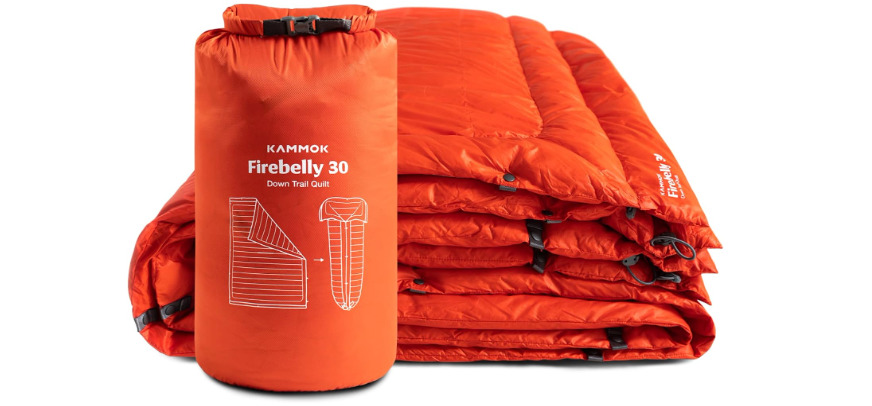
Kammok Wolverine Underquilt
- Temperature rating40F
- Fill700 fill power down
- Weight18 oz
- AttachmentIntegrated ridgeline clips
Key features
- 700 fill power down insulation
- Integrated ridgeline attachment clips
- Compatible with any Roo model
Pros
- Solves the compressed-insulation cold-back problem
- Self-centering attachment system
- Compact packed size
Cons
- Additional purchase on top of the hammock itself
- 40F rating not suited to genuinely cold nights
What we liked
- Solves cold-back problem
- self-centering clips
- compact
What we did not
- Separate purchase
- not rated for deep cold
Anyone who already owns a Roo and finds the underside cold on cool nights should add this next.
Check the current price5) Kammok Python Straps (Best suspension pairing)
Kammok’s Python straps round out the system with tree-friendly webbing wide enough to meet the minimum width requirement many parks and public lands now mandate for hammock suspension. They are sold separately from the bare Roo hammocks but bundled with some Mantis packages, and pairing them with any Kammok hammock completes the full system without needing to shop outside the brand.
The wide webbing spreads the hammock’s load across more bark surface area than a thin rope or narrow strap would, directly reducing the risk of damaging the tree, which is the entire reason wide tree-friendly straps have become the standard recommendation across the hammock camping community.
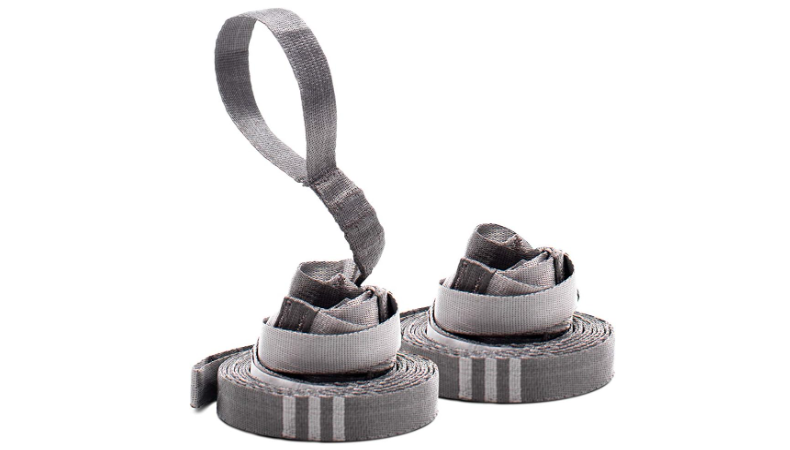
Kammok Python Straps
- Width1 in
- Length9 ft per strap
- Weight9 oz per pair
- RatingUp to 300 lb per strap
Key features
- Wide, tree-friendly webbing
- Meets common park width requirements
- Multiple adjustment points per strap
Pros
- Protects tree bark better than narrow straps or rope
- Meets width rules at many public lands
- Simple adjustment, no knots required
Cons
- Sold separately from the bare Roo hammocks
- Not included with every Kammok bundle
What we liked
- Tree-friendly width
- meets park rules
- no knots needed
What we did not
- Sold separately
- not bundled with every purchase
Anyone completing a Kammok system, or replacing worn or narrow straps, should look here to finish the setup.
Check the current priceFrequently asked questions
What makes Kammok hammocks different from other brands?
Kammok is best known for its diamond ripstop fabric, which feels noticeably more supportive than the standard parachute nylon most competitors use, along with higher weight capacity ratings and a cohesive accessory ecosystem.
Does the Kammok Mantis use bottom-entry like a Hennessy hammock?
No, the Mantis uses a top-entry design with an integrated bug net that zips closed around the perimeter, which many buyers coming from a standard gathered-end hammock find more intuitive than learning a bottom-entry technique.
Do I need the Wolverine underquilt with every Kammok hammock?
Only if you plan to camp in cool weather, for warm summer nights a hammock alone is often comfortable, but any camping below roughly 60 degrees Fahrenheit benefits significantly from an underquilt like the Wolverine.
How does Kammok’s capacity rating compare to competitors?
Kammok’s Roo line typically rates around 500 pounds, meaningfully higher than the roughly 400 pound rating common on standard hammocks from brands like ENO or Wise Owl, giving larger or heavier campers more margin.
Conclusion
For most buyers, the Kammok Roo Double remains the clearest expression of what makes this brand worth choosing, delivering the supportive diamond ripstop fabric and generous capacity rating that define the lineup. Solo backpackers should look at the Roo Single, while buyers wanting a complete out-of-box system should consider the Mantis All-in-One.
Anyone hanging in cool weather should pair their Roo with the Wolverine Underquilt, and completing the system with the tree-friendly Python Straps rounds out a setup built entirely within one brand, giving every component matched attachment points rather than mixing hardware from several different manufacturers. For a comparison against the market’s most popular value brand, see our ENO vs Kammok comparison, and our best hammock underquilts roundup covers more insulation options beyond the Wolverine.
Buy the Kammok Roo Double for the definitive brand experience, the Roo Single if you backpack solo, and the Mantis All-in-One if you want a complete system in one purchase.