Tarp pitch configurations explained means understanding that a single rectangular tarp can be rigged into several genuinely different shapes, each suited to a different combination of wind, rain, and coverage needs, rather than there being one correct way to set it up. Learning four or five of the most useful configurations turns one piece of fabric into a shelter that adapts to whatever conditions you actually encounter on a trip, and understanding the basic physics behind why each shape sheds wind or rain differently makes it much easier to choose the right one on the fly rather than defaulting to the same pitch every time out of habit.
The short answer
The A-frame sheds rain and wind best for general use, the lean-to gives an open front for a campfire view, the diamond pitch saves weight for minimal coverage, the C-fly adds one enclosed side to a lean-to for better wind blocking, and a flat pitch maximizes standing headroom in calm weather.
The A-frame pitch
The A-frame is the classic tarp shape, with a ridgeline running along the peak and both sides sloping down to the ground or near it, forming a tent-like triangular cross section. Structurally, this shape works because wind hitting either sloped face gets deflected up and over rather than pushing directly against a flat surface, similar to how a steeply pitched roof performs better in wind than a flat one. It sheds rain and wind from either side effectively, making it the go-to configuration for genuinely bad weather, though the sloped sides do reduce usable interior space compared to a flatter pitch.
This is the configuration most people picture when they think of a rain-ready tarp setup, and it is also the easiest to learn well since it only requires a taut ridgeline and four evenly tensioned corner stakes to execute correctly. The main variable worth adjusting is how close the sides come to the ground, since a nearly-closed A-frame blocks more wind-driven rain at the cost of ventilation, while leaving a few inches of gap at the base improves airflow and reduces condensation at the cost of slightly more exposure in a sideways storm.
The lean-to pitch
A lean-to angles the entire tarp from a high point down to a low anchor on one side only, leaving the opposite side completely open. This works well when you want to sit facing a campfire or a view while still having overhead and one-sided rain coverage, but it only protects against wind and rain coming from the closed side, so it depends on knowing which direction weather is likely to come from, information you can often get from watching cloud movement or checking a forecast’s wind direction before committing to the pitch.
Because a lean-to has no fabric on one full side, it is meaningfully less wind resistant than an A-frame in a storm that shifts direction partway through the night, and experienced tarp campers generally treat it as a fair-weather or light-rain configuration rather than something to trust in a genuinely unpredictable forecast.
The diamond pitch
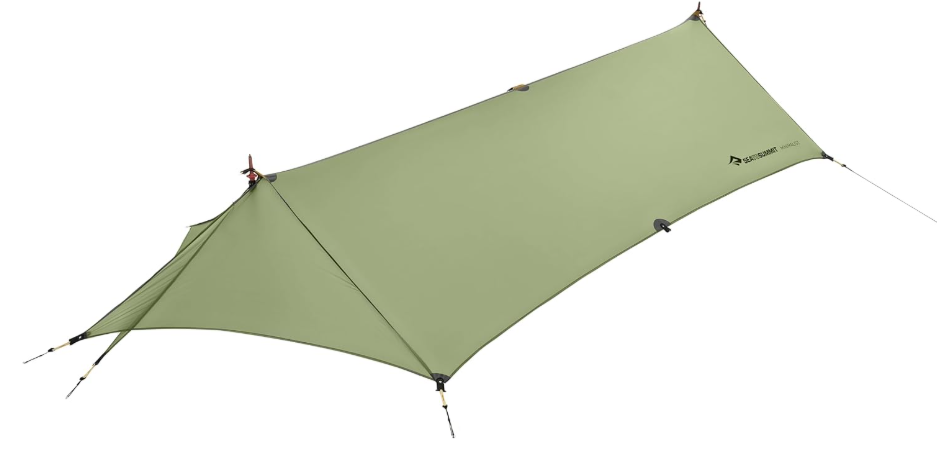
A diamond pitch uses just two or three of the tarp’s tie-out points, typically corner to corner, to create a small, angled shelter with minimal material actually doing the work. It is the lightest and fastest configuration in terms of setup effort, popular with ultralight backpackers and hammock campers, since it can be rigged with just a ridgeline and two ground stakes in a few minutes.
It sacrifices coverage area, though, leaving less margin against wind-driven rain reaching the edges of your sleeping space, since the diamond shape concentrates protection near the center and tapers off quickly toward the unsupported corners. This makes it best suited to calm to moderately rainy nights rather than anything with sustained wind, where the reduced fabric area simply cannot deflect as much water and air as a full A-frame.
The C-fly pitch
A C-fly, sometimes called a half-pyramid, modifies the basic lean-to by pulling one side edge down and staking it to the ground, effectively closing off one end while keeping the front open, forming a shape that looks roughly like the letter C when viewed from above. This gives meaningfully better wind blocking than a standard lean-to since it closes off one of the two exposed ends, while still preserving the open front view and easy access a full A-frame does not offer.
It takes a bit more practice to pitch correctly than a basic lean-to, since getting the closed end taut without creating a loose, flapping corner requires an extra stake and careful tensioning, but it is a genuinely useful middle ground for campers who want more wind protection than an open lean-to without fully closing in the shelter the way an A-frame does.
The flat or high canopy pitch
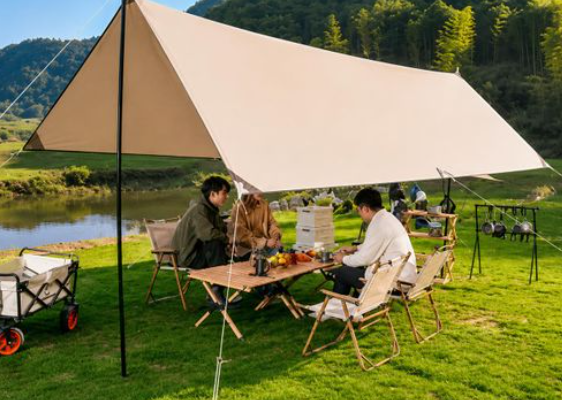
Pitching the entire tarp flat and taut, elevated on poles or between trees at a consistent height, maximizes standing headroom and usable space underneath, which makes it ideal for a camp kitchen or group gathering area in calm, dry to lightly rainy weather. The trade off is that a flat pitch is the most prone to water pooling in the center during sustained rain, since there is no slope to actively move water off the fabric, and it offers the least wind resistance of any configuration, since it presents a large, flat surface for gusts to catch and lift.
Choosing the right configuration for conditions
Match the pitch to the actual forecast rather than defaulting to the same shape every trip: an A-frame for genuinely bad weather, a lean-to or C-fly for a nice evening with a known wind direction, a diamond for minimal weight over a hammock, and a flat pitch for a calm-weather kitchen or gathering space. Tarps with multiple guy-out points, like the Kelty Noah’s Tarp line, make switching between these configurations on the same trip far easier than a basic four-corner tarp with no additional tie-outs, since the extra anchor points give you the flexibility to reshape the same piece of fabric as conditions change rather than being locked into one shape for the whole trip.
Common mistakes
- Using a flat pitch in genuinely bad weather. It maximizes headroom but pools water and catches wind more than a steeper A-frame configuration would, and a large pool of water sitting on a flat tarp for hours can be heavy enough to stretch the fabric permanently or pull a grommet loose entirely, turning a minor annoyance into gear damage.
- Choosing a lean-to without knowing wind direction. An open-sided pitch only protects from one direction, so guessing wrong leaves you exposed exactly when you needed the coverage, and a wind shift partway through the night can mean waking up to rain blowing directly into an open shelter with no easy way to fix it in the dark.
- Over-relying on a diamond pitch in driving rain. Its minimal coverage area works fine in light rain but leaves little margin once wind starts pushing rain sideways, since the small footprint that makes it fast to pitch also means there is very little buffer between the shelter’s edge and whatever is underneath it.
- Not adjusting the pitch as weather changes mid-trip. A tarp with enough guy points to reconfigure is only useful if you actually take the time to re-pitch when the forecast shifts, and campers who set up once and never revisit the shape often end up fighting a configuration that no longer matches the conditions they are actually facing.
Frequently Asked Questions
Which tarp pitch is best for heavy rain?
The A-frame configuration, with its steep sloped sides running from a central ridgeline, sheds heavy rain most effectively of the common configurations, avoiding the pooling problems of a flatter pitch while also deflecting wind from either side reasonably well.
Can I pitch a tarp without trees?
Yes, many configurations, including the A-frame and diamond pitch, work well with trekking poles or dedicated tarp poles in place of trees, which matters for sites like beaches or above treeline where no natural anchor points exist at all.
What is the fastest tarp configuration to set up?
The diamond pitch is generally the fastest, using just two or three tie-out points and minimal fabric management, often achievable in under two minutes once you know the sequence, though it offers the least coverage of the common configurations.
Do I need a tarp with extra guy points to try different pitch shapes?
A basic four-corner tarp can manage a simple A-frame, lean-to, or flat pitch, but a tarp with multiple additional guy-out points, like the Kelty Noah’s Tarp, makes the C-fly and other asymmetric configurations significantly easier to achieve cleanly.
Wrapping up
Learning a handful of tarp pitch configurations turns one piece of fabric into a shelter that adapts to rain, wind, and coverage needs rather than being stuck with a single setup regardless of conditions. See our guide on how to pitch a tarp in the rain for the technique behind executing these pitches quickly, and our best tarps for a hammock roundup covers tarps particularly well suited to the diamond and A-frame configurations.