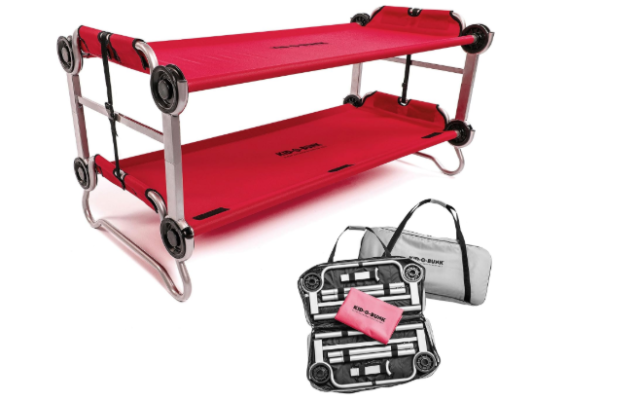

Will a camping cot fit in my tent is the question that stops a lot of buyers right before checkout, and the honest answer is that it depends on three separate measurements most people never think to check together: your tent’s floor dimensions, its peak and wall height at the spot where the cot will sit, and the cot’s own footprint once its legs are extended, not just its folded packed size. A cot that comfortably fits a family cabin tent can be a tight, frustrating squeeze inside a backpacking or smaller three-season tent, where sloped walls eat into usable space in ways a flat spec sheet comparison will not warn you about.
The short answer
Measure your tent’s floor length and width at the specific spot the cot will go, not just the advertised overall floor size, and compare that against the cot’s fully extended footprint, which is always larger than its folded packed dimensions. Then check the tent’s wall height directly above that spot, since a cot’s own height adds to your body’s height when you sit up, and sloped tent walls common in dome and backpacking tents can turn a technically fitting cot into one you constantly bump your head or shoulder against.
Why floor footprint alone does not guarantee a fit
A cot’s legs splay outward from the bed frame to create a stable base, which means the actual footprint on the tent floor is meaningfully wider than the folded bundle you see in the packed size listing, sometimes by several inches on each side depending on the leg design. Manufacturers list this extended footprint separately from the packed size, and it is the number that actually matters for fit, yet many buyers compare only the packed dimensions since that is the figure most prominently displayed in a product listing.
Tent floor dimensions also get advertised at their widest point, which in a dome or other tapered tent shape is rarely the full usable rectangle available for a cot. A tent listed as fitting a 7 by 7 foot floor may only offer that full width along the very center line, tapering down toward the corners where the walls begin sloping inward, and a cot placed anywhere off-center can end up with its legs pressing against fabric that was never meant to bear that kind of point load.
How tent wall shape changes what actually fits
Dome and backpacking tents typically use curved or sharply sloped walls that maximize floor area at ground level while narrowing dramatically as you move upward, which is efficient for weight and wind resistance but creates a real problem for cot users, since a cot elevates you several inches to nearly two feet closer to that narrowing ceiling. A cot that would leave comfortable headroom on a flat tent floor can put your face or shoulder directly against sloped fabric once you are raised onto the cot’s bed.
Cabin-style tents with near-vertical walls avoid this problem almost entirely, since the usable floor area stays consistent from floor to near the full wall height, which is why cots pair naturally with cabin tents and are a much more common source of fit complaints inside dome-style tents. If your tent uses a dome or tunnel design, check the wall angle at the specific height your cot’s bed will sit, not just the tent’s peak height at its absolute center.
Matching cot height to your tent’s interior shape
Low-profile cots, typically sitting somewhere around 6 to 8 inches off the ground, are the safer choice for backpacking and smaller dome tents specifically because that extra elevation matters less when the walls are already sloping inward at that height. Standard and taller cots, often in the 15 to 20 inch range, work best in cabin tents or larger family tents where the walls stay vertical well past that height, giving you the same headroom sitting on the cot as you would have standing on the bare floor.
It is worth noting that a taller cot is not purely a downside even in a smaller tent, since some campers deliberately choose a lower-profile model specifically to preserve headroom, accepting less ground clearance in exchange for a better fit under a sloped ceiling. Matching cot height to your specific tent shape, rather than simply buying the tallest or most cushioned option available, tends to produce the best result.
Measuring your tent before buying
Pitch your tent, or at minimum lay out its floor dimensions on flat ground, and measure the width and length at the spot the cot will actually occupy, factoring in space for a second occupant, gear, or a doorway you still need to access. Then measure the tent’s interior height directly above that spot rather than at the tent’s tallest point, since most tents list only their peak height, which may be several feet away from where you intend to place the cot.
Compare both figures against the cot’s fully extended footprint and its bed height plus roughly two feet for a seated adult, a rough but useful way to estimate whether you will have comfortable clearance. If the numbers are close, err toward the lower-profile cot option, since a tight fit that technically works on paper often feels cramped in practice once bedding, pillows, and a sleeping bag add their own bulk to the equation.
When a cot simply will not work in a given tent
Some backpacking and ultralight tents are sized so tightly around a sleeping pad footprint that no cot, even the most compact low-profile models, will fit without the legs pressing directly against the tent walls, a real risk of damaging the fabric over repeated use. In these cases, a sleeping pad remains the more practical choice regardless of how appealing a cot’s comfort sounds, and forcing the fit is more likely to result in a torn tent wall than a comfortable night.
If you specifically want cot-level comfort but own a tent too small to accommodate one, the more reliable fix is sizing up to a larger tent for trips where a cot matters, rather than trying to wedge an oversized cot into a shelter it was never designed to hold.
Common mistakes
- Comparing packed size instead of extended footprint. A cot’s legs splay out well beyond its folded bundle size, and this extended footprint, not the packed dimensions, is the number that determines whether it fits your tent floor.
- Using the tent’s peak height instead of the height above the cot’s actual spot. Most tents are tallest at dead center, and a cot placed anywhere else, particularly in a dome tent, may sit under a noticeably lower ceiling than the advertised peak height suggests.
- Ignoring wall slope entirely. A tent’s advertised floor area is often measured at its widest point along the ground, which narrows quickly as the walls slope inward, a detail that matters far more once a cot raises you closer to that narrowing shape.
- Buying the tallest or most cushioned cot without checking tent shape first. A taller cot is not automatically the better choice, since it eats into headroom faster in a sloped-wall tent than a low-profile model would, even if it offers more ground clearance.
Frequently Asked Questions
What size tent do I need to fit a camping cot?
As a rough guide, look for a tent with at least 7 by 3 feet of usable floor space per cot with near-vertical walls for most of that height, though exact requirements vary by cot model. Cabin-style tents generally accommodate cots more easily than dome or backpacking tents of similar advertised floor area.
Can a cot fit in a 2 person backpacking tent?
Rarely comfortably, since most 2 person backpacking tents are sized tightly around two sleeping pads with sloped walls that leave little headroom once you are raised onto a cot. A low-profile cot has the best chance, but many backpacking tents simply are not built to accommodate one.
Does a low profile cot fit better in a small tent than a standard cot?
Yes, generally. A low-profile cot’s reduced height matters less against a sloped tent wall than a standard or tall cot’s extra elevation, which can push your head or shoulder directly into fabric that a lower cot would clear comfortably.
Will cot legs damage my tent floor?
They can, if the legs press against the tent walls due to a poor fit, or if the tent floor is a thin, lightweight fabric not designed for concentrated point loads. A cot that fits with room to spare, away from the tent walls, poses little risk to a typical tent floor.
Wrapping up
Whether a cot will fit your tent comes down to measuring the actual space at the spot it will occupy, both floor footprint and wall height, rather than trusting advertised peak dimensions from either product. Measure before you buy rather than after. For help picking a cot sized to your situation from the start, see our camping cots buying guide, and our cot vs sleeping pad comparison covers the alternative if your tent simply will not accommodate one.