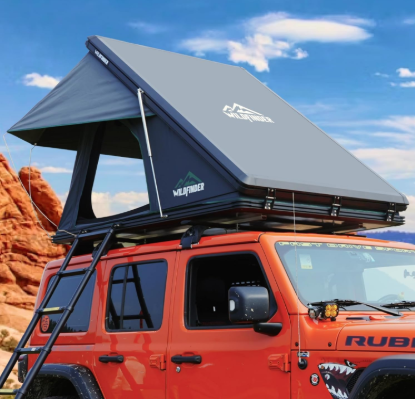
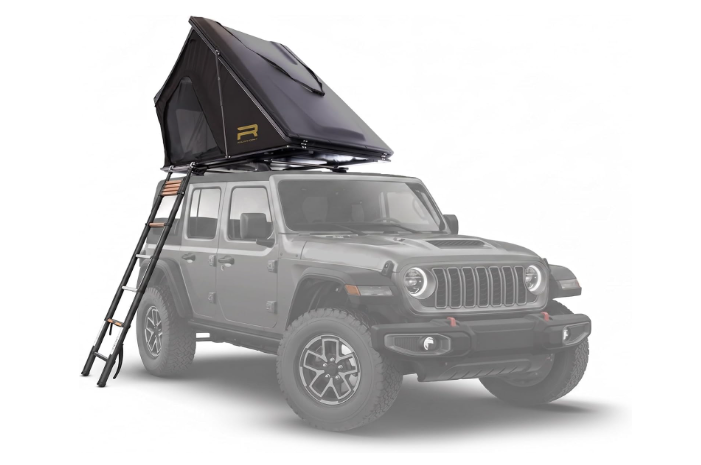
This Roofnest Falcon 2 review keeps coming back to the same standout trait, the hardshell clamshell design pops open and closes in well under a minute, which changes how often you actually feel like setting up camp rather than pushing through to the next stop. It is aimed at overlanders and weekend campers who value a fast, low profile pitch over the largest possible floor plan.
The detail that decides whether this tent fits your trips is how much you value speed and aerodynamics on the drive over raw interior space once you arrive. If you want to be inside a made up bed within a minute or two of parking, the Falcon 2 is one of the strongest options in this category, and understanding exactly how that clamshell mechanism holds up across different conditions, ground types, and years of use is worth walking through before deciding it is the right tent for your rig.
Specifications
| Weight | 165 lb |
| Capacity | 2 person |
| Closed height | 10 in |
| Mattress thickness | 2.5 in high density foam |
| Shell material | Fiberglass reinforced hardshell |
| Season rating | 3 season |
Who it is for
The Falcon 2 suits drivers who want the low profile and improved fuel economy of a hardshell tent without stepping all the way up to a premium price point, and it particularly suits anyone who camps often enough that a slow setup becomes a real deterrent to stopping for the night. The kind of camper who benefits most is someone doing frequent short trips, a Friday night stop after a long work week, or a spontaneous one night stay somewhere along a road trip route, where the difference between a five minute pitch and a twenty minute one genuinely changes whether the stop happens at all.
It is a less natural fit for larger groups or families, since the two person capacity and fixed hardshell footprint leave no room to grow the way a softshell with an annex can, and it is also a weaker match for anyone who plans to store significant gear inside the tent itself between trips, since the rigid shell simply does not offer the internal volume for that. Buyers who camp mostly in one fixed location for extended stays, rather than moving frequently between sites, also get less benefit from the Falcon 2’s core advantage, since the fast setup and teardown matters most when you are doing it often.
How it performs
Setup
This is the Falcon 2’s clearest strength. The gas strut assisted clamshell lid lifts open with minimal effort, and the mattress and bedding stay made up inside, so there is genuinely very little to do beyond popping the latches and extending the ladder. Closing down in the morning is just as fast, which matters as much as the opening speed on a trip with an early departure. Gas struts of this kind, the same general type used in tailgates and hatchbacks, are typically rated for many thousands of open and close cycles before they lose enough gas pressure to need replacement, so for the vast majority of owners this is not a component that needs thinking about for years of regular use.
Solo setup is entirely realistic here, unlike with a softshell tent, since the clamshell mechanism does not require a second person to walk canvas around a frame, it simply needs someone to release the latches and let the struts do the lifting. The one place solo setup gets slightly trickier is on a site with any meaningful slope, where getting the ladder seated at a stable angle by yourself takes a bit more care than it would with a second person steadying it, though this is a minor point next to how much of the rest of the process is already automated by the strut assisted lid.
Weather
The rigid hardshell handles wind noticeably better than a softshell canvas tent, since there is no fabric to flex or flap in gusts, and the shell itself acts as a much stiffer wind barrier than any canvas wall could. Rain performance is strong thanks to the sealed shell, and condensation is managed reasonably well through the built in vents, though in genuinely humid conditions some moisture buildup is still noticeable by morning, a common trait of hardshell tents generally since the rigid structure holds warm, moist air from breathing occupants against a cooler shell surface more readily than a breathable canvas wall does.
In a passing shower the sealed shell means you barely notice anything happening outside, but in a sustained, multi hour rain event it is worth paying closer attention to the extended canvas wall sections around the sides, the part of the tent that is not rigid shell, since that is where water management depends on the same taped seam and coated fabric principles that govern any softshell tent’s weather resistance. Fiberglass reinforced hardshells like this one typically carry no meaningful hydrostatic head rating in the way fabric does, since the shell itself is effectively waterproof by construction, but the canvas transition sections still rely on a coating or tight weave in the 1500 to 3000 millimeter range that is typical across the industry for quality rooftop tent fabrics.
Space
Interior floor space is comfortable for two adults but not generous, and there is minimal room for gear storage inside the shell itself, so a separate storage solution for clothing and bags is worth planning for. The low profile that makes it fast to close also means less headroom than a taller softshell design, which is most noticeable when sitting up to change clothes or during a long, weather delayed morning inside.
The mattress itself, at 2.5 inches of high density foam, sits within the typical range most rooftop tent manufacturers use, generally somewhere between 2 and 3 inches for a factory fitted pad, a thickness chosen to balance sleeping comfort against how compactly the whole assembly needs to fold down inside a 10 inch closed shell. Anyone accustomed to a thicker home mattress will notice the difference the first night or two, though most owners report adjusting within a trip or two.
Durability and weight
The fiberglass reinforced shell holds up well to UV exposure and rough handling over multiple seasons, and at 165 pounds it sits in a reasonable middle ground, heavier than a softshell like the Front Runner Feather Lite but lighter than some of the larger XL hardshell options on the market. Fiberglass as a shell material is valued in this category specifically because it resists the gradual UV degradation and impact cracking that can affect cheaper ABS plastic shells over years of sun exposure, while remaining lighter than an all aluminum shell of comparable rigidity.
The hinge mechanism connecting the upper and lower shell halves is the component most worth paying attention to over a long ownership period, since it carries repeated mechanical load with every open and close cycle. Reports from long term owners suggest the hardware here holds tolerance well, with minimal play developing even after several seasons of regular use, which is a meaningful data point given how central that hinge is to the entire tent’s function.
Setup in the field
Beyond the mechanics of the pitch itself, real world use surfaces a few practical patterns worth knowing. Latching the shell closed in the morning after a damp night requires making sure the canvas walls are folded in cleanly first, since the shell will not close flush over bunched up fabric, a small technique that becomes automatic after a few mornings but can be genuinely frustrating the first time you encounter it, particularly if you are in a hurry. Owners who camp frequently on uneven forest service roads and dispersed sites report that the ladder’s adjustable feet handle moderate unevenness well, though a genuinely steep or rocky site still benefits from a leveling ramp under the tires before the tent goes up at all, advice that applies to essentially any rooftop tent regardless of brand.
Pros and cons
What we liked
- Among the fastest setup and teardown in the hardshell category
- low profile improves highway driving experience
- rigid shell handles wind well
- solid build quality for the price point
What we did not
- Limited interior space for two
- minimal internal gear storage
- no clear path to add capacity later
How it compares
Against the iKamper Skycamp 3.0, the Falcon 2 is lighter and less expensive but offers less floor space, since the Skycamp is built around three person capacity. Against the CVT Mt. Bachelor, the two are closer in size and setup speed, though the Falcon 2 has a more established track record and a wider network of installer support. Against the TMBK Overland, which uses a lighter aluminum shell rather than fiberglass, the Falcon 2 runs a bit heavier but has a longer history in the category and a more extensive base of owner feedback to draw on, while the TMBK undercuts it meaningfully on weight for buyers whose roof rating is the tighter constraint.
Frequently Asked Questions
How fast is the Roofnest Falcon 2 to set up?
Most owners report well under a minute to pop the shell open and extend the ladder, making it one of the faster hardshell tents to pitch and pack down.
Does the Falcon 2 improve fuel economy compared to a softshell tent?
The low, aerodynamic closed profile does reduce wind resistance noticeably compared to a bulkier softshell box, though the exact fuel economy impact varies by vehicle and driving speed.
Is the Roofnest Falcon 2 good for two adults with gear?
It comfortably fits two adults for sleeping, but internal gear storage is limited, so plan on keeping bags and clothing in the vehicle or a separate roof box rather than inside the tent itself.
Can the Roofnest Falcon 2 be mounted on most roof racks?
It mounts to most crossbar systems rated for the tent’s weight, though checking your specific rack’s static and dynamic load ratings before purchase is essential.
Verdict
What tends to convince skeptical buyers who test drive the Falcon 2 at a dealer or a friend’s campsite is simply watching how little thought the setup actually requires after the first couple of times. There is no fiddling with poles, no wrestling canvas into place, and no wondering whether it was pitched correctly, since the shell only closes properly when everything underneath is where it should be. That built in feedback loop is a quieter but genuinely valuable safety feature that is easy to overlook until you have used a tent that lacks it.
The Roofnest Falcon 2 delivers on the core promise of a hardshell rooftop tent, a genuinely fast setup and a low profile that makes the drive between camps noticeably more pleasant. It is not the roomiest tent in this category, but for two people who camp frequently and value speed, that trade off is an easy one to accept.
Buy this if fast setup and a low highway profile matter more to you than maximum interior space. Look elsewhere if you regularly camp with a third person or need more onboard storage, since a larger hardshell or a softshell with an annex will serve you better. For the full range of options at every weight and price, see our rooftop tents buying guide.
One of the fastest hardshell rooftop tents to open and close, with a low profile that makes highway driving noticeably better, at the cost of limited interior space and storage.