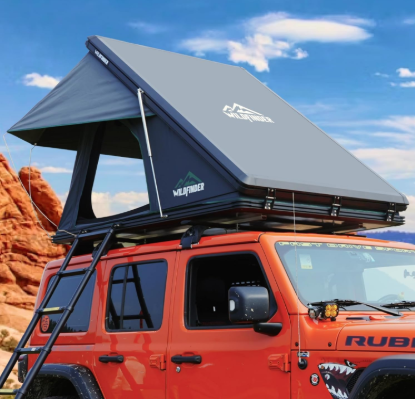
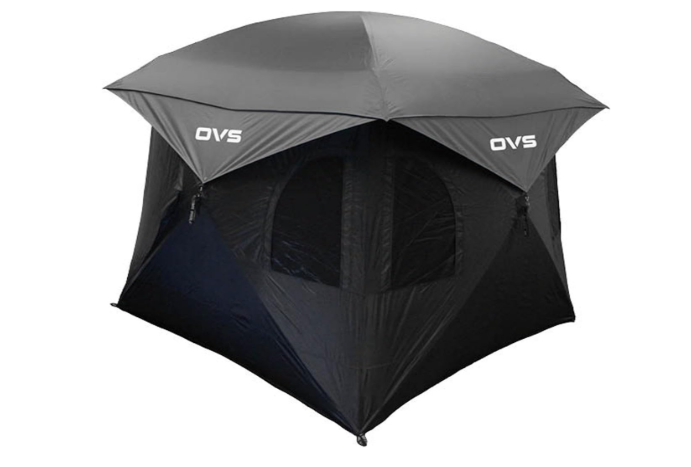
Rooftop tent vs ground tent is a decision that shapes nearly every part of how you camp, from where you can pitch to how much your vehicle costs to run afterward. A rooftop tent mounts permanently or semi-permanently to a roof rack and sets up above the vehicle, off the ground and away from uneven terrain, while a ground tent pitches directly on the earth and can go virtually anywhere you can walk to, at a fraction of the price. Neither option is universally better, and the right pick depends on your vehicle, your budget, how much off-the-ground comfort matters to you, and whether your trips ever take you beyond the end of a road.
The short answer
Choose a rooftop tent if you value being elevated off uneven or wet ground, camp mostly near your vehicle, and can accept a real hit to fuel economy. Choose a ground tent if you want flexibility to camp anywhere, including backcountry sites a vehicle cannot reach, and a far lower upfront cost. Most car campers who stick to established campgrounds can be happy with either, while backpackers and anyone chasing remote, walk-in sites need a ground tent regardless of budget.
Side by side
| Factor | Rooftop Tent | Ground Tent |
|---|---|---|
| Price for comparable capacity | Significantly higher | Significantly lower |
| Setup time | Under 1 to 7 minutes | 5 to 20 minutes |
| Where you can camp | Anywhere you can park | Anywhere you can walk to |
| Impact on fuel economy | Noticeable, ongoing | None |
| Typical weight range | Roughly 100 to 250 lb | Roughly 3 to 25 lb |
Rooftop tents explained
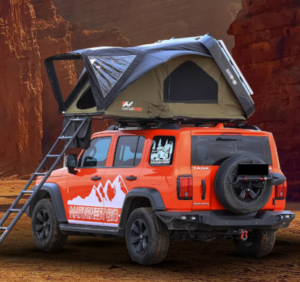
A rooftop tent mounts to a roof rack rated for the added static and dynamic load, and once installed it stays on the vehicle for the season or gets removed between trips depending on how often you use it. The weight sits well above the vehicle’s own center of gravity, which is why manufacturers publish a dynamic rating for driving separately from a static rating for parked use, since the forces acting on a roof-mounted load during braking and cornering are far greater than the load’s actual weight would suggest. Sleeping elevated off the ground means no rocks, roots, or puddles under the mattress, and setup at camp is far faster than pitching a comparable ground tent, especially with a hardshell design that opens in under a minute.
The tradeoffs are significant: a rooftop tent adds real, ongoing weight and drag that measurably affects fuel economy on every drive, not just camping trips, since the tent stays mounted between outings for most owners rather than being removed and reinstalled each time. The tent also ties you to wherever your vehicle can physically park, ruling out any site beyond the end of a road, ridgeline, or trailhead, which matters a great deal if your camping style ever includes hike-in or paddle-in sites rather than exclusively vehicle-accessible ones.
Ground tents explained
A ground tent pitches directly on the earth using stakes and poles, distributing the structure’s weight across the footprint through the floor and guy lines rather than through a single mounting point on a vehicle roof. It can go anywhere you are willing to carry it, from a drive-up campground to a backcountry site miles from the nearest road, and the pole and fabric construction used across most ground tents, whether freestanding dome poles or a trekking-pole shelter, is largely the same engineering family regardless of price point, which keeps entry costs low. It costs a fraction of a comparable rooftop tent, adds no permanent weight or drag to your vehicle, and packs away small enough to store in a closet rather than living on your roof rack year round.
The tradeoff is exposure to whatever the ground offers that night, from rocks and roots to standing water after rain, since the tent floor sits directly on whatever surface you choose rather than being elevated above it. Setup generally takes longer than a hardshell rooftop tent, though a good freestanding ground tent still pitches in well under ten minutes with practice, and site selection becomes a real skill that affects sleep quality in a way it simply does not for a rooftop tent, which sleeps the same regardless of what is directly beneath the vehicle.
Where each one wins
Ground clearance and site flexibility
Ground tent wins decisively, since it can be carried anywhere on foot, while a rooftop tent is limited to sites your vehicle can actually reach and park at, ruling out hike-in, paddle-in, or otherwise vehicle-restricted locations entirely.
Weather
Rooftop tent wins for wet or uneven ground, since sleeping elevated avoids puddles and roots entirely, though both handle wind and rain reasonably well when properly set up, and a ground tent pitched on a poor site can actually perform worse in a storm than an elevated rooftop tent would.
Budget
Ground tent wins clearly, often costing a small fraction of even a budget rooftop tent for comparable capacity, since the manufacturing and material costs of a fabric-and-pole shelter are inherently lower than a roof-mounted structure with rack-compatible hardware.
Setup effort
Rooftop tent wins for repeated use, since a hardshell version sets up in under a minute at every stop, while a ground tent must be staked and adjusted each time, a difference that adds up quickly over a multi-stop road trip.
Vehicle impact
Ground tent wins clearly here, since it adds no ongoing weight, drag, or fuel economy penalty to the vehicle between trips, while a rooftop tent affects daily driving costs for as long as it stays mounted, which for most owners is most of the camping season.
Which should you buy
If most of your trips involve driving to a site and setting up camp repeatedly, and you can accept the ongoing fuel economy hit, a rooftop tent delivers real comfort and speed over a season of use, particularly for anyone who values not thinking about ground conditions at all. If your trips include backcountry sites a vehicle cannot reach, or you are working with a tighter budget, a ground tent remains the more flexible and affordable choice, and it is simply the only option once your trip goes beyond where a vehicle can drive. For the full range of rooftop options, see our rooftop tents buying guide.
Frequently Asked Questions
Does a rooftop tent really hurt gas mileage?
Yes, a rooftop tent adds meaningful weight and wind drag that reduces fuel economy on every drive it stays mounted, not just on camping trips, with the effect more pronounced at highway speeds where aerodynamic drag dominates fuel consumption. A ground tent, by contrast, has zero ongoing impact on mileage since it rides inside the vehicle rather than on top of it.
Can I use a rooftop tent without a roof rack?
No, a roof rack rated for the tent’s static and dynamic weight is required, and most vehicles need this added separately before a rooftop tent purchase makes sense, since factory crossbars are frequently rated well below what even a lightweight rooftop tent requires for safe driving use.
Is a rooftop tent safer than a ground tent?
Being elevated off the ground does offer a psychological sense of separation from wildlife and ground moisture, though a properly set up ground tent is not meaningfully less safe in most camping situations. Neither shelter type offers real structural protection from large wildlife, and both rely on good site and food storage practices for genuine safety rather than the shelter itself.
Which option is better for backcountry camping?
A ground tent, without question, since a rooftop tent is limited to wherever your vehicle can physically drive and park, ruling out any site beyond the end of a road. Anyone who regularly hikes, paddles, or bikes into a site needs a ground tent or a dedicated backpacking shelter, since a rooftop tent simply cannot travel that last stretch on its own.
Buy a rooftop tent if you value elevated sleeping and repeated fast setup near your vehicle, and a ground tent if you want site flexibility and a far lower price.