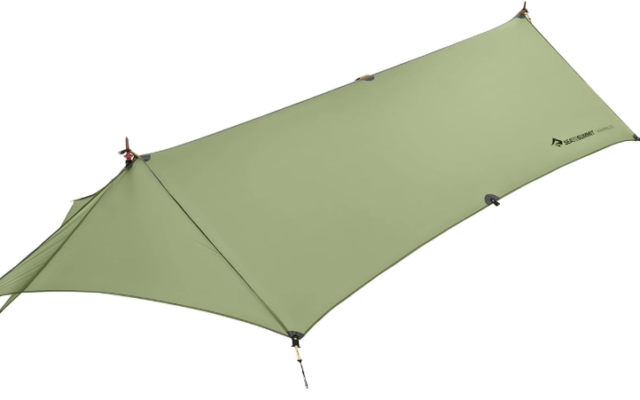
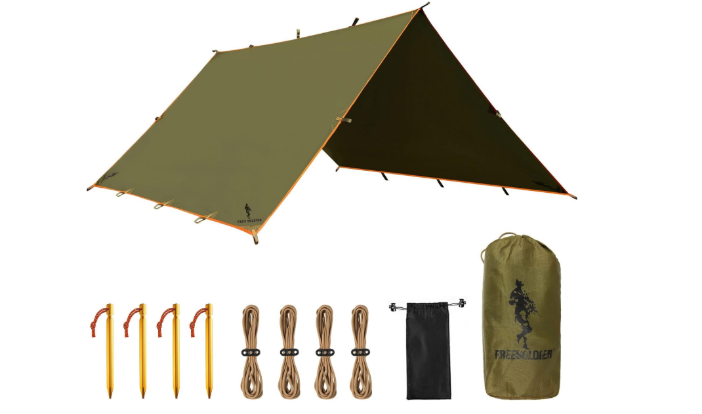
Tarp vs canopy for camping comes down to a trade off between weight and standing structure, since a tarp is a flat sheet of fabric pitched with cord and stakes while a canopy is a self supporting frame that unfolds into a standing shelter with real headroom. A tarp wins on packability and price, while a canopy wins on setup ease and comfort once it is up. Neither is universally better, and the right choice depends heavily on whether you are backpacking, car camping, or hosting a group at a fixed site, and the underlying engineering difference between a tensioned fabric pitch and a rigid hinged frame explains most of the practical trade offs between them.
The short answer
Choose a tarp if pack weight matters or you are backpacking. Choose a canopy if you are car camping and want a standing structure with real headroom that sets up in minutes without needing trees. Many established campers eventually own both and reach for whichever one fits the specific trip.
Side by side
| Factor | Tarp | Canopy |
|---|---|---|
| Typical weight | 1 to 5 lb | 40 to 70 lb |
| Setup time | 5 to 15 minutes, needs trees or poles | Under 5 minutes, self supporting |
| Standing headroom | Limited, depends on pitch | Full headroom throughout |
| Price for comparable coverage | Often lower | Often higher |
| Packed size | Fits in a stuff sack | Needs a dedicated rolling bag |
Tarps explained
A tarp is a flat piece of coated fabric with grommets or guy-out points along the edges, pitched using cord, stakes, trekking poles, or nearby trees into one of several possible shapes depending on the design. Because a tarp has no rigid frame of its own, its ability to resist wind and hold its shape comes entirely from how tightly it is tensioned and the angle it is pitched at, which is why a well-executed tarp pitch with a taut ridgeline and properly staked corners can actually shed a strong gust more gracefully than it looks like it should, flexing slightly rather than fighting the wind head on the way a rigid structure must.
This flexibility and low weight make tarps the default choice for backpacking, where every ounce matters and a tarp can weigh a fraction of even a lightweight canopy, since the entire shelter is just coated fabric and some cord rather than any structural hardware. The trade off is that pitching well takes some practice, since getting the tension even across every tie-out point and choosing an anchor arrangement that actually works with the terrain is a learned skill, and standing headroom is generally limited compared to a true canopy, concentrated mostly at the ridgeline and tapering off toward the edges. A tarp also depends on finding suitable anchor points, whether that means correctly spaced trees or carrying trekking poles specifically for the pitch.
Canopies explained
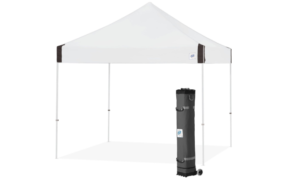
A canopy, in the pop up sense most campers mean, is a frame, typically steel or aluminum, built around a scissoring hinge mechanism at each leg that unfolds from a folded bundle into a self supporting structure with a fabric top, pitching in minutes without needing trees or careful guy line tensioning. The frame holds its rectangular shape through structural rigidity rather than fabric tension, which is why a canopy stands up the moment its legs lock into place rather than requiring the fabric itself to be pulled taut against anchor points the way a tarp does. The genuine standing headroom throughout the space is the biggest advantage over a tarp, useful for cooking, eating, or simply standing up out of the sun or rain without ducking near the edges.
The trade off is substantial weight and bulk, since even the lightest pop up canopies weigh forty pounds or more, putting them firmly in car camping territory rather than anything you carry on foot, a direct consequence of the steel or aluminum tubing and hinge hardware needed to hold that rigid shape reliably through hundreds of open and close cycles over its lifespan. The canopy’s tall, boxy profile also means its wind resistance depends heavily on frame gauge and how many stake points are actually used, since unlike a low tarp that can be pitched to deflect wind, a standing canopy always presents a relatively large, mostly vertical surface area to any gust that catches it broadside.
Where each one wins
Weight
Tarps win by a wide margin, weighing a small fraction of even the lightest pop up canopy frame, since there is no structural steel or aluminum involved at all.
Weather protection
Roughly even, since both depend heavily on the specific fabric coating and how well the shelter is pitched or staked, though canopies with add on sidewalls can close the gap against wind-driven rain specifically.
Budget
Tarps generally win, offering solid coverage at a lower price than a comparable canopy frame, though large group tarps and premium canopies can invert that at the extremes of each category.
Setup speed
Canopies win decisively for ease, self supporting and pitching in minutes without needing trees, poles, or practiced guy line tensioning, a real advantage for anyone arriving at a site tired or after dark.
Longevity with repeated use
Canopies generally win here too, since their steel or aluminum frames are engineered for hundreds of open-close cycles, while a tarp’s fabric and grommets, though durable, see more cumulative wear from repeated staking, folding, and UV exposure over the same number of trips.
Which should you buy
If you are backpacking or simply want the lightest, most packable shelter option, a tarp is the clear choice, and it remains a genuinely capable rain shelter once you have learned a couple of pitch configurations well enough to execute them quickly. If you are car camping and want a standing structure that goes up in minutes and gives your group real headroom to cook, eat, or gather under, a canopy is worth the added weight and cost, and its frame will likely outlast several seasons of a tarp’s fabric wear given how it is engineered for repeated cycling. For the full range of both shelter types, see our tarps and canopies buying guide.
What each shelter does poorly
It is worth being honest about where each option genuinely struggles rather than only listing strengths. A tarp offers essentially no bug protection and only modest privacy, since an open-sided pitch like a lean-to or diamond leaves gaps that mosquitoes and other insects move through freely, and even a fully closed A-frame usually has some ventilation gap at the base. A tarp also depends entirely on correct pitching technique to perform well, meaning the exact same piece of fabric can be a reliable rain shelter in experienced hands and a flapping, leaking mess in inexperienced ones, a variability a canopy’s rigid frame simply does not have.
A canopy’s weaknesses run in the opposite direction. Its tall, mostly vertical profile means it genuinely struggles in sustained high wind regardless of how well it is staked, since the physics of a large flat vertical surface catching a gust broadside do not change no matter how sturdy the frame is, which is why canopies are often the first structure taken down or reinforced with extra weights when a forecast turns windy. A canopy also offers essentially no flexibility in shape or coverage area once purchased, unlike a tarp that can be reconfigured into a lean-to, A-frame, or diamond pitch depending on what a given night actually calls for.
Frequently Asked Questions
Can a tarp provide as much standing room as a canopy?
With a steep, high pitch and the right configuration a tarp can offer decent headroom in the center, especially with a ridgeline elevated on trekking poles or a high tree branch. It rarely matches the consistent, edge to edge standing headroom of a true canopy frame, though, since the fabric inevitably slopes down toward its anchor points at the perimeter.
Is a canopy more wind resistant than a tarp?
Not necessarily, since a canopy’s tall, boxy shape actually catches more wind surface area than a low, angled tarp pitch. This is why low profile tarps often perform better in genuinely gusty conditions, particularly at exposed sites like beaches, even though the canopy’s rigid frame feels sturdier when you are standing next to it.
Can I backpack with a canopy instead of a tarp?
Not realistically, since even the lightest pop up canopy frames weigh forty pounds or more and pack into a rigid bundle that will not compress or conform to a backpack the way fabric does. This makes canopies strictly car camping equipment compared to tarps that can weigh under two pounds and fold into a stuff sack the size of a water bottle.
Do I need both a tarp and a canopy?
Many car campers do use both, a canopy as the main gathering and cooking space and a smaller tarp over a hammock, truck bed, or additional gear area, since the two genuinely serve different roles at the same site and neither fully replaces the other’s specific strengths.
Buy a tarp if pack weight matters or you are backpacking, and buy a canopy if you are car camping and want a standing structure with real headroom that sets up fast.