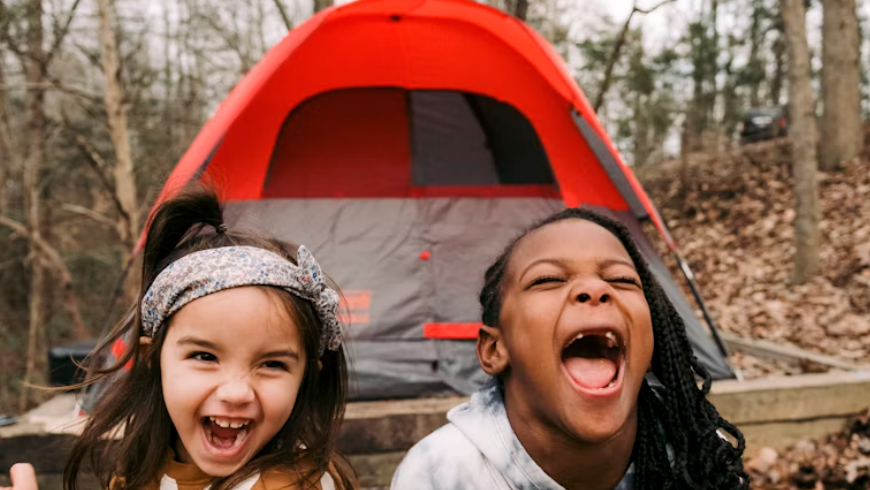
Camping with kids for the first time works best when the goal is a good experience rather than a perfect one, because the trip that goes exactly to plan is rare and the trip that leaves everyone wanting to go again is entirely achievable. Kids do not need an elaborate campsite to have a good time. They mostly need to be warm, fed, not bored, and reasonably close to a parent who is not too stressed to enjoy it either.
The adjustments from a standard camping trip are fewer than people expect, and they cluster around three things: picking a forgiving location, packing for a child’s actual needs rather than an adult’s, and building in enough unstructured time that nobody is trying to force fun on a schedule.
The short answer
Choose a campground with facilities close by for a first trip, not a remote backcountry site. Keep the trip short, one or two nights, rather than starting with a week. Bring more warm layers and more snacks than seems necessary, and pack a few familiar comfort items from home. Plan one simple activity rather than a full schedule, and expect the first hour or two to involve some resistance to the unfamiliar setup regardless of how well prepared you are.
Choose a forgiving location for the first trip
This is not the trip to test a remote site with no facilities nearby. A first family camping trip goes better with some safety margin built into the location itself.
- A campground with a toilet block close by, which matters enormously with a child who needs the toilet at inconvenient hours.
- Within a reasonable drive of home, so leaving early is a real option if the trip is not working for anyone, without that feeling like a failure.
- A site with some other families around, since children often warm to a new environment faster when there are other kids to notice.
- Somewhere with a bit of easy exploring, whether that is a short flat trail, a shallow creek or simply space to run, since idle time is where most meltdowns start.
Our guide to how to choose a campsite covers the practical side of picking ground, and for a family the facility distance matters more than usual.
Pack for a child’s actual needs, not a scaled down adult list
A standard packing list covers the basics, and a few additions matter specifically for kids.
- More layers than feels necessary. Children regulate temperature less efficiently than adults and get cold faster, particularly once the sun goes down.
- A kids sleeping bag rated for the actual temperature, since an adult bag sized down does not insulate properly around a smaller body.
- Familiar comfort items from home, a specific stuffed animal, a particular blanket, whatever the usual bedtime routine involves. An unfamiliar environment is easier with a familiar object in it.
- More snacks than you think you need, and easy ones. Physical activity outdoors burns through a child’s energy faster than a normal day, and hunger shows up as tears well before anyone mentions being hungry.
- A headlamp of their own, which does double duty as a genuinely exciting item and a practical safety tool once it is dark.
- A well stocked first aid kit, since small scrapes happen more often with kids exploring new ground.
Our fuller camping checklist for beginners and first camping trip what to bring cover the base list this builds on.
Keep the schedule loose and the trip short
The instinct to plan activities for every hour usually backfires. Children do well with less structure outdoors than parents expect, and a loosely planned day leaves room to follow what is actually holding their attention rather than moving on because the itinerary says so.
- One or two nights for the first trip, not a full week. This is a trial run, and a short successful trip builds appetite for a longer one far better than a long difficult one does.
- One simple planned activity per day, with the rest left open. A short walk, exploring near water, or nothing more structured than free play around the site.
- Involve them in setup, even in small ways. Holding a peg, unrolling a sleeping bag, helping find firewood. Ownership of the process makes the unfamiliar feel less unfamiliar.
- Expect an adjustment period. The first hour or two at an unfamiliar campsite is often the hardest part of the whole trip, and it usually passes once the initial newness settles.
The evening routine matters more than usual
Bedtime in an unfamiliar setting can be the trickiest part of a first family trip, and keeping the routine as close to normal as possible helps considerably.
Keep the same order of events as home where you can, whether that is a story, a particular song or a specific sequence before sleep. Darkness outside a tent feels different to darkness in a bedroom, so a small nightlight or a dimmed lantern left on inside the tent can help more than seems necessary. Our note on how to sleep better in a tent covers making that first night comfortable for the whole family, not just the kids.
Common mistakes
- Choosing a remote first location. A first family trip is the wrong time to test a site with no facilities nearby or a long drive to reach. Build in safety margin.
- Overpacking activities and underpacking snacks. A full itinerary rarely survives contact with a tired, hungry child. Food runs out faster than schedules do.
- Skipping familiar comfort items. They weigh almost nothing and do more for a smooth first night than most other preparation combined.
- Planning too long a trip. A difficult week long first trip can put a family off camping entirely. A good short trip builds toward a longer one naturally.
Frequently asked questions
What age is good to start camping with kids?
There is no fixed age, and families successfully camp with children from infancy onward with the right adjustments. What matters more than age is choosing a location with good facility access and keeping the first trip short, so the family can adapt gradually rather than facing a demanding trip from the start.
How do I keep my kids warm camping?
Pack more layers than seems necessary, since children lose heat faster than adults, and use a sleeping bag genuinely rated for the expected temperature rather than an adult bag sized down. A warm hat for sleeping and a hot water bottle for particularly cold nights both help considerably.
What should kids do while camping?
Unstructured exploration usually works better than planned activities. A short walk, time near water, helping with camp setup, or simply free play around the site tends to hold a child’s attention longer than an organised itinerary, and it leaves room to follow what is genuinely capturing their interest.
How long should a first camping trip with kids be?
One or two nights is the right length for a first trip. It is enough to experience the full routine of setting up, sleeping outside and packing down, without the trip becoming a test of endurance if something does not go smoothly.
Wrapping up
Camping with kids for the first time goes well when the location is forgiving, the packing accounts for a child’s real needs, and the schedule stays loose enough to follow what is actually working. None of it requires expensive kid specific gear beyond a properly rated sleeping bag and a few familiar comforts from home.
A short, well prepared first trip is what makes a second one likely. That is the actual goal, more than any single activity or perfect campsite.
For the wider basics, see our guide to camping for beginners, and our roundup of camping gear starter kits covers what to buy once you know the family enjoys it.