
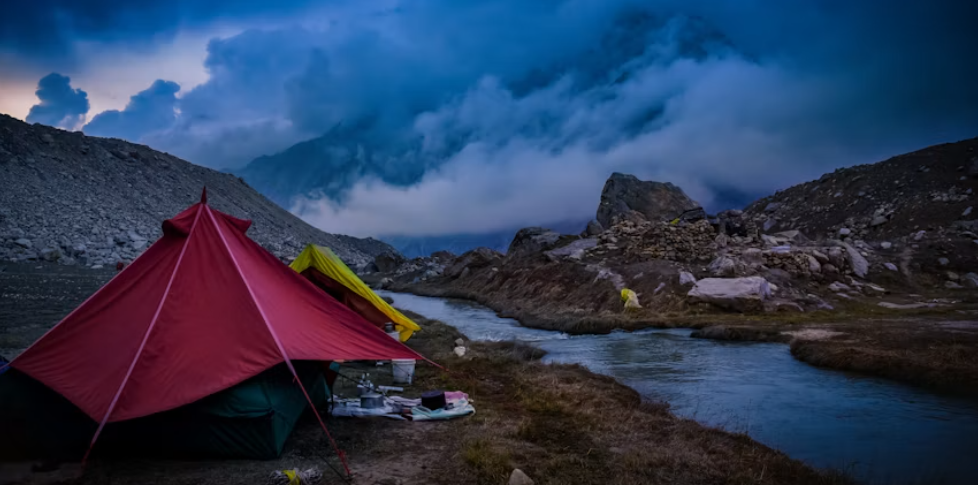
Working out how to keep a tent dry in heavy rain is less about the tent than most people assume. Modern tents shed water well. What lets water in is almost always something around the tent: where it was pitched, how the fly was tensioned, what got dragged inside on wet clothing, and whether the air had anywhere to go.
There is also a distinction worth making early. A tent that leaks and a tent full of condensation feel identical at two in the morning and have completely different causes and fixes. Most wet nights blamed on leaking tents are condensation, which is good news, because condensation is the easier of the two to solve.
The short answer
Pitch on raised, well drained ground and never in a dip. Tension the fly so it does not touch the inner anywhere, and peg out every guy line. Keep the footprint tucked strictly under the fly so it cannot collect runoff. Vent the tent even in cold weather, because sealed tents rain on you from the inside. Keep wet clothing in the vestibule, never inside, and shake the fly down before packing.
The pitch decides most of it
You cannot fix a bad pitch with good technique. If water is running towards the tent or collecting under it, everything else is damage control.
- Raised, firm ground. Even a slight rise keeps you out of the sheet of water that moves across a site during a downpour.
- Never a hollow, however sheltered it looks. Hollows are where water ends up, and a tent in one becomes an island.
- Look at where water would run. Old channels, flattened grass and silt lines all show the route water took last time it rained hard.
- Avoid the base of slopes, which collect everything coming down from above.
- Do not dig a trench around the tent. It is old advice, it damages the ground badly, and it is prohibited nearly everywhere. Choosing better ground achieves the same thing.
There is more on assessing terrain in our guide to how to choose a campsite.
Tension the fly and mean it
This is the single most common technique failure. A slack fly sags in rain, touches the inner tent, and water wicks straight through the contact point. People then conclude the tent leaks. It does not. It is being asked to do something no tent can do.
Peg the corners first and square the tent up before tensioning anything else. Then work around the guy lines, pulling each one until the fly is taut and there is a clear air gap between fly and inner all the way round. Check the gap by looking rather than assuming, particularly at the corners and along any long panel where sag collects.
Use every guy point in bad weather, not just the obvious ones. Manufacturers do not add guy points for decoration, and a fly that is drum tight sheds water and resists wind at the same time. Retension before bed, because fabric relaxes as it wets and the tension you set in dry conditions will not be there two hours later.
Footprints, groundsheets and the puddle you create yourself
A footprint that extends beyond the fly is worse than no footprint at all. Rain runs off the fly, lands on the exposed lip, and is funnelled into the space between the footprint and the tent floor. You then have a shallow pool sitting directly under where you sleep.
The rule is simple. The footprint must sit strictly inside the line of the fly, with no edge peeking out anywhere. If yours is slightly oversized, fold the excess under rather than leaving it exposed. A cheap plastic sheet cut a few centimetres smaller than the tent floor does the job perfectly well.
Condensation is the other half of the problem
A sleeping adult releases a significant amount of moisture overnight through breath and skin. In a sealed tent that moisture has nowhere to go, so it condenses on the coldest surface available, which is the inside of the fly, and then drips.
- Open the vents, including in cold weather. A ventilated tent sleeps warmer than a sealed one, because a damp sleeping bag insulates badly.
- Crack the door zips at top and bottom to create airflow through the tent rather than into a dead end.
- Keep wet gear in the vestibule. A soaked jacket brought inside will evaporate into the air you are breathing and land on the fly as water.
- Do not cook inside. Beyond the fire and carbon monoxide risk, boiling water puts an enormous amount of moisture into a small space.
- Keep your bag off the walls, since anything touching the inner will wick moisture across.
- Wipe the fly down in the morning with a small cloth before it drips onto everything.
Restoring a tent that has started letting water through
Tents do genuinely wear out, and there are two separate things to check before deciding yours has.
First, the fly’s durable water repellent finish. When rain stops beading and instead soaks into the fabric as dark patches, the coating has worn off rather than the tent having failed. A spray on repellent restores it, and it is worth doing every year or two on a tent in regular use.
Second, the seams. Factory tape lifts with age, usually at the corners and along stress points. Seam sealer applied to the inside of the fly along the taped lines fixes it, and should be done dry, indoors, with a full day to cure. Pitch the tent at home to find the failures first, since a garden hose will show you exactly where water gets in without any of the consequences.
When gear does get wet regardless, our guide to how to dry wet gear at camp covers recovering from it.
Common mistakes
- A slack fly touching the inner. The cause of most reported leaks. Retension after the fabric wets and check the air gap all the way round.
- An oversized footprint. Turns the tent into a collection tray. Tuck every edge strictly under the fly.
- Sealing the tent against the cold. Understandable and counterproductive. Closed vents produce condensation, which makes the tent colder rather than warmer.
- Packing the tent away wet and leaving it. Occasionally unavoidable on the day, genuinely damaging after that. Mildew ruins coatings permanently, so dry it fully within a day or two of getting home.
Frequently asked questions
Why is my tent wet inside when it is not leaking?
Almost always condensation. Breath and skin moisture collect on the inside of the fly overnight and drip. Open the vents, crack the door zips, keep wet clothing in the vestibule and make sure nothing inside touches the walls.
Do I need a footprint for my tent?
It is not essential, but it protects the floor from abrasion and adds a little warmth. What matters most is the size. A footprint extending past the fly collects runoff and funnels it under you, which is worse than having none at all.
How do I waterproof an old tent?
Two separate jobs. Spray on a durable water repellent to restore beading on the fly, and apply seam sealer to the inside of the taped seams where tape has lifted. Do both dry and indoors, and allow a full day to cure before packing.
Can I use a tarp over my tent in heavy rain?
Yes, and it works well if pitched with a clear gap above the fly so air still moves between them. A tarp reduces the water hitting the tent and gives you a dry space to cook and change under, which matters more than the tent itself on a long wet weekend.
Wrapping up
Most of how to keep a tent dry in heavy rain happens before the rain arrives. Pitch on raised, well drained ground, tension the fly until there is daylight between it and the inner, tuck the footprint strictly underneath, and leave the vents open however cold it feels.
If you take one thing from this, make it the fly tension. A drum tight fly solves leaking, condensation and wind resistance simultaneously, and it costs nothing but two minutes with the guy lines.
For the wider skill set, see our guide to campsite skills and camp craft. If your current tent is struggling, our roundup of the best backpacking tents for heavy rain goes through hydrostatic head ratings and fly designs that actually cope.