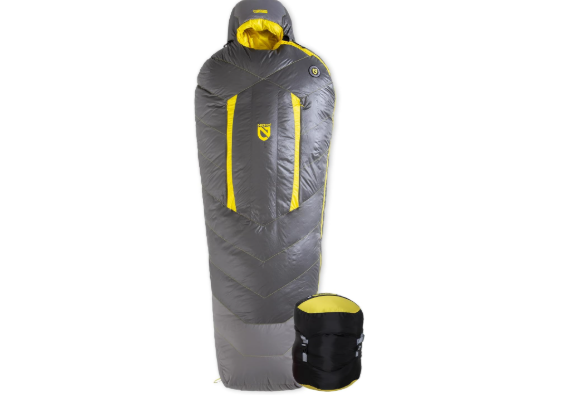
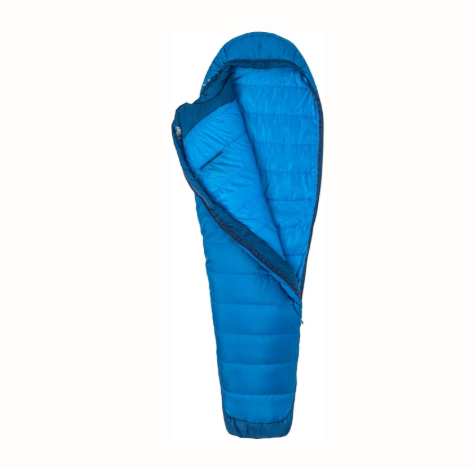
The Marmot Trestles Elite Eco 20 review conversation almost always starts with sustainability, since this bag is built with 100 percent recycled shell and lining fabrics without giving up the warmth or comfort backpackers expect from a synthetic three season bag. It is aimed at campers who want a dependable 20 degree bag and would rather their gear purchase not lean quite so heavily on virgin synthetic materials.
Beyond the recycled materials story, this is simply a well built synthetic mummy bag with a roomy cut and a few thoughtful comfort details that put it a step above bare bones budget options. It suits car campers and three season backpackers about equally well, and understanding exactly where the recycled construction helps and where it does not matters more than the sustainability headline alone.
Specifications
| Temperature rating | 20°F |
| Fill type | Synthetic (recycled Spirafil) |
| Weight | 3 lb 6 oz (regular) |
| Packed size | 9 x 17 in |
| Shape | Mummy |
| Liner fabric | Recycled polyester |
Who it is for
This bag suits campers who want a genuinely warm, comfortable 20 degree bag and place real weight on buying from a recycled material supply chain rather than treating it as a footnote. It also suits anyone who runs a little cold at the feet, since the footbox is cut generously and insulated well relative to the rest of the bag. Families building out a shared gear closet, outdoor programs replacing worn fleet bags, and campers who specifically research the environmental footprint of what they buy tend to be the most enthusiastic owners of this particular bag.
It is a less natural fit for ultralight backpackers chasing the smallest possible packed size, since the fill is not built for extreme compression. It is also not the obvious choice for someone who has never given a second thought to recycled materials and is purely price shopping, since a few competitors at a similar price point skip the recycled fabric story and instead put that cost into a slightly lighter build, so buyers purely optimizing for weight per dollar have other options worth comparing first.
How it performs
Warmth
The Trestles Elite Eco 20 runs true to its rating for an average sleeper, and the footbox in particular performs a notch above where a bag at this price usually lands. The draft tube along the zipper does a solid job blocking cold spots, a detail that budget bags sometimes skip. Like most bags on the market, the printed 20 degree figure is generated under the EN/ISO 23537 lab protocol, which actually yields both a comfort rating for a relaxed average cold sleeper and a separate, lower limit rating for a warmer sleeper curled tightly, and manufacturers typically advertise a single number that sits closer to the limit figure, so it is worth mentally shading the number a few degrees warmer if you know you run cold.
At temperatures right around the rated 20 degrees, the combination of footbox insulation and draft tube keeps performance close to the manikin test results, provided the bag is paired with a properly insulated sleeping pad, since ground conduction is excluded from the lab measurement entirely. Push toward 0 or 10 degrees and the bag’s limits become clear quickly, with the hood cinch and shoulder area becoming the weak points rather than the footbox, which continues to perform well even as the rest of the bag starts to struggle in genuinely cold conditions.
Comfort and fit
The interior is cut wide enough through the shoulders to allow some movement without feeling like a straitjacket, and the liner fabric has a soft hand feel that does not stick to skin on a warm night. Side sleepers should find enough room to shift without fighting the bag, and the recycled polyester liner, contrary to what some buyers expect from a sustainability focused product, does not feel like a compromise in softness or breathability compared to virgin polyester alternatives.
The hood uses a single drawcord system that cinches down around the face reasonably well, though it requires a deliberate pull to seal fully rather than closing automatically with body movement the way a more elaborate two stage hood does. Once cinched properly it blocks drafts effectively, and the separate draft tube at the zipper, an insulated baffle that runs the length of the zip to prevent cold air from leaking through the metal teeth and stitching, is doing much of the practical work of keeping the bag’s interior warm even before the hood comes into play.
Compressibility
Like most synthetic bags, this one takes up meaningful pack space, and it compresses to a size closer to the Kelty Cosmic 20 than to any down competitor. It is not a bag built for minimalist packing. The underlying reason is structural rather than a quality shortfall: down clusters loft into a three dimensional web that collapses under compression and springs back efficiently, which is exactly what the fill power rating measures, while synthetic fiber of any kind, recycled or virgin, needs more bulk by weight to trap an equivalent volume of warm air, so no synthetic bag at any price will match a comparable down bag’s packed size.
Over a season of regular use, the recycled Spirafil fill has held its loft reasonably well through repeated stuff sack cycles, performing comparably to non recycled synthetic fills of similar quality in owner reports, which addresses a fair question buyers sometimes have about whether recycled insulation degrades faster than virgin material. In practice the recycling process does not appear to meaningfully compromise the fiber’s resilience.
Durability
The recycled shell fabric has held up well in long term use reports, resisting the pilling and thinning that cheaper synthetics show after repeated washing. The zipper and draft tube construction feel more durable than the price point might suggest. Synthetic fill’s biggest durability advantage over down shows up specifically in wet conditions: when down gets saturated, the individual plumes clump together and lose structure almost entirely, sometimes requiring a full day or more of sun and airflow to dry back out in the field, while the Spirafil fill here retains a meaningful amount of its loft and trapped air even soaked through, and sheds water and dries considerably faster hung over a line or draped across a pack.
Overnight condensation, an unavoidable byproduct of sleeping in an enclosed tent, beads and wipes off the outer shell without much trouble in normal use, and the shell fabric has not shown a tendency to wet through even after repeated damp mornings across a season of testing. Genuine soaking, such as direct contact with a leaking tent wall for hours, will eventually work through any shell fabric, recycled or not, so this is a matter of degree rather than immunity.
Fit and cut
Marmot builds the Trestles Elite Eco with a differential cut, meaning the outer shell is sewn slightly larger than the inner liner so the insulation sandwiched between the two layers is not squeezed flat wherever the bag bends around the body. This is a meaningful but invisible construction detail, since insulation compressed by tight stitching loses loft exactly where warmth matters most, at the points of contact between body and fabric.
The footbox is boxed rather than pointed, giving feet more natural room than a tapered mummy design, and the extra insulation specifically layered into that footbox is the single most distinctive fit choice on this bag relative to its competitors. Through the torso the cut sits between a trim ultralight taper and a roomy rectangular shape, wide enough to roll partially onto a side comfortably but not so loose that dead air space undermines warmth.
Pros and cons
What we liked
- Built from recycled materials without sacrificing warmth
- well insulated footbox
- roomy comfortable cut
- durable shell fabric
What we did not
- Bulky packed size compared to down bags
- heavier than ultralight synthetic options
How it compares
Against the Kelty Cosmic 20, the Trestles Elite Eco 20 offers a warmer feeling footbox and a stronger sustainability story, while the Cosmic 20 is slightly lighter and a touch more compressible thanks to a fill specifically engineered to resist compression fatigue. Buyers deciding between the two are mostly weighing footbox warmth and recycled materials against marginal weight and pack size savings.
Against the NEMO Forte 35, the Trestles Elite Eco 20 is rated for meaningfully colder conditions and offers stronger footbox insulation, while the Forte trades that cold weather capability for a lighter build and wide zipper venting better suited to warm summer nights. Campers who mostly camp in shoulder seasons will get more use out of the Trestles Elite Eco, while summer focused campers will likely prefer the Forte’s ventilation.
Against the REI Co-op Trailmade 0, the Trestles Elite Eco 20 is lighter and more packable but gives up real cold weather margin, since the Trailmade’s deeper 0 degree rating and similarly insulated footbox make it the better choice for anyone regularly facing temperatures well below 20 degrees. For straightforward three season use where 0 degree capability is not needed, the Trestles Elite Eco is the more efficient choice on both weight and price.
Frequently Asked Questions
Is the Marmot Trestles Elite Eco 20 actually made from recycled materials?
Yes, the shell and lining fabrics are made from recycled content, which is the main differentiator between this bag and Marmot’s standard Trestles line at a similar price.
How does the Marmot Trestles Elite Eco 20 handle cold feet?
The footbox is insulated a notch above what is typical at this price, so cold sleepers who usually struggle with their feet in a mummy bag tend to notice the difference.
Is this bag good for car camping as well as backpacking?
Yes, it works well for both, though the packed size is bulky enough that ounce counters chasing the lightest backpacking setup may prefer a down alternative instead.
Does the recycled fill affect warmth compared to standard synthetic fill?
No, the recycled Spirafil insulation performs comparably to standard synthetic fill at the same rating, so there is no meaningful warmth trade off for choosing the more sustainable option.
Verdict
The Marmot Trestles Elite Eco 20 delivers real warmth, a comfortable roomy cut, and a genuinely better footbox than most bags in its price range, all while being built from recycled materials rather than treating that as marketing gloss. It is a strong pick for anyone who wants a synthetic three season bag they feel good about buying, and the recycled construction has not shown any meaningful compromise in durability or warmth compared to standard synthetic alternatives.
Buy this if a warm footbox and recycled materials matter to you and you are not chasing the smallest possible pack size. Look elsewhere if ounces are your top priority, since a down bag will always compress smaller for the same rating. For more on choosing between fill types generally, see our down versus synthetic sleeping bag guide, and browse the full category in our sleeping bags guide.
A warm, roomy synthetic bag built from recycled materials, with a standout footbox and durable construction that makes it a strong all around three season pick.