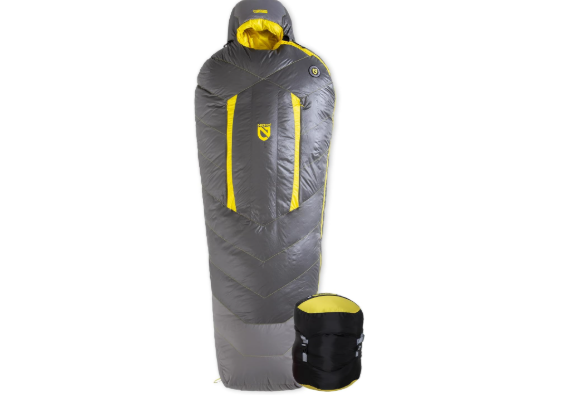

How to store a sleeping bag so it lasts comes down to one core rule: never leave it compressed in its stuff sack between trips, since long term compression is what breaks down insulation faster than almost anything else. Both down and synthetic fill need room to loft when not in use, and the storage habits you build between trips matter more to your bag’s lifespan than how carefully you use it in the field.
The short answer
Store your sleeping bag loose or in a large mesh or cotton storage sack, never compressed in its stuff sack, in a dry, room temperature space. Make sure the bag is completely dry before you put it away.
Why compression is the real enemy
Both down clusters and synthetic fibers rely on trapped air to create loft, and loft is what produces warmth, since insulation only works by holding a layer of still air close enough to the body that your own body heat can warm it. Keeping a bag squeezed into a small stuff sack for months at a time slowly crushes that structure, flattening down clusters and permanently bending synthetic fibers out of the shape they need to trap air efficiently. Down does regain most of its loft after a few uses because the individual clusters are naturally springy and resilient, but synthetic fill loses loft more permanently over repeated long term compression, since manufactured fibers do not have quite the same ability to spring back to their original shape after being crushed flat for extended periods.
A bag stored loose or lightly stuffed into a large sack keeps that structure intact for years longer than one left compressed on a closet shelf, and the difference compounds over time. A bag compressed for a single week between trips suffers little lasting damage, but a bag left compressed for months at a stretch, season after season, gradually loses a measurable amount of its original loft, which translates directly into a lower effective temperature rating over the years even if the bag looks fine on the outside.
Dry the bag completely before storing it
Any lingering moisture inside a stored bag, whether from humidity, sweat or an incompletely dried wash, creates the conditions for mildew and odor to develop over weeks of enclosed storage, since a damp, dark, enclosed sack is close to an ideal environment for mold growth. Air the bag out fully after every trip, ideally hanging it inside out for a few hours in a dry space with some air circulation, before packing it away. This single habit prevents more long term damage than almost any other storage step, since mildew odor is notoriously difficult to fully remove once it sets into the fabric and insulation, sometimes requiring repeated washing that itself further degrades the fill over time.
Use a large storage sack, not the stuff sack
Most sleeping bags come with two sacks, a small compression stuff sack for the trail and a larger cotton or mesh storage sack for home, and the difference matters more than it might seem. The large sack lets the bag loft up close to its full volume while still keeping dust and pests away, while the trail stuff sack is specifically designed to compress the bag as small as possible for packing, which is exactly the opposite of what you want for long term storage. If your bag did not come with a storage sack, a large pillowcase or a mesh laundry bag works just as well for keeping it loose between trips, and either option costs far less than replacing a bag whose insulation has permanently lost loft from months of unnecessary compression.
Pick a dry, temperature stable storage spot
A closet shelf or under bed storage in a climate controlled home works well, while a garage, attic or basement often swings through humidity and temperature extremes that can encourage mildew or degrade fabric coatings over time, since repeated cycles of heat, cold and humidity stress the shell fabric’s waterproof and water resistant treatments faster than stable conditions do. Keep the storage spot away from direct sunlight too, since UV exposure gradually weakens shell fabric even through a storage sack, breaking down the fibers over months and years of cumulative exposure even if the bag is never actually used outdoors during that time.
Protect the zipper and shell fabric too
Insulation loft gets most of the attention in storage advice, but the zipper and outer shell fabric deserve some care as well. Store the bag with the main zipper fully or mostly closed rather than left open and twisted inside the storage sack, since a zipper stored under tension or at an awkward angle for months can develop a slight misalignment that makes it snag more easily on the trail. If your bag has a durable water repellent coating on the shell fabric, that coating also breaks down gradually with age and UV exposure, so storing the bag away from sunlight helps preserve the coating’s effectiveness for longer, delaying the point at which the fabric starts wetting out and needs a fresh treatment.
It is also worth giving the bag a quick shake and fluff every month or two if it sits in storage for an extended period without use, since this redistributes fill that may have settled unevenly and keeps the loft consistent across the whole bag rather than letting it settle permanently into one section, particularly toward the foot end where gravity pulls fill downward over long periods of undisturbed storage.
Common mistakes
- Leaving the bag in its trail stuff sack for months. This is the single biggest cause of long term loft loss, particularly for synthetic fill, which does not spring back the way down does. A bag stored this way for years can lose enough loft to meaningfully raise its effective temperature rating, meaning it no longer keeps you as warm as it did when new.
- Packing the bag away while still slightly damp. Even minor lingering moisture creates ideal conditions for mildew over weeks of enclosed storage, and mildew smell rarely comes out completely once set in, often requiring repeated washing that further strips down oils or compresses synthetic fibers in the process of trying to fix the original mistake.
- Storing in a garage or attic. Temperature and humidity swings in these spaces accelerate fabric and insulation breakdown compared to a stable, climate controlled closet, and the cumulative effect of years of seasonal extremes can noticeably shorten a bag’s usable lifespan.
- Never airing the bag out between trips. Even a dry looking bag holds some moisture and body oils after use, and skipping regular airing lets both build up over a season of use, gradually degrading the down’s natural oils or creating a breeding ground for odor causing bacteria in synthetic fill.
Frequently Asked Questions
Can I store my sleeping bag in its original stuff sack long term?
No, the trail stuff sack is meant for compact carrying, not storage. Long term compression in that small sack is the fastest way to degrade the insulation’s loft over time, and the damage accumulates the longer the bag sits compressed between trips.
How do I know if my sleeping bag is fully dry before storing it?
Hang the bag inside out in a dry, ventilated space for several hours and check that no cool or damp spots remain when you press on the fabric, particularly around the footbox where moisture tends to linger longest due to reduced airflow in that section of the bag.
Does down or synthetic fill need different storage?
Both benefit from loose, dry storage, though down is somewhat more forgiving of occasional compression since it regains loft more readily than synthetic fibers, which compress more permanently over repeated long term storage and are less able to spring back to their original shape.
Is it okay to store a sleeping bag hanging up?
Yes, hanging a bag in a closet works well and keeps it fully lofted, as long as the hanger does not create a pressure point that compresses one section of the bag over long periods, so a wide, padded hanger is generally a better choice than a narrow wire one.
Wrapping up
The habits that protect a sleeping bag’s lifespan happen almost entirely at home between trips, not on the trail. Store it loose and dry, keep it out of the trail stuff sack, and choose a stable closet over a garage or attic. For care specific to down insulation, see our how to wash a down sleeping bag guide, and our sleeping bags buying guide covers the full category if you are shopping for a new one.