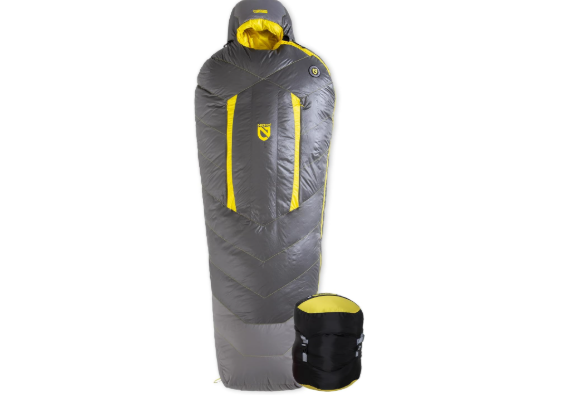
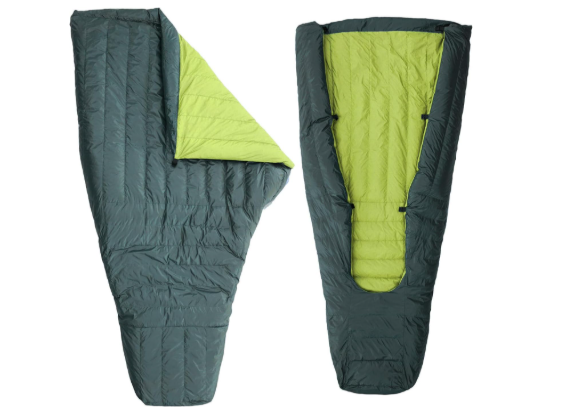
Quilt vs sleeping bag for backpacking is a tradeoff between shaving pack weight and keeping the familiar full enclosure most campers are used to, and the right choice depends on whether you use a sleeping pad reliably and how you feel about an open backed design. A backpacking quilt drops the zipper, hood and underside insulation entirely, since that fabric gets compressed under your body weight and stops insulating anyway, while a traditional sleeping bag keeps full coverage on all sides for a more familiar, self contained feel. Neither option is universally better, and the right pick depends on how much weight matters to you and how you sleep.
The short answer
Choose a quilt if you already rely on a good sleeping pad and want to shave real weight and bulk. Choose a traditional sleeping bag if you want full enclosure, move around a lot at night, or do not want to manage drafts along an open back.
Side by side
| Factor | Quilt | Sleeping Bag |
|---|---|---|
| Weight | Noticeably lighter | Heavier for the same rating |
| Draft protection | Requires careful pad attachment | Fully enclosed, no draft management |
| Reliance on sleeping pad | High, pad insulation is critical | Lower, bag insulates underneath too |
| Packed size | Smaller | Larger for the same warmth |
Quilts explained
A backpacking quilt removes the zipper, hood and the underside insulation that a traditional bag carries beneath your body, a design decision rooted in a simple physical fact: when down or synthetic fill gets compressed flat under your body weight, its loft collapses and it stops trapping meaningful air, which means it stops insulating regardless of how much fill is technically there. Since that underside fill was never doing much warming to begin with, a quilt simply omits it and relies entirely on your sleeping pad to block heat loss into the ground, redirecting the weight and cost that would have gone into that dead insulation toward more fill on top, where it actually matters. This makes a quilt meaningfully lighter and more compact than a sleeping bag with the same temperature rating, often by several ounces or more, a real advantage for anyone counting ounces on a long trail.
Most quilts attach to your sleeping pad using elastic straps, clips or a sewn in sleeve along the edges, creating a sealed pocket of warm air between the quilt and the pad that functions much like the enclosed lower half of a traditional bag. This attachment has to be reasonably snug, or cold drafts creep in along the sides where the quilt does not fully wrap around your body, which is the main adjustment for anyone switching from a full bag and the reason quilts have a reputation for feeling colder than their rating until a user dials in the strap tension and learns to keep the quilt properly sealed against the pad through the night.
Sleeping bags explained
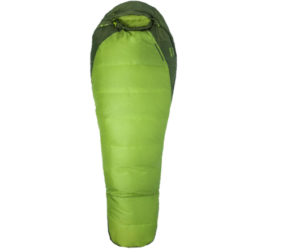
A traditional sleeping bag fully encloses your body in insulation, including the underside, which duplicates some of the job your sleeping pad already does but provides a genuine margin of warmth if your pad shifts out of position, deflates partially overnight, or has a lower insulation value than your conditions really call for. This full enclosure also means less to manage at the campsite, since there is no strap system to adjust and no draft gap to worry about along the sides, and a sealed zipper draft tube running the length of the main closure blocks one of the more common places a quilt style design cannot fully address.
The tradeoff is weight, and it is a direct consequence of the same physics that makes a quilt lighter. Carrying insulation that gets compressed flat under your body and contributes little real warmth is simply carrying dead weight compared to a quilt built around that same physical reality, and over a multi day trip that extra weight in your pack compounds with every mile hiked. A traditional bag’s hood is also worth noting here, since it seals around the head far more effectively than most quilts, which typically pair with a separate hat or hood for that same coverage, adding a small amount of extra gear weight back into the comparison that is easy to overlook.
Where each one wins
Weight
Quilt wins clearly, shedding the weight of underside insulation and the zipper and hood a full bag carries, often the single biggest weight saving move in a backpacker’s entire sleep system.
Ease of use
Sleeping bag wins, since there is no strap system to adjust and no draft gap to manage along the sides, which matters more to campers who want to set up and go without fine tuning gear each night.
Packability
Quilt wins clearly, compressing into a noticeably smaller stuff sack for the same temperature rating, freeing up pack space for food or other gear.
Cold sleeper comfort
Sleeping bag wins, since the full enclosure gives cold sleepers a margin of warmth a quilt’s open back does not provide, particularly on a night when temperatures drop below what was forecast.
Versatility across seasons
Sleeping bag wins here too, since a full bag performs reasonably even if your sleeping pad underperforms or shifts, while a quilt’s warmth is directly tied to how well the pad and quilt combination is dialed in, making a bag the more forgiving choice across a wider range of unpredictable conditions.
Which should you buy
If you already trust your sleeping pad and want to shave real weight on a long trail, a quilt’s lighter, more compact design is worth the adjustment period, and most backpackers who switch report the learning curve takes only a trip or two before the strap system feels second nature. If you sleep cold, move around a lot at night, or simply want the reassurance of full enclosure regardless of how your pad performs on a given night, a traditional sleeping bag remains the more forgiving choice. For lightweight quilt specific options, see our best ultralight quilts for backpacking roundup.
Frequently Asked Questions
Are quilts warm enough for cold weather backpacking?
They can be, provided you pair a cold rated quilt with a sleeping pad that has a sufficiently high insulation value, since the pad is doing more of the warmth work than it would with a traditional bag, and skimping on pad insulation is the most common reason a quilt underperforms its rating.
Do quilts really save that much weight?
Yes, removing the zipper, hood and underside insulation typically saves several ounces or more compared to a sleeping bag with the same temperature rating, and that saving can be even larger at colder ratings where a full bag would otherwise need considerably more total fill.
Is it harder to stay warm in a quilt?
It takes some practice to get the strap attachment snug enough to prevent drafts along the sides, but once dialed in, a properly fitted quilt keeps warmth in about as effectively as a bag for most sleepers, and many experienced quilt users report no meaningful difference in warmth once they learn the setup.
Can a quilt replace a sleeping bag for car camping?
It can, but the weight savings matter far less for car camping, so a traditional sleeping bag’s full enclosure and lack of strap fiddling often make more practical sense for that use case, especially for less experienced campers who would rather not manage an unfamiliar attachment system.
Buy a quilt if you trust your sleeping pad and want to shave real weight, and stick with a traditional sleeping bag if you want full enclosure and fewer things to manage at camp.